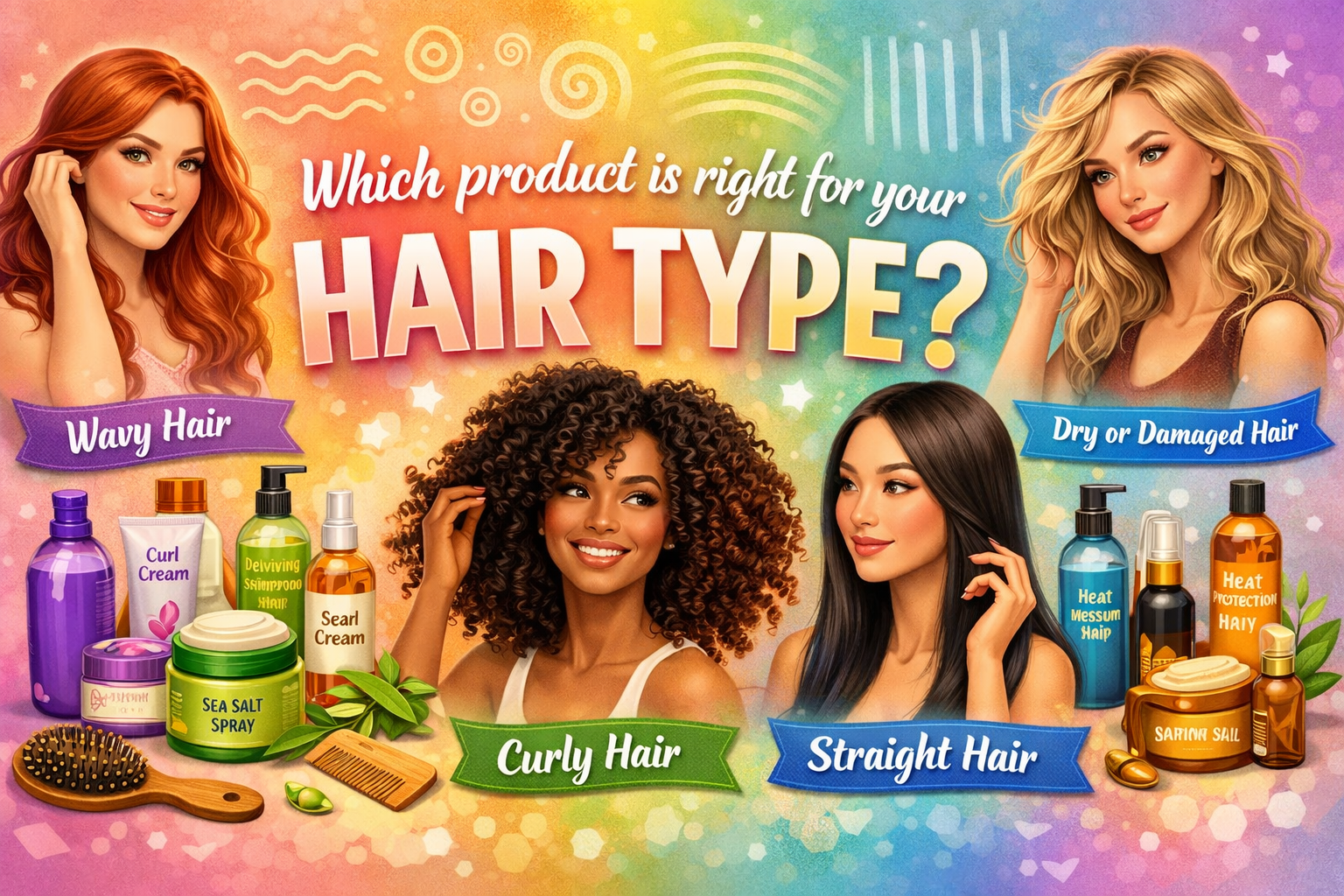
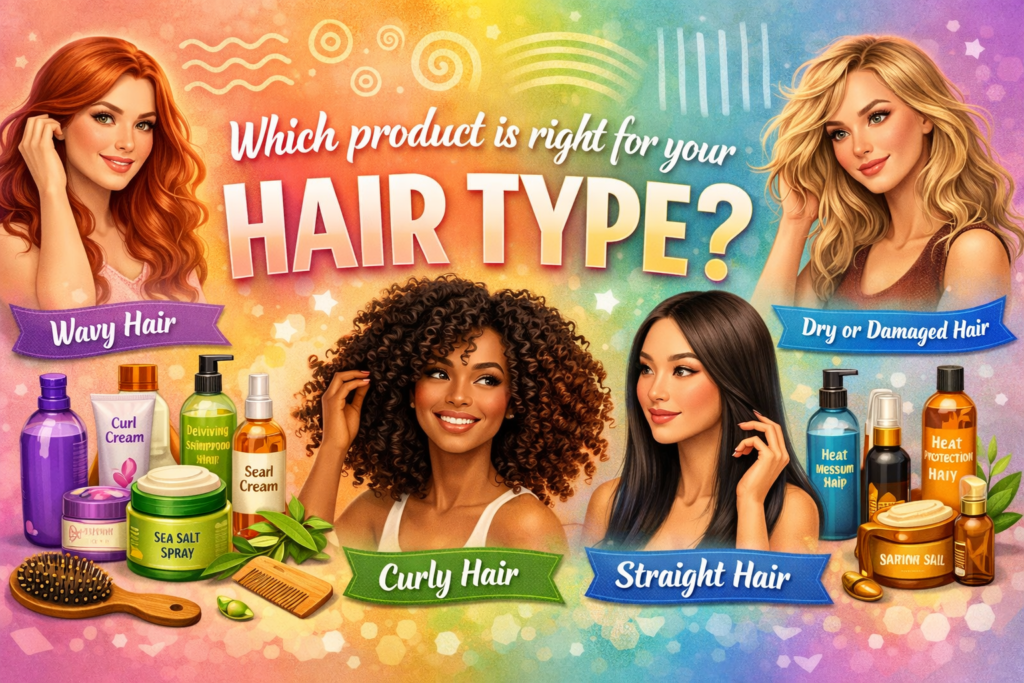
Which Product Is Right for Your Hair Type?
A personal journey through trial, error, and understanding
I didn’t always know what my hair needed. For a long time, I believed what most people around me seemed to believe—that hair care was simple. You pick a shampoo that smells nice, maybe add a conditioner if you remember, and that’s it. The rest, I thought, was just luck or genetics.
But somewhere between rushed mornings, bad hair days that seemed to arrive uninvited, and a growing curiosity about why nothing ever felt quite right, I began to realize something important: choosing the right product isn’t about trends or branding. It’s about understanding your hair in a way that feels almost… personal.
The First Mistake: Following the Crowd
I remember walking into a store once, overwhelmed by shelves lined with colorful bottles, each one promising something better than the last—“ultimate repair,” “silky smooth,” “volume boost,” “deep hydration.” It felt less like shopping and more like guessing.
So I did what many of us do: I followed what was popular.
At the time, a volumizing shampoo was everywhere. Influencers talked about it, friends recommended it, and the packaging itself seemed to whisper, this is the one. I bought it without hesitation, convinced that it would solve everything.
But instead of fuller, bouncier hair, I ended up with something else entirely—dry ends, a slightly rough texture, and a strange feeling that my hair was somehow both lighter and less healthy.
It was confusing. How could something that worked for so many people not work for me?
That was the moment I began to understand a simple truth: what works for others doesn’t automatically work for you.
Learning to Listen to Your Hair
Hair, I realized, isn’t static. It changes with the weather, with your routine, even with your mood—or at least it feels that way. And the more I paid attention, the more I noticed patterns.
On humid days, my hair would swell and lose its shape. In colder weather, it became dry and brittle. After using certain products, it felt heavy, almost as if it couldn’t breathe.
These weren’t random reactions. They were signals.
And once I started treating them as such, everything began to shift.
Understanding Hair Types Beyond Labels
We often hear about basic hair types—straight, wavy, curly, coily—but those labels only tell part of the story. What really matters is the combination of factors that make your hair unique.
For me, it wasn’t just about texture. It was about how easily my hair lost moisture, how it reacted to oils, and how quickly it became weighed down.
Someone else might have thick, curly hair that thrives on heavy creams and rich conditioners. But if I used the same products, my hair would collapse under the weight, losing any sense of movement.
That’s when I realized: choosing the right product is less about category and more about compatibility.
The Turning Point: Reading Between the Ingredients
There was a point when I stopped focusing on the front of the bottle—the promises—and started paying attention to the back.
At first, the ingredient list felt like a foreign language. Long, unfamiliar names that seemed impossible to decode. But slowly, patterns began to emerge.
I noticed that certain ingredients consistently left my hair feeling dry, while others made it softer and easier to manage. Lightweight oils worked better for me than heavy butters. Gentle cleansers felt less stripping than harsh ones.
It wasn’t about memorizing every ingredient. It was about recognizing how my hair responded.
And in a way, it felt empowering. I was no longer guessing—I was learning.
Matching Products to Needs, Not Trends
One of the biggest shifts in my approach was moving away from trends and toward intention.
Instead of asking, What’s popular right now?, I started asking, What does my hair need today?
Sometimes, the answer was hydration. Other times, it was balance—removing buildup without over-drying. Occasionally, it was repair, especially after too much heat styling or environmental stress.
And the products I chose began to reflect those needs:
- A gentle, hydrating shampoo when my hair felt dry
- A lightweight conditioner when it felt weighed down
- A clarifying product when buildup became noticeable
It wasn’t a fixed routine anymore. It was flexible, responsive.
The Myth of “One Perfect Product”
For a while, I searched for a single product that could do everything—a kind of miracle solution that would simplify my routine and solve all my problems.
But that product never came.
And eventually, I understood why.
Hair care isn’t about finding one perfect product. It’s about building a system that works together. Each product plays a role, and their effectiveness depends on how well they complement each other.
A good shampoo prepares your hair. A conditioner restores balance. A styling product enhances texture or protects against damage.
Expecting one product to do it all is like expecting one tool to build an entire house. It’s not impossible—but it’s rarely effective.
Mistakes That Taught Me More Than Success
Looking back, some of my worst hair days were also my most valuable lessons.
There was the time I overused a deep conditioning mask, thinking more moisture would mean better results. Instead, my hair felt limp and lifeless.
Another time, I tried a strong clarifying shampoo too often, leaving my hair stripped and fragile.
Each mistake revealed something important: balance matters.
Too much of a good thing can be just as problematic as too little.
External Factors We Often Ignore
It’s easy to think that hair products alone determine the outcome. But over time, I began to notice how much external factors played a role.
Water quality, for example, had a noticeable impact. In places with harder water, my hair felt different—slightly rougher, less manageable.
Climate mattered too. Humidity, temperature, even air pollution—all of these influenced how my hair behaved and what it needed.
This made me realize that choosing the right product isn’t a one-time decision. It’s an ongoing process, shaped by your environment as much as your hair type.
The Emotional Side of Hair Care
What surprised me the most was how emotional this journey became.
Hair isn’t just hair. It’s tied to identity, confidence, and self-expression. A good hair day can subtly shift how you carry yourself. A bad one can linger in your thoughts longer than you’d like to admit.
And finding the right products—products that make your hair feel like yours—can feel incredibly satisfying.
Not because they’re perfect, but because they align with who you are.
A More Thoughtful Approach
If there’s one thing I’ve learned, it’s that hair care doesn’t have to be complicated. But it does require attention.
Instead of chasing every new release or trend, it helps to slow down and observe:
- How does your hair feel after using a product?
- Does it improve over time, or worsen?
- Does it respond differently in different conditions?
These small observations add up. They guide you toward choices that feel less like guesses and more like decisions.
So, Which Product Is Right for Your Hair Type?
The answer, I’ve realized, isn’t a specific brand or formula.
It’s the product that understands your hair as it is—right now.
It’s the one that works with your texture, your environment, your routine. The one that doesn’t promise transformation, but delivers consistency.
And perhaps most importantly, it’s the one you choose not because someone else said it was the best—but because you’ve taken the time to understand why it works for you.
In the end, this journey wasn’t just about hair. It was about learning how to pay attention, how to adapt, and how to trust small observations over loud promises.
And maybe that’s what makes the difference—not just in hair care, but in so many other parts of life.
Because sometimes, the right answer isn’t out there waiting to be found.
Sometimes, it’s something you discover gradually, one small choice at a time.