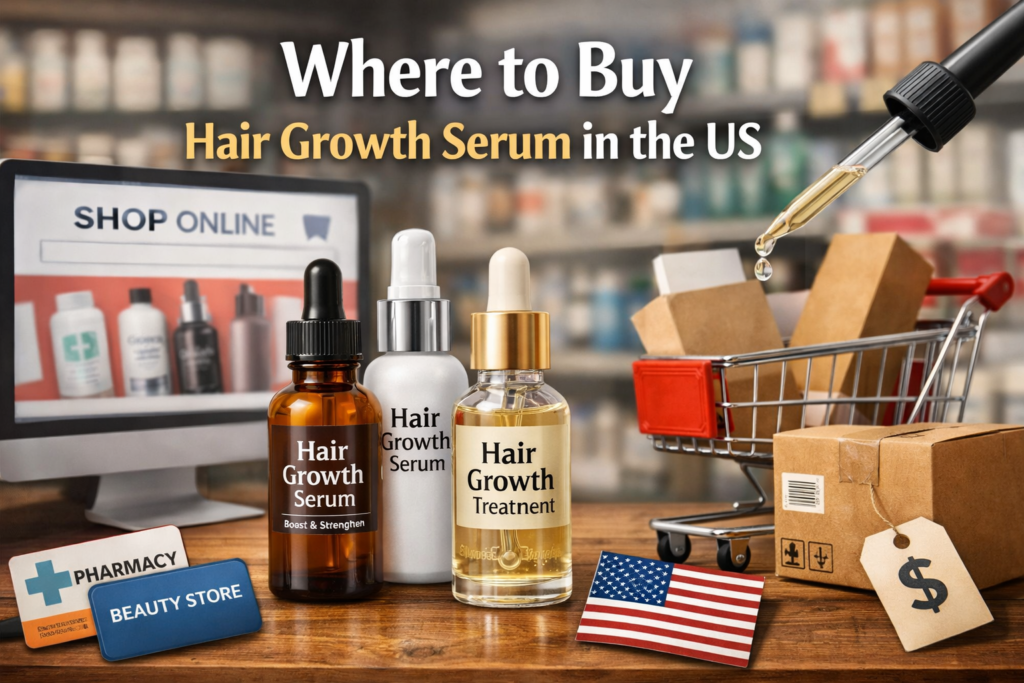
Where to Buy Hair Growth Serum in the US
A personal, reflective journey through choices, doubts, and small victories
I didn’t expect buying a hair growth serum to feel so… complicated.
At first, it seemed like one of those simple errands—like picking up shampoo or replacing a toothbrush. You walk into a store, grab something that looks decent, maybe glance at a few reviews, and you’re done. But somewhere between the third product label and the fiftieth online review, I realized this wasn’t just a purchase. It had quietly turned into a decision layered with hope, skepticism, and a surprising amount of self-reflection.
Because when you’re looking for a hair growth serum, you’re not just buying a product. You’re buying into a possibility—the idea that something small, applied daily, might bring back a part of yourself you feel you’ve been slowly losing.
The First Stop: Drugstores and the Comfort of Familiarity
My search began where most of these things do—at a local drugstore.
There’s something reassuring about places like CVS and Walgreens. The fluorescent lighting, the neatly arranged shelves, the quiet hum of routine—it all makes decisions feel manageable. I wandered into the hair care aisle, expecting a straightforward selection. Instead, I was met with an entire wall of options.
Bottles promised thicker hair, fuller strands, restored confidence. Words like “clinical strength,” “dermatologist recommended,” and “advanced formula” appeared over and over again, each one trying to outdo the last.
I picked up a few boxes, reading the fine print more carefully than I ever had before. Some contained minoxidil, a name I had seen mentioned repeatedly in articles and forums. Others leaned toward natural ingredients—biotin, caffeine, castor oil—presented in earthy packaging that felt calm and trustworthy.
In that moment, I realized something important: where you buy your serum often shapes how you feel about it. Drugstores offer accessibility and familiarity. You can see the product, hold it, compare it side by side with others. There’s less uncertainty.
But there’s also limitation. The selection, while broad, is curated. It doesn’t always include niche brands or newer formulations that haven’t yet made it onto mainstream shelves.
I left with a small bag and a larger sense that this was only the beginning.
The Online Rabbit Hole
That night, I did what most of us do when curiosity lingers—I opened my laptop.
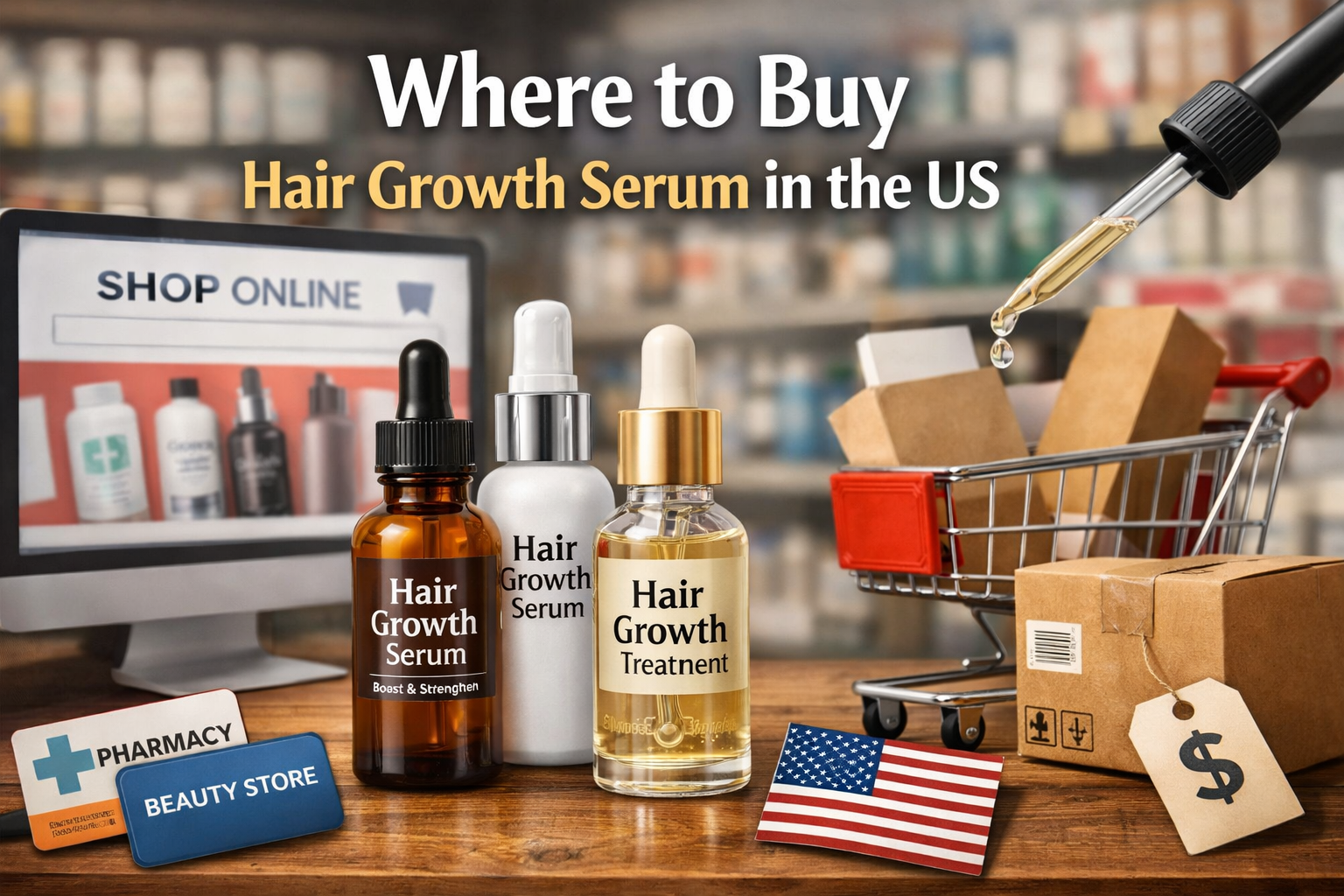
Online shopping for hair growth serums is an entirely different experience. If drugstores are structured and finite, the internet is expansive, almost overwhelming. Websites like Amazon, Ulta, and Sephora offer thousands of options, each accompanied by reviews, ratings, and sometimes conflicting opinions.
I found myself scrolling for hours.
One review would praise a product as life-changing, while the next would dismiss it as ineffective. Some included before-and-after photos that seemed convincing—until I noticed differences in lighting or angles that made me question their authenticity.
Still, there was something valuable in this chaos. Online platforms provide access to real user experiences, and while not all of them are reliable, patterns begin to emerge if you read carefully enough.
I started to notice recurring themes:
- Products with consistent, long-term reviews tended to be more trustworthy
- Serums with transparent ingredient lists inspired more confidence
- Brands that acknowledged limitations felt more honest than those promising instant results
Buying online also introduced convenience. With a few clicks, I could have a product delivered to my door within days. No need to revisit multiple stores or settle for what was available locally.
But convenience comes with its own trade-offs. You can’t physically inspect the product. You rely on images and descriptions, which may not always match reality. And there’s always that small doubt—what if this isn’t the right choice?
Specialty Stores and the Search for Expertise
A few days later, I decided to visit a beauty specialty store.
Walking into a place like Sephora or Ulta feels different from a drugstore. The atmosphere is more curated, almost intentional. Products are displayed with care, and there’s often someone nearby who can answer questions.
This time, I didn’t just browse. I asked.
The conversation was brief but helpful. The associate didn’t promise miracles. Instead, they asked about my routine, my concerns, and what I was hoping to achieve. Their recommendations felt more tailored, less generic.
This is where specialty stores stand out—they offer guidance. Not always perfect, but often more informed than what you might find on your own.
I learned about serums that focused on scalp health rather than just hair growth. Products that emphasized consistency over quick results. Brands that invested in research rather than marketing.
It was a reminder that sometimes, where you buy matters as much as what you buy. The right environment can shift your perspective, helping you make decisions that feel more grounded and less reactive.
The Rise of Direct-to-Consumer Brands
Somewhere along the way, I stumbled upon brands that didn’t exist in physical stores at all.
Direct-to-consumer companies have carved out a unique space in the market. They sell primarily through their own websites, often emphasizing transparency, science-backed formulations, and personalized experiences.
At first, I was skeptical. Without the backing of a familiar retailer, these brands felt harder to trust. But as I explored further, I noticed something different.
Their websites often included detailed explanations of ingredients, clinical studies, and realistic timelines. Instead of promising immediate transformation, they focused on gradual improvement.
Some even offered subscription models, delivering products on a regular schedule. At first, this felt like a commitment I wasn’t ready to make. But then I realized—it was designed to encourage consistency, which is essential for any hair growth journey.
Buying directly from a brand can feel more personal. There’s a sense that you’re engaging with the source, rather than a middleman. But it also requires more research, more patience, and a willingness to trust information that isn’t filtered through a retailer.
The Unexpected Role of Community
What I didn’t anticipate was how much other people’s experiences would influence my choices.
Forums, social media groups, and comment sections became part of my research process. I read stories from people who had tried multiple products, who had faced setbacks, who had found small successes over time.
There was something grounding about these voices. They weren’t polished or curated—they were real.
Some shared before-and-after photos that felt genuine, not because they were perfect, but because they weren’t. Lighting was inconsistent. Angles varied. Progress was subtle.
These stories didn’t just inform my decision—they reshaped my expectations.
Hair growth, I realized, isn’t a quick fix. It’s a slow process, influenced by factors beyond any single product. Where you buy your serum matters, but how you use it—and how patient you are—matters more.
Balancing Price and Value
At some point, I had to confront another question: how much was I willing to spend?
Hair growth serums in the US range widely in price. Some are affordable, easily found in drugstores. Others are significantly more expensive, often positioned as premium or clinically advanced.
Initially, I assumed higher price meant better results. But the more I researched, the less certain that became.
Value isn’t just about cost—it’s about effectiveness, consistency, and how well a product fits into your routine.
A cheaper product used consistently can outperform an expensive one used sporadically. A serum that feels comfortable and easy to apply is more likely to become part of your daily habit.
In the end, the “best” option isn’t necessarily the most expensive or the most popular. It’s the one you’ll actually use.
Small Decisions, Lasting Impact
Looking back, the process of finding where to buy a hair growth serum turned out to be more than just a shopping experience.
It became a series of small decisions:
- Choosing between convenience and variety
- Balancing trust and curiosity
- Weighing cost against consistency
- Listening to others while learning to trust my own judgment
Each step shaped not just what I bought, but how I approached the entire journey.
A Quiet Realization
There’s a moment, somewhere in the middle of all this, where the urgency fades.
You stop looking for the perfect product and start focusing on the process. You understand that no single purchase will solve everything. And strangely, that realization feels… relieving.
Because it shifts the goal.
Instead of chasing immediate results, you begin to value steady progress. Instead of relying solely on where you buy, you pay attention to how you use what you’ve chosen.
And maybe that’s the real takeaway.
Buying a hair growth serum in the US isn’t difficult. There are countless options, available both in stores and online. But choosing one—understanding why you chose it, and committing to using it consistently—that’s where the real challenge lies.
In the end, I did make a choice.
Not because it was the most popular or the most expensive, but because it felt right for me. It fit into my routine. It aligned with what I had learned. And most importantly, it was something I could commit to using over time.
The results didn’t come overnight. They rarely do.
But with each passing week, there was a subtle shift—not just in my hair, but in my mindset. I became more patient, more attentive, more aware of the small changes that often go unnoticed.
And that, perhaps, is the quiet truth behind all of this.
Where you buy your hair growth serum matters.
But what truly makes a difference is what you do after you bring it home.