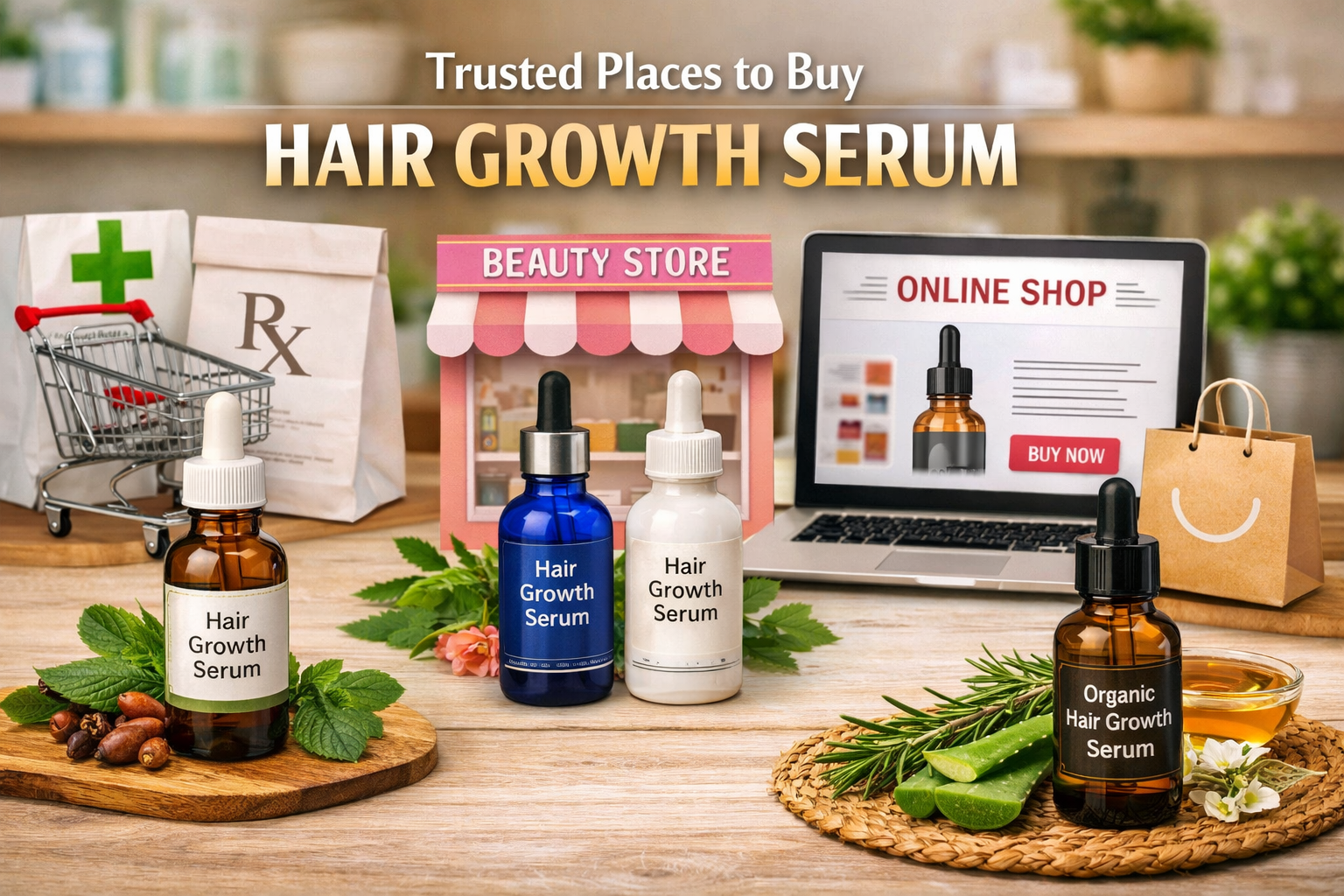
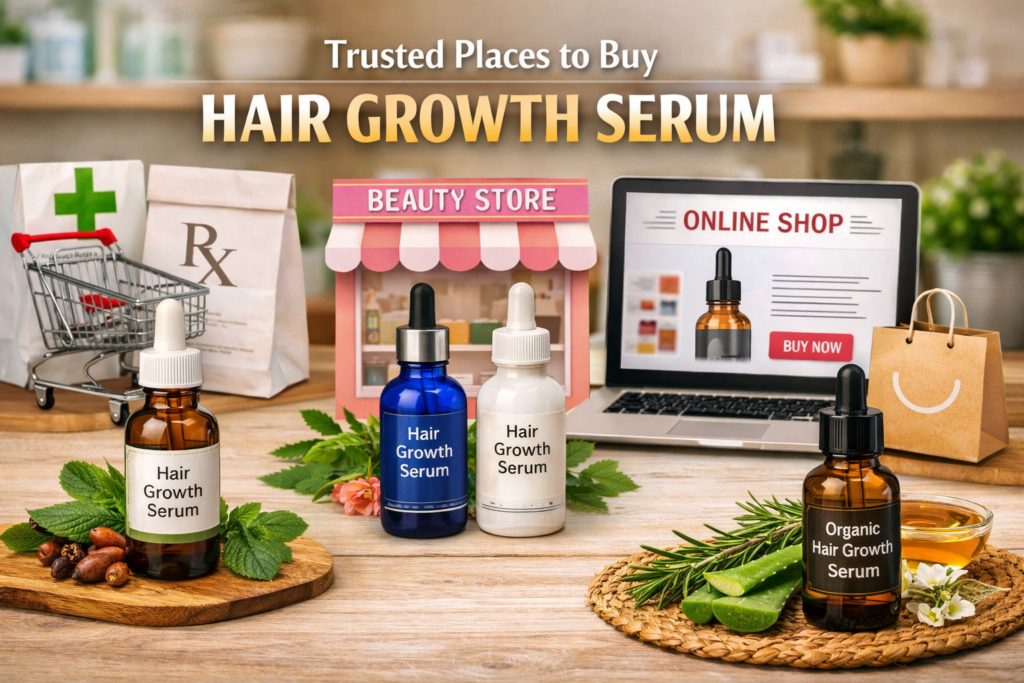
Trusted Places to Buy Hair Growth Serum
A personal journey through choices, doubts, and quiet discoveries
I didn’t start out looking for a “trusted place.”
At the beginning, I was just looking for anything that might work.
It started subtly—more strands of hair on my pillow than usual, a little extra shedding in the shower, the kind of thing you can easily dismiss if you don’t look too closely. But once you notice it, it’s hard to unsee. Every mirror becomes a checkpoint. Every bad hair day feels like confirmation of something going wrong.
And so, like most people, I turned to the internet.
The Overwhelming First Search
Typing “hair growth serum” into a search bar feels a bit like opening a door into chaos. Hundreds of options appear instantly—each one promising faster growth, thicker hair, miraculous transformations.
At first glance, they all seem convincing.
Sleek packaging. Scientific-sounding ingredients. Reviews that range from life-changing success stories to complete disappointment. Some products are incredibly cheap, others surprisingly expensive. And somewhere in between, you’re expected to decide which one deserves your trust.
I remember scrolling endlessly, opening tab after tab, comparing brands I had never heard of. It didn’t take long to realize that the real challenge wasn’t finding a product—it was finding a place that felt reliable enough to buy from.
Because when it comes to something personal like hair, trust matters more than marketing.
The First Lesson: Not All Online Stores Are Equal
The first serum I bought came from a random online store I barely recognized. The website looked decent enough, and the price was lower than most others. That alone should have made me pause—but it didn’t.
A few days later, the product arrived.
At first, everything seemed fine. But something felt off—the packaging was slightly different from what I had seen in reviews. The label looked faded, almost like a copy. And the smell… not unpleasant, but not quite right either.
That experience introduced me to something I hadn’t considered before: counterfeit or low-quality products.
From that point on, I became much more careful—not just about what I bought, but where I bought it.
Official Brand Websites: The First Safe Ground
If there’s one place that consistently feels reliable, it’s the official website of the brand itself.
It sounds obvious, but it took me a while to fully appreciate why.
When you buy directly from a brand:
- You’re more likely to receive authentic products
- You can access detailed ingredient information
- Customer support is usually clearer and more responsive
I remember ordering a serum directly from a brand’s official site after my first disappointing experience. The difference was noticeable—not just in the product, but in the entire process. Clear confirmation emails, tracking updates, and packaging that matched exactly what I had seen advertised.
There was a sense of reassurance in knowing that there were fewer unknowns involved.
But even this option has its limitations. Not every brand ships worldwide. Some have higher prices compared to third-party platforms. And sometimes, the variety is limited.
So the search continued.
Large E-Commerce Platforms: Convenience vs. Caution
Eventually, I found myself browsing through well-known platforms like Amazon, Shopee, and others.
These sites offer something incredibly appealing: convenience.
You can compare dozens of products in minutes. Reviews are abundant. Prices are competitive. And delivery is often fast.
But convenience comes with its own set of challenges.
I learned quickly that on these platforms, the same product can be sold by multiple sellers—and not all of them are equally trustworthy.
One listing might have thousands of positive reviews, while another version of the same product looks suspiciously similar but has inconsistent feedback. It becomes less about the product itself and more about identifying the right seller.
Over time, I developed a habit of checking:
- Seller ratings and history
- Verified purchase reviews
- Real customer photos
- Consistency in product descriptions
It’s not foolproof, but it helps reduce the risk.
And sometimes, you come across sellers who clearly care—who respond to questions, provide detailed information, and maintain a level of transparency that builds confidence.
Those are the ones worth returning to.
Pharmacies and Drugstores: Quiet Reliability
There’s something different about walking into a physical store.
No scrolling. No guesswork about shipping. No uncertainty about what will arrive.
Just shelves, products, and the ability to see everything up close.
Buying hair growth serum from a pharmacy or drugstore feels… grounded. The options might be fewer, but they’re often curated. There’s an implicit level of trust in knowing that these products have met certain standards.
I remember standing in one aisle, holding two different serums, reading their labels carefully. It was slower than online shopping, but also more intentional.
Sometimes, that slower pace leads to better decisions.
And if you’re unsure, there’s often someone you can ask—even if it’s just a quick question about ingredients or usage.
It’s not the most exciting option, but it’s one of the most reliable.
Specialty Beauty Stores: A Balance of Trust and Variety
At some point, I discovered specialty beauty retailers—both online and offline.
These stores sit somewhere between pharmacies and large e-commerce platforms. They offer a wider range of products, often including niche or premium brands, but with more curation than a typical marketplace.
What stood out to me was the level of detail:
- Ingredient breakdowns
- Usage guides
- Comparisons between products
Some even include expert recommendations or editorial content, which makes the experience feel less like shopping and more like learning.
Buying from these stores felt like a middle ground—enough variety to explore different options, but enough structure to avoid feeling overwhelmed.
Social Media and Influencer Shops: The Risky Shortcut
At one point, I was tempted by products I saw on social media.
It’s hard not to be. The before-and-after photos, the confident recommendations, the promise of quick results—it all feels convincing in the moment.
But this is where things get complicated.
Not every recommendation is unbiased. Not every product is thoroughly tested. And not every shop linked in a bio is trustworthy.
I did try one product from a social media recommendation. It wasn’t terrible, but it also wasn’t what it claimed to be. And the lack of clear information about the seller made the whole experience feel uncertain.
That’s when I realized something important: visibility is not the same as credibility.
Just because something is popular doesn’t mean it’s reliable.
What “Trusted” Really Means
Over time, my definition of a “trusted place” began to change.
At first, I thought it meant a well-known website or a high number of reviews. But now, I see it as something more nuanced.
A trusted place is one that:
- Provides clear and honest information
- Delivers products that match their descriptions
- Maintains consistency over time
- Makes it easy to ask questions or resolve issues
It’s less about perfection and more about reliability.
Because no product works the same for everyone. But the place you buy from should at least be dependable.
The Emotional Side of the Search
What surprised me most wasn’t the variety of products or the complexity of choosing—it was how personal the whole process felt.
Hair, for many of us, is tied to identity. Confidence. The way we present ourselves to the world.
So when something feels off, even slightly, it’s not just a physical concern—it becomes emotional.
And that emotion can influence our decisions.
It can make us rush into buying something without enough research. It can make us trust the wrong sources. It can make us spend more than we intended.
Recognizing that helped me slow down.
To pause before clicking “buy.”
To question whether I trusted the source—not just the promise.
A Quiet Shift in Perspective
Looking back, I realize that the search for a hair growth serum wasn’t just about the product itself.
It was about learning how to navigate choices.
How to balance convenience with caution.
How to recognize the difference between marketing and authenticity.
How to trust—not blindly, but thoughtfully.
And maybe that’s the real takeaway.
Because in a world where options are endless and information is everywhere, effectiveness isn’t just about what you choose—it’s about how you choose.
Where I Stand Now
If you asked me today where to buy a hair growth serum, I wouldn’t give you a single answer.
Instead, I’d say this:
Start with places that have earned a reputation for consistency.
Take the time to verify what you’re buying.
Be cautious of shortcuts that seem too good to be true.
And most importantly, don’t rush the process.
Because trust isn’t something you find instantly.
It’s something you build—one careful decision at a time.
And maybe, in the end, that’s what makes the difference.
Not just the serum you use,
but the confidence in knowing where it came from,
and why you chose it in the first place.