Should You Buy Long-Term Treatment Plans?
A personal reflection on commitment, doubt, and the true cost of “thinking ahead”
I didn’t plan to think so deeply about long-term treatment plans. At first, it seemed like a simple decision—almost transactional. Pay once, save more later. Lock in a better rate. Avoid future hassle. That’s how it was presented to me, wrapped neatly in logic and a subtle sense of urgency.
It happened on an ordinary weekday. I remember sitting in a brightly lit office, flipping through a brochure filled with promises—“consistent results,” “cost efficiency,” “peace of mind.” The words sounded reassuring, almost comforting. And yet, something about it made me hesitate.
Not because it didn’t make sense on paper. But because life, I’ve learned, rarely follows paper.
The Appeal of Certainty
There’s a certain comfort in committing to something long-term. It feels responsible, like you’re taking control of your future. You’re not just reacting—you’re planning. And in a world that often feels unpredictable, that sense of control can be incredibly appealing.
When I first considered a long-term treatment plan, I wasn’t just thinking about the service itself. I was thinking about stability. About not having to revisit the same decision every few months. About trusting that a part of my life was “handled.”
It reminded me of signing up for something bigger than the present moment—like planting a flag in the future and saying, I’ll be here, and this will still matter.
But that’s also where the question begins: how much of the future can we really predict?
The Hidden Weight of Commitment
Commitment sounds admirable, but it carries weight—often more than we expect.
A long-term treatment plan isn’t just a financial decision. It’s a commitment of time, energy, and attention. It assumes that your needs will remain relatively stable, that your priorities won’t shift, and that the service you’re buying today will still feel valuable months—or even years—later.
I remember agreeing to a plan once, convinced I was making the “smart” choice. The discount was significant, the benefits seemed clear, and the provider was persuasive without being pushy.
At first, everything felt aligned. I followed the schedule, attended sessions, and appreciated the structure it brought into my routine.
But as time passed, something subtle began to change.
My schedule became busier. My priorities shifted. What once felt convenient started to feel restrictive. Appointments became obligations rather than opportunities. And slowly, almost without noticing, I began to feel like I was working around the plan instead of the plan working for me.
That’s when I realized: long-term plans don’t just lock in benefits—they also lock in expectations.
The Cost Beyond Money
We often evaluate these decisions in terms of cost savings. “If I buy ten sessions now, I save 20%.” It’s a straightforward calculation, easy to justify.
But there are other costs that don’t show up on the receipt.
There’s the cost of flexibility—the ability to change your mind without consequence. There’s the cost of missed sessions, rescheduling conflicts, or simply not having the same level of motivation over time.
And perhaps most importantly, there’s the cost of mismatch. What if the treatment no longer suits your needs? What if a better option becomes available? What if you outgrow what you once thought you needed?
These aren’t hypothetical concerns. They’re part of the reality of living in a constantly changing environment.
I’ve found that the longer the commitment, the more important it is to consider not just the present value, but the potential for change.
When Long-Term Plans Make Sense
That said, not all long-term treatment plans are problematic. In fact, some can be incredibly beneficial—if the conditions are right.
I’ve seen situations where committing long-term brought real advantages. When the treatment required consistency to be effective, a long-term plan helped maintain discipline. When the provider was highly reliable and adaptable, the experience felt supportive rather than restrictive.
In those cases, the plan wasn’t just a purchase—it was a framework. It created structure, encouraged follow-through, and reduced the mental load of repeated decision-making.
The key difference, I’ve noticed, lies in alignment.
When your needs, your schedule, and the nature of the treatment all align, a long-term plan can feel like a natural extension of your goals. It doesn’t force you into a routine—it supports one you already value.
The Role of Self-Awareness
If there’s one factor that influences this decision more than any other, it’s self-awareness.
How consistent are you, really? Not in theory, but in practice.
It’s easy to imagine your future self as disciplined, motivated, and perfectly aligned with your current intentions. But reality is often more complicated. Life intervenes. Energy fluctuates. Interests evolve.
I had to confront this myself. I like to think of myself as committed, but when I looked honestly at my patterns, I saw gaps—missed appointments, shifting priorities, moments of hesitation.
That realization didn’t mean I should avoid long-term plans altogether. But it did mean I needed to choose them more carefully.
Not based on who I wanted to be, but based on who I actually was.
Flexibility vs. Efficiency
There’s an inherent trade-off between flexibility and efficiency.
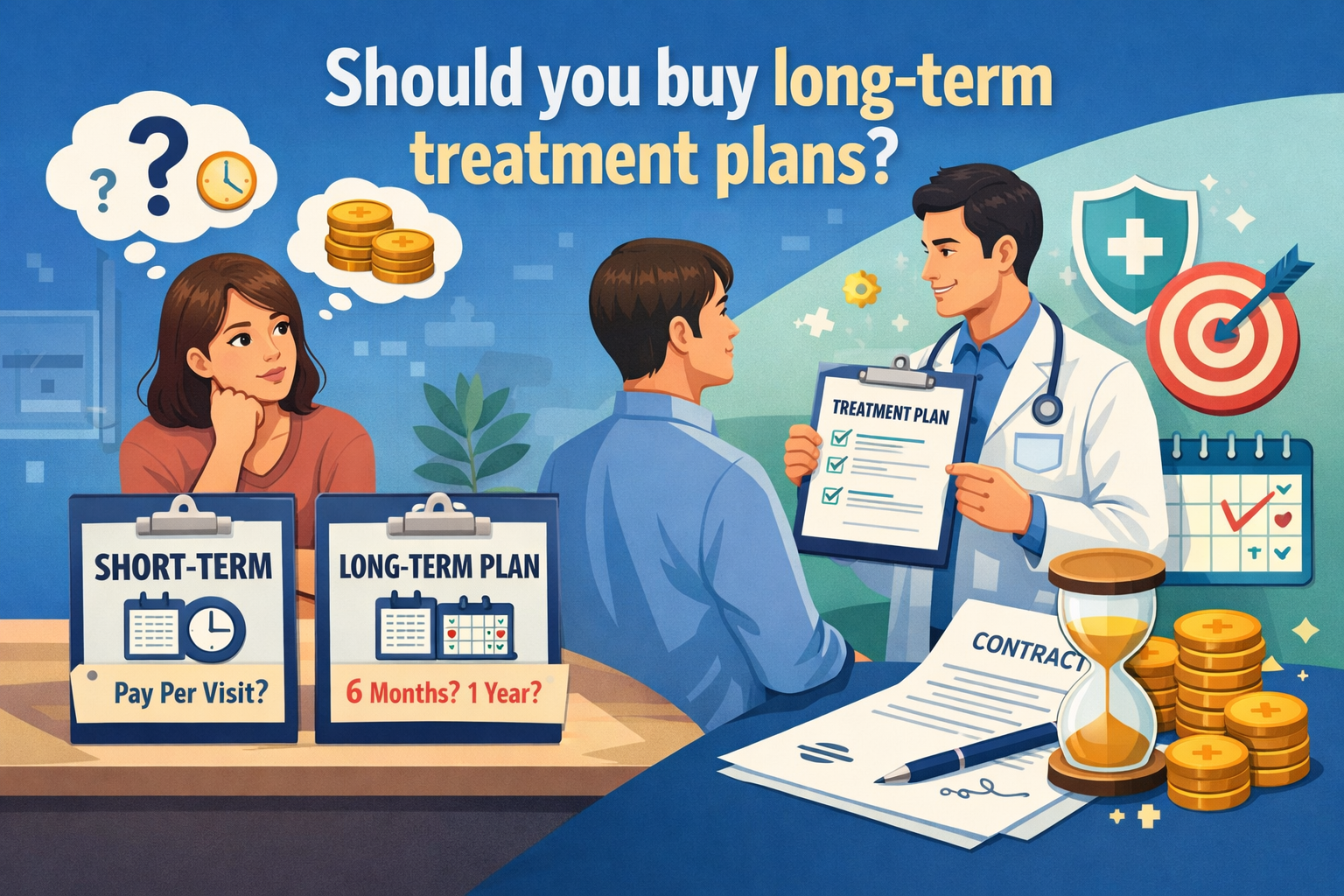
Long-term plans often offer better pricing and structured benefits, but they reduce your ability to adapt. Short-term or pay-as-you-go options, on the other hand, provide freedom at a higher cost.
Neither is inherently better. It depends on what you value more in a given moment.
There was a time when I prioritized efficiency. I wanted to optimize costs, streamline decisions, and commit fully. But as my life became more dynamic, I began to value flexibility more. The ability to adjust, pause, or change direction became worth the extra expense.
This shift didn’t happen overnight. It came from experience—from moments where rigidity created stress, and flexibility provided relief.
Questions Worth Asking
Before committing to a long-term treatment plan, I’ve learned to ask myself a few simple but important questions:
- Do I genuinely see myself following through consistently?
- How likely is my schedule or priority to change?
- Is the provider flexible if my situation shifts?
- Am I choosing this for convenience, or because it truly fits my needs?
- What happens if I change my mind halfway through?
These questions don’t guarantee the “right” decision, but they bring clarity. They turn an emotional choice into a thoughtful one.
A More Balanced Perspective
Looking back, I don’t regret trying long-term plans. Each experience, whether positive or frustrating, taught me something about how I make decisions and what I value.
I’ve learned that there’s no universal answer to whether you should buy them. The better question is whether a specific plan fits your current reality—and your likely future.
Sometimes, the best choice is to commit. To lean into consistency and trust the process.
Other times, the wiser move is to stay flexible. To accept a slightly higher cost in exchange for freedom and adaptability.
And occasionally, the answer lies somewhere in between—starting small, testing the experience, and committing only when confidence grows.
A Quiet Realization
If I had to sum up what I’ve learned, it would be this: long-term treatment plans are less about the treatment itself, and more about your relationship with time.
They ask you to make a promise to your future self—to assume that your needs, habits, and circumstances will remain stable enough to justify the commitment.
Sometimes, that promise holds. And when it does, the rewards can be meaningful.
But sometimes, it doesn’t. And that’s not a failure—it’s simply a reflection of how unpredictable life can be.
Now, when I sit in a similar office, flipping through another brochure filled with familiar promises, I no longer rush to decide. I pause, not out of indecision, but out of awareness.
Because I’ve learned that the real question isn’t just:
“Is this a good deal?”
It’s:
“Is this a good fit for who I am—and who I’m likely to be?”
And that, more than any discount or guarantee, is what ultimately determines whether a long-term treatment plan is worth it.