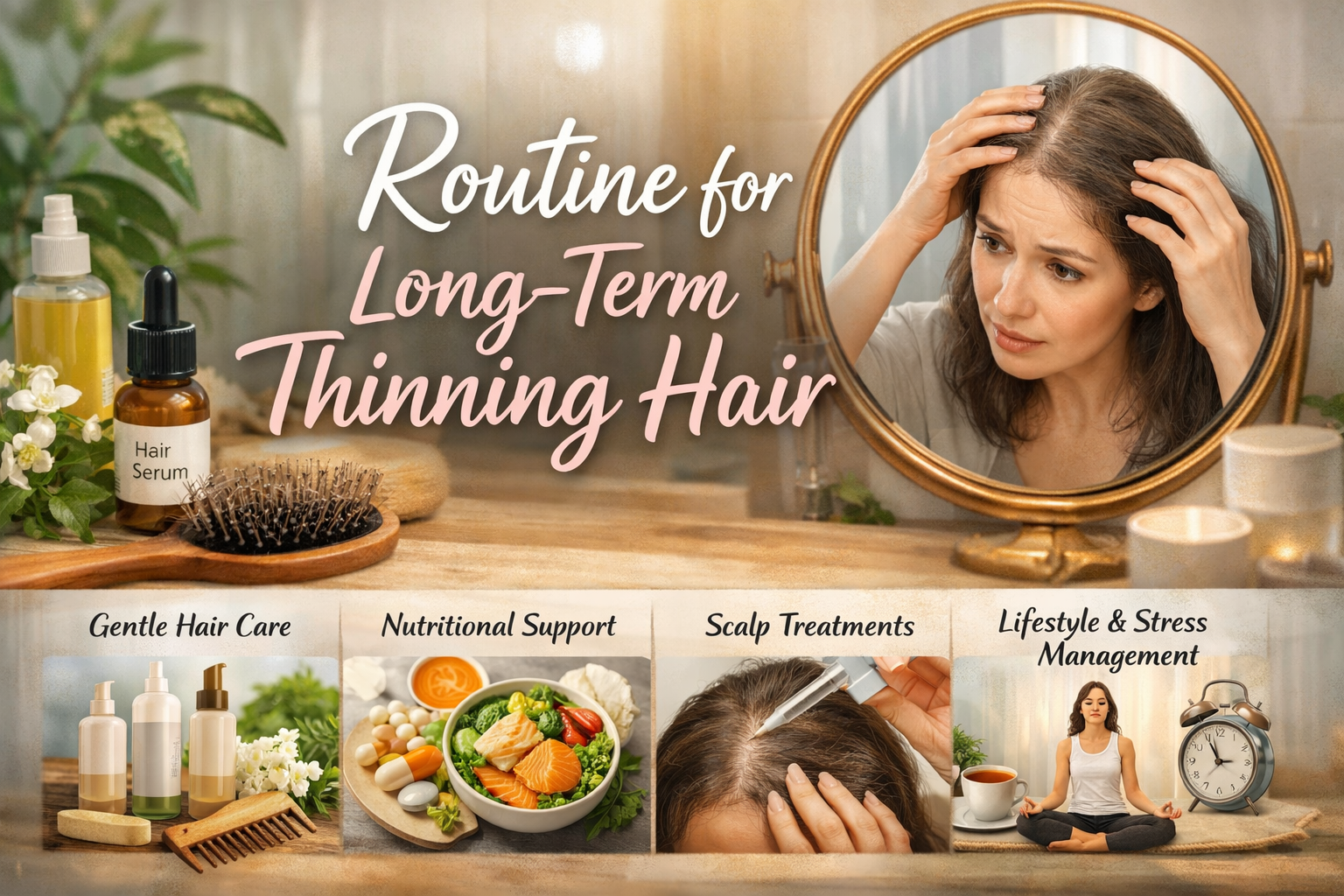
Routine for Long-Term Thinning Hair (Continued)
There was a time when I thought hair thinning was something that happened to “other people.” You know, the kind of issue that belonged to stressful corporate lifestyles, aging celebrities, or genetics I was lucky enough not to inherit. But life has a funny way of humbling you in the quietest, most persistent ways. For me, it started with something so small I almost ignored it—a few extra strands on my pillow, a slightly wider part in the mirror, a ponytail that didn’t feel as thick as it used to.
At first, I brushed it off. “It’s just seasonal shedding,” I told myself. But days turned into months, and months into a quiet realization: this wasn’t temporary. This was something deeper, something long-term. And like many things in life that don’t have quick fixes, it required patience, consistency, and a shift in mindset.
Understanding What “Long-Term” Really Means
The first lesson I learned was that long-term hair thinning is not something you can rush. We live in a world obsessed with instant results—overnight transformations, miracle serums, and “7-day regrowth” promises. But hair doesn’t work like that. It grows slowly, responds gradually, and reflects what’s happening inside your body just as much as what you put on your scalp.
I remember standing in the hair care aisle, overwhelmed by options. Bottles screamed words like “thickening,” “volumizing,” and “repair.” It felt like hope packaged in plastic. But deep down, I knew that no single product could solve something that had been developing over time.
So I changed my approach. Instead of searching for a quick fix, I started building a routine—a quiet, steady commitment to taking care of my hair and, in many ways, myself.
Step One: Rethinking Hair Care from the Roots
The first real shift happened when I stopped treating my hair like just hair. I began thinking about my scalp as skin—living, breathing, and deserving of care.
I used to wash my hair without much thought, rushing through it like a chore. But now, I slowed down. I paid attention to how my scalp felt. Was it dry? Oily? Sensitive? I realized that a healthy scalp is the foundation for healthy hair, something I had overlooked for years.
I introduced gentle shampoos—nothing too harsh, nothing overloaded with chemicals. At first, it felt like nothing was happening. No dramatic change, no sudden improvement. But after a few weeks, I noticed something subtle: less irritation, less itchiness, and a sense that my scalp was finally “breathing.”
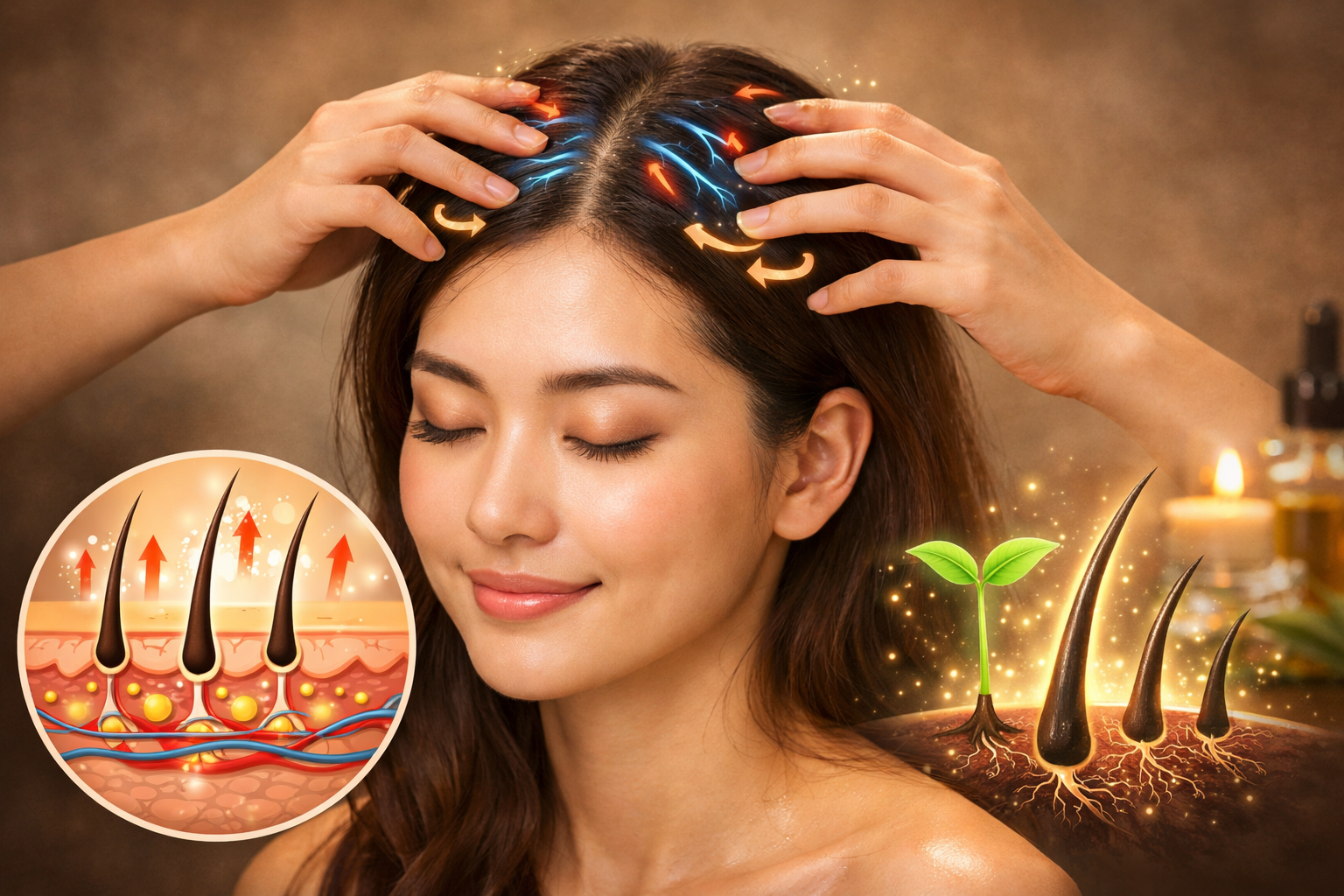
And then came scalp massages.
It sounded almost too simple to matter. But every night, I spent a few minutes massaging my scalp with my fingertips. No fancy tools, no expensive oils—just a quiet ritual before bed. Over time, it became more than just a step in my routine. It became a moment of calm, a way to reconnect with myself after long days.
Did it magically regrow my hair? No. But it made a difference in how my scalp felt—and sometimes, that’s where change begins.
Step Two: Nutrition—The Invisible Factor
If there’s one thing I underestimated, it was how much my diet affected my hair.
I used to think of hair care as something external—shampoos, conditioners, serums. But thinning hair forced me to look inward. What was I feeding my body? Was I giving it what it needed to grow strong, healthy hair?
The answer, honestly, was no.
There were days when meals were rushed, unbalanced, or skipped entirely. Protein was inconsistent. Vitamins were an afterthought. And hydration? Let’s just say coffee often replaced water.
So I started small. I didn’t overhaul my entire diet overnight. Instead, I made gradual changes—adding more protein, incorporating foods rich in iron and vitamins, and simply drinking more water.
At first, it felt unrelated. Eating better didn’t immediately change my hair. But over time, I noticed subtle shifts—not just in my hair, but in my energy, my skin, and my overall well-being.
Hair, I realized, is often a reflection of what’s happening inside. And caring for it means caring for your body as a whole.
Step Three: Letting Go of Damage
This was perhaps the hardest part.
I loved styling my hair—heat tools, tight hairstyles, experimenting with different looks. It was a form of self-expression, something that made me feel confident. But as my hair began to thin, I had to face a difficult truth: some of my habits were doing more harm than good.
I didn’t quit everything overnight. That would have felt too extreme, too restrictive. Instead, I started making compromises.
I used heat tools less often. I chose looser hairstyles. I paid attention to how my hair felt after certain routines. Slowly, I learned to listen to it—to notice when it was stressed, dry, or fragile.
It wasn’t about giving things up entirely. It was about finding balance.
Step Four: Patience—The Most Difficult Habit
If there’s one thing no one prepares you for, it’s how long it takes to see results.
Weeks passed, then months. There were moments when I stood in front of the mirror, searching for change and finding none. It was frustrating. Discouraging. Sometimes, it felt like all the effort wasn’t worth it.
But then, one day, I noticed something small.
My hair didn’t fall out as much when I brushed it. My part didn’t seem quite as wide. My ponytail—though still not as thick as before—felt just a little fuller.
These weren’t dramatic transformations. No one else would have noticed. But to me, they meant everything.
Because they were proof that something was working.
Step Five: Redefining What “Healthy Hair” Means
Before all of this, I had a very specific idea of what healthy hair looked like—thick, voluminous, perfectly styled. Anything less felt like a problem to fix.
But going through long-term thinning changed that perspective.
Healthy hair, I realized, isn’t about perfection. It’s about resilience. It’s about how your hair feels, how it responds, and how you care for it over time.
There were days when my hair still looked thin. Days when I felt self-conscious, comparing myself to others or to my past self. But those moments became less frequent as I focused more on the process than the outcome.
Because the truth is, long-term hair care isn’t just about regrowth. It’s about building a relationship with yourself—learning patience, practicing consistency, and finding confidence in small, steady progress.
Step Six: The Emotional Side No One Talks About
Hair thinning isn’t just physical. It’s emotional.
There’s a quiet vulnerability in watching something change that you once took for granted. It can affect how you see yourself, how you show up in the world, and how you feel in your own skin.
I had moments of doubt—wondering if things would ever go back to how they were. I questioned my routine, my choices, even my body.
But over time, I realized something important: this journey wasn’t just about fixing my hair. It was about understanding myself better.
It taught me to be more patient, more mindful, and more compassionate toward myself. It reminded me that not everything needs to be perfect to be meaningful.
Building Your Own Routine
If there’s one thing I’ve learned, it’s that there’s no universal routine that works for everyone. What worked for me might not work for you—and that’s okay.
But if you’re navigating long-term thinning, here are a few guiding principles that helped me:
- Start simple. You don’t need a complicated routine. Focus on consistency.
- Listen to your body. Pay attention to how your hair and scalp respond.
- Be patient. Real change takes time—often longer than you expect.
- Take care of your overall health. Hair is just one piece of a larger picture.
- Be kind to yourself. Progress isn’t always linear.
Looking Back
When I think about where I started, I realize how much has changed—not just in my hair, but in my mindset.
My hair may never be exactly what it once was. And surprisingly, I’ve made peace with that.
Because what I’ve gained is something deeper: a sense of balance, a healthier routine, and a quieter kind of confidence that doesn’t rely on perfection.
Long-term thinning hair isn’t a problem you solve once and forget. It’s a journey you learn to navigate—day by day, habit by habit.
And somewhere along the way, you realize that the goal isn’t just to “fix” your hair.
It’s to take care of yourself in a way that lasts.