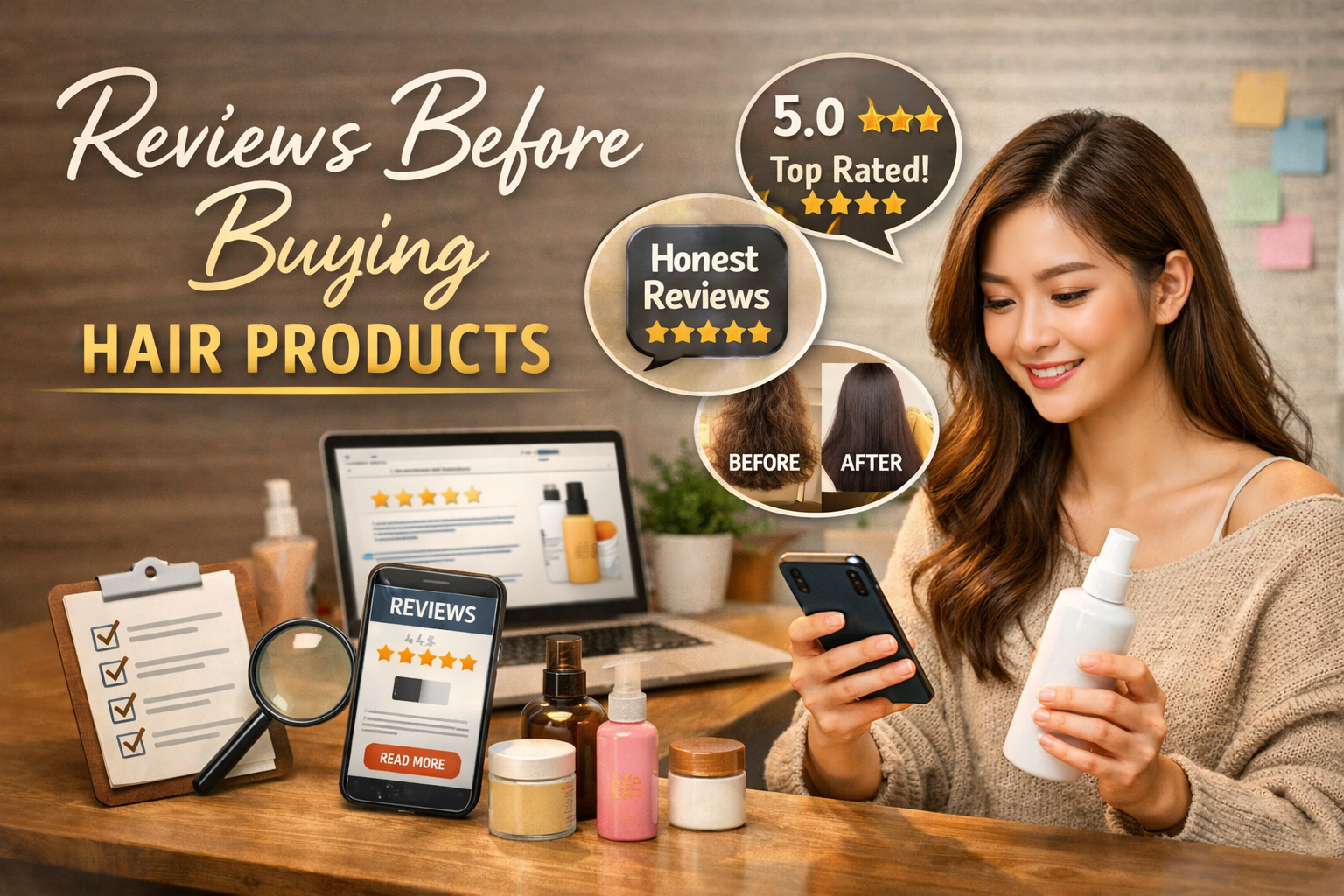
Reviews Before Buying Hair Products
A personal reflection on trust, trial, and the quiet art of choosing what we use on ourselves
I didn’t always read reviews before buying hair products. In fact, there was a time when I would walk into a store, pick the bottle with the nicest packaging, maybe sniff it if the cap allowed, and head straight to the checkout. It felt simple, almost instinctive—like choosing based on a feeling rather than a process.
That worked… until it didn’t.
I still remember one particular purchase. The bottle promised “silky smooth transformation” in bold, elegant lettering. The model on the label had impossibly glossy hair that seemed to catch light from every angle. I didn’t question it. Why would I? Everything about it looked right.
But after a week of using it, my hair felt heavier, almost tired. It didn’t shine—it dulled. And that’s when I realized something that, in hindsight, feels obvious: not every product is made for everyone. And more importantly, not every promise on a label tells the full story.
That was the moment I started turning to reviews—not just occasionally, but almost ritualistically.
The First Dive Into Reviews
At first, reading reviews felt like opening a door into a crowded room where everyone was talking at once. There were five-star praises that sounded almost poetic, and one-star complaints that read like warnings you couldn’t ignore. It was overwhelming.
But I kept reading.
Some reviews were short and vague—“Love it!” or “Didn’t work for me.” They didn’t help much. Others, though, were detailed. They talked about hair type, climate, how long the product was used, even how it interacted with other products.
Those were the reviews that changed everything.
I began to notice patterns. People with similar hair types to mine would often have similar experiences. If three or four of them mentioned dryness after a few uses, I paid attention. If others described improved texture or volume under specific conditions, I took note of that too.
It wasn’t just about the product anymore. It was about context.
Learning to Read Between the Lines
Over time, I realized that reviews aren’t just about what’s written—they’re about what’s implied.
A five-star review doesn’t always mean a product is perfect. Sometimes it just means it worked well for that person. And a negative review doesn’t necessarily mean the product is bad—it might just not suit a particular hair type or routine.
I remember reading a review where someone complained that a shampoo made their hair feel “too light” and “lacking weight.” That same characteristic was exactly what another reviewer loved about it.
That’s when it clicked: effectiveness is subjective.
So I started asking myself different questions while reading:
- Does this reviewer have hair similar to mine?
- Are they using the product the same way I would?
- What are their expectations, and do they match mine?
These questions helped filter out the noise. Reviews stopped being overwhelming and started becoming useful.
The Role of Expectations
There’s something subtle but powerful about expectations when it comes to hair products.
If you expect a product to completely transform your hair overnight, you’re likely to be disappointed—even if it works reasonably well. On the other hand, if you approach it with realistic expectations, you’re more likely to notice its actual benefits.
Reviews often reflect this gap.
I once bought a conditioner that had mixed reviews. Some people said it was “life-changing,” while others claimed it did “absolutely nothing.” Curious, I read deeper.
The positive reviews often came from people who used it consistently over time. The negative ones? Many expected immediate results.
When I tried it myself, I kept my expectations in check. I didn’t look for instant transformation. Instead, I paid attention to small changes—how my hair felt after each wash, how it behaved throughout the day.
And slowly, almost quietly, I noticed an improvement.
That experience taught me that reviews are not just about the product—they’re about the mindset of the person using it.
When Reviews Conflict
One of the most confusing moments in this journey is when reviews completely contradict each other. One person swears by a product; another warns against it.
At first, this made decision-making harder. It felt like standing at a crossroads with no clear direction.
But eventually, I realized something important: conflicting reviews are not a problem—they’re information.
They reveal the range of experiences a product can produce. And within that range, you can often find clues about where you might fall.
For example, if a product works well for people with dry hair but poorly for those with oily scalps, and you know where you stand, the decision becomes clearer.
It’s less about finding a universally “good” product and more about finding the right product.
The Influence of Trends and Hype
There was a period when I got caught up in trends. A product would go viral, and suddenly it felt like everyone was using it. Reviews would flood in, often overwhelmingly positive.
It was hard not to be influenced.
I remember buying a highly popular hair serum that seemed to be everywhere. The reviews were glowing, almost unanimously so. It felt like a safe choice.
But when I used it, the results were… average.
Not bad, but not extraordinary either.
That’s when I started questioning the role of hype. Are all reviews genuine? Are some influenced by trends, marketing, or even expectations shaped by popularity?
I became more cautious. I started looking for balanced reviews—ones that mentioned both pros and cons. I paid attention to reviewers who explained why they liked or disliked a product, rather than just stating their opinion.
Hype can be persuasive, but it doesn’t replace personal suitability.
The Quiet Value of Consistency
One thing reviews rarely capture perfectly is consistency over time.
A product might work well for the first few uses but lose its effectiveness later. Or it might show minimal results initially but improve hair health gradually.
I’ve learned to value reviews that mention long-term use. They often provide insights that short-term experiences miss.
And this ties back to patience.
Hair care is not an instant process. It’s a relationship—one that develops over time. Reviews can guide you, but they can’t replace your own experience.
Trusting Yourself Along the Way
As helpful as reviews are, there comes a point where you have to trust your own judgment.
I’ve had moments where reviews suggested a product wouldn’t work for me, but I tried it anyway—and it did. And other times, highly recommended products simply didn’t suit me.
These experiences reminded me that reviews are guides, not rules.
They inform your decisions, but they don’t define them.
The Emotional Side of Choosing
There’s also something quietly emotional about choosing hair products.
It’s not just about function—it’s about how you feel when you use them. The scent, the texture, the routine—it all becomes part of your daily life.
Reviews sometimes capture this, but not always.
I remember reading a review where someone described how a particular shampoo made their morning routine feel calmer, more enjoyable. That detail stayed with me.
When I tried it, I understood what they meant. It wasn’t just about how my hair looked—it was about how the experience felt.
And that’s something numbers and ratings can’t fully convey.
A More Thoughtful Approach
Looking back, my approach to buying hair products has changed completely.
I no longer rely on packaging or promises alone. I take time to read, to compare, to reflect. I consider my own needs, my habits, and even my environment.
Reviews are a part of that process—but they’re not the whole of it.
They’re like conversations with strangers who’ve walked a path before you. They can point out obstacles, suggest shortcuts, and share insights. But ultimately, you still have to walk the path yourself.
Final Thoughts
If there’s one thing I’ve learned, it’s that reviews are most valuable when used thoughtfully.
They’re not about finding certainty—they’re about reducing uncertainty.
They help you make more informed choices, avoid common mistakes, and set realistic expectations. But they don’t eliminate the need for personal experience.
Because in the end, the effectiveness of a hair product isn’t just determined by its ingredients or its popularity.
It’s shaped by you—your hair, your routine, your preferences, and even your patience.
And maybe that’s what makes the process meaningful.
Not just finding the “perfect” product, but understanding yourself a little better along the way.