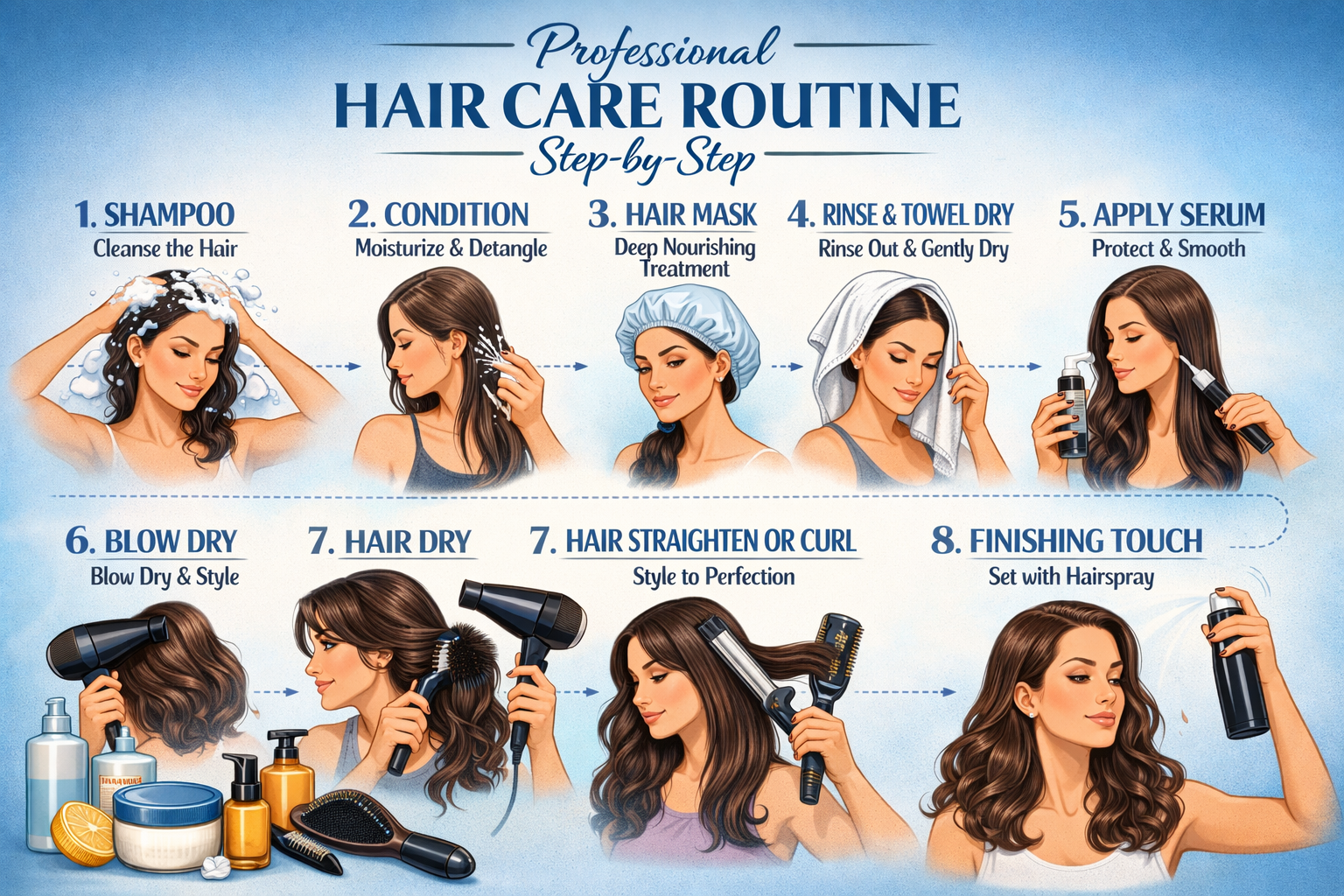
Professional Hair Care Routine Step-by-Step: A Personal Journey to Healthier Hair
I didn’t always have a “hair care routine.” In fact, for a long time, my relationship with my hair was careless at best. I washed it when it felt greasy, brushed it when it tangled, and tied it up when it became too inconvenient to deal with. Like many people, I believed good hair was mostly about genetics or luck—something you either had or didn’t.
That belief started to change one particularly frustrating morning. I remember standing in front of the mirror, running my fingers through strands that felt dry, frizzy, and lifeless. It wasn’t just about appearance—it felt like my hair reflected how little attention I had given to taking care of myself. That moment pushed me to rethink everything. I began researching, experimenting, failing, and slowly learning what actually works.
This is not just a professional hair care routine—it’s a story of trial, patience, and transformation. If you’re looking to build a routine that truly makes a difference, let me walk you through it step by step.
Step 1: Understanding Your Hair (The Step I Ignored for Too Long)
Before buying products or following trends, I had to pause and ask a simple question: What does my hair actually need?
This step sounds obvious, but it’s surprisingly easy to skip. I used to choose shampoos based on scent or packaging. “Moisturizing,” “repairing,” “volumizing”—they all sounded good, so I assumed they were interchangeable.
They’re not.
Hair care starts with understanding three key things:
- Your hair type (straight, wavy, curly, coily)
- Your scalp condition (dry, oily, balanced, sensitive)
- Your hair concerns (damage, frizz, breakage, thinning)
For me, the realization was clear: I had wavy hair with a slightly oily scalp but dry ends. That meant I needed balance—not heavy products that weighed my hair down, but not overly stripping ones either.
Once I understood this, everything else began to make more sense.
Step 2: Pre-Wash Care (The Game Changer I Never Knew I Needed)
For years, I thought hair care started in the shower. It turns out, it actually begins before that.
Pre-wash care became one of the most transformative steps in my routine. It prepares your hair, reduces damage, and enhances the effectiveness of everything that follows.
There are two simple methods I now rotate:
1. Oil Treatment (1–2 times per week)
I gently apply a lightweight oil (like argan or coconut oil) to my mid-lengths and ends. Sometimes, I massage a small amount into my scalp.
At first, I was skeptical—oil sounded messy and unnecessary. But after a few weeks, I noticed my hair felt softer, less brittle, and much easier to manage.
2. Detangling Before Washing
This might seem small, but it prevents a lot of breakage. I use a wide-tooth comb or my fingers to gently remove knots before stepping into the shower.
It’s a quiet, almost meditative step—one that reminds me to slow down and be gentle.
Step 3: Cleansing Properly (Not Just Washing, But Washing Right)
Washing your hair is simple, right? That’s what I thought—until I realized I had been doing it wrong for years.
The biggest mistake I made was treating shampoo like soap—applying it everywhere and scrubbing aggressively. This stripped my hair and left it dry.
Now, I follow a more intentional approach:
1. Focus on the Scalp
Shampoo is meant to cleanse your scalp, not your entire hair length. I apply it to my scalp and gently massage in circular motions.
2. Let the Suds Do the Work
As I rinse, the shampoo naturally travels down the lengths of my hair, which is enough to clean it without over-drying.
3. Choose the Right Frequency
I used to wash my hair daily. Now, I wash it 2–3 times per week, depending on how my scalp feels. This balance helps maintain natural oils without buildup.
Over time, my hair stopped feeling stripped and started feeling… alive.
Step 4: Conditioning (Where the Magic Begins)
If shampoo is about cleansing, conditioner is about restoring.
I used to rush through this step—apply, rinse, done. But once I started treating conditioning as an essential part of my routine, everything changed.
Here’s what I do now:
- I apply conditioner mainly to the mid-lengths and ends
- I avoid the scalp (to prevent buildup and greasiness)
- I leave it on for at least 3–5 minutes
Sometimes, I even take that time to pause—no phone, no distractions—just letting the product work while I breathe and reset.
Once rinsed, my hair feels smoother, softer, and far easier to detangle.
Step 5: Deep Treatment (The Weekly Reset)
This step is like giving your hair a weekly “therapy session.”
Once a week, I replace my conditioner with a deep conditioning mask. This is especially important if your hair is exposed to heat styling, coloring, or environmental stress.
The first time I used a hair mask consistently, I didn’t notice dramatic results immediately. But after a few weeks, the difference became undeniable:
- Less frizz
- More shine
- Stronger strands
It taught me something important: good hair care isn’t about instant results—it’s about consistency.
Step 6: Post-Wash Care (Handle with Care)
What you do after washing your hair is just as important as what you do during.
I used to rub my hair aggressively with a towel. It felt efficient—but it caused frizz and breakage.
Now, my approach is much gentler:
1. Pat Dry, Don’t Rub
I use a soft towel or even a cotton T-shirt to gently squeeze out excess water.
2. Apply Leave-In Products
Depending on how my hair feels, I use:
- A leave-in conditioner for moisture
- A lightweight serum for smoothness
- Heat protectant if I plan to style
3. Detangle Carefully
I start from the ends and slowly work my way up, using a wide-tooth comb.
This step requires patience—but it’s worth it.
Step 7: Styling (Less Damage, More Intention)
Styling used to mean heat—straighteners, curling irons, blow dryers. I didn’t think twice about it.
Now, I see styling as a choice, not a necessity.
I still use heat tools occasionally, but with precautions:
- Always applying heat protectant
- Using lower temperatures
- Avoiding daily heat styling
On most days, I embrace my natural texture. It’s not perfect—but it’s real, and it’s healthier.
Step 8: Night Care (The Step That Changed Everything)
This was the step I underestimated the most.
I used to go to bed with loose hair, not thinking about the friction and tangling that happened overnight.
Now, my nighttime routine is simple but powerful:
- I loosely braid my hair or tie it in a low bun
- I use a silk or satin pillowcase
The result? Less frizz, fewer tangles, and smoother hair in the morning.
It’s one of those small habits that quietly makes a big difference.
Step 9: Regular Maintenance (The Long-Term Commitment)
Hair care isn’t a one-time fix—it’s an ongoing process.
Every few weeks, I trim my ends to prevent split ends from traveling up the hair shaft. I also reassess my routine depending on the season, my lifestyle, and how my hair feels.
There’s no “perfect” routine—only one that evolves with you.
What I Learned Along the Way
Looking back, this journey wasn’t just about hair.
It taught me patience. It taught me to pay attention. It taught me that small, consistent actions matter more than quick fixes.
There were times when I felt frustrated—when results were slow, when products didn’t work, when my hair refused to cooperate. But over time, those moments became part of the process.
And eventually, something shifted.
My hair didn’t just look better—it felt better. And in a subtle way, so did I.
Final Thoughts
If you’re starting your own hair care journey, here’s what I want you to remember:
You don’t need the most expensive products.
You don’t need a complicated routine.
You don’t need to get everything right immediately.
What you need is consistency, awareness, and a little patience.
Hair care is not just about appearance—it’s a form of self-respect. A quiet daily ritual that reminds you to take care of yourself, even in small ways.
And maybe one day, like me, you’ll stand in front of the mirror—not with frustration, but with a quiet sense of appreciation for how far you’ve come.