Latest Hair Growth Technologies: A Journey Through Science, Hope, and Reinvention
I still remember the first time I noticed it.
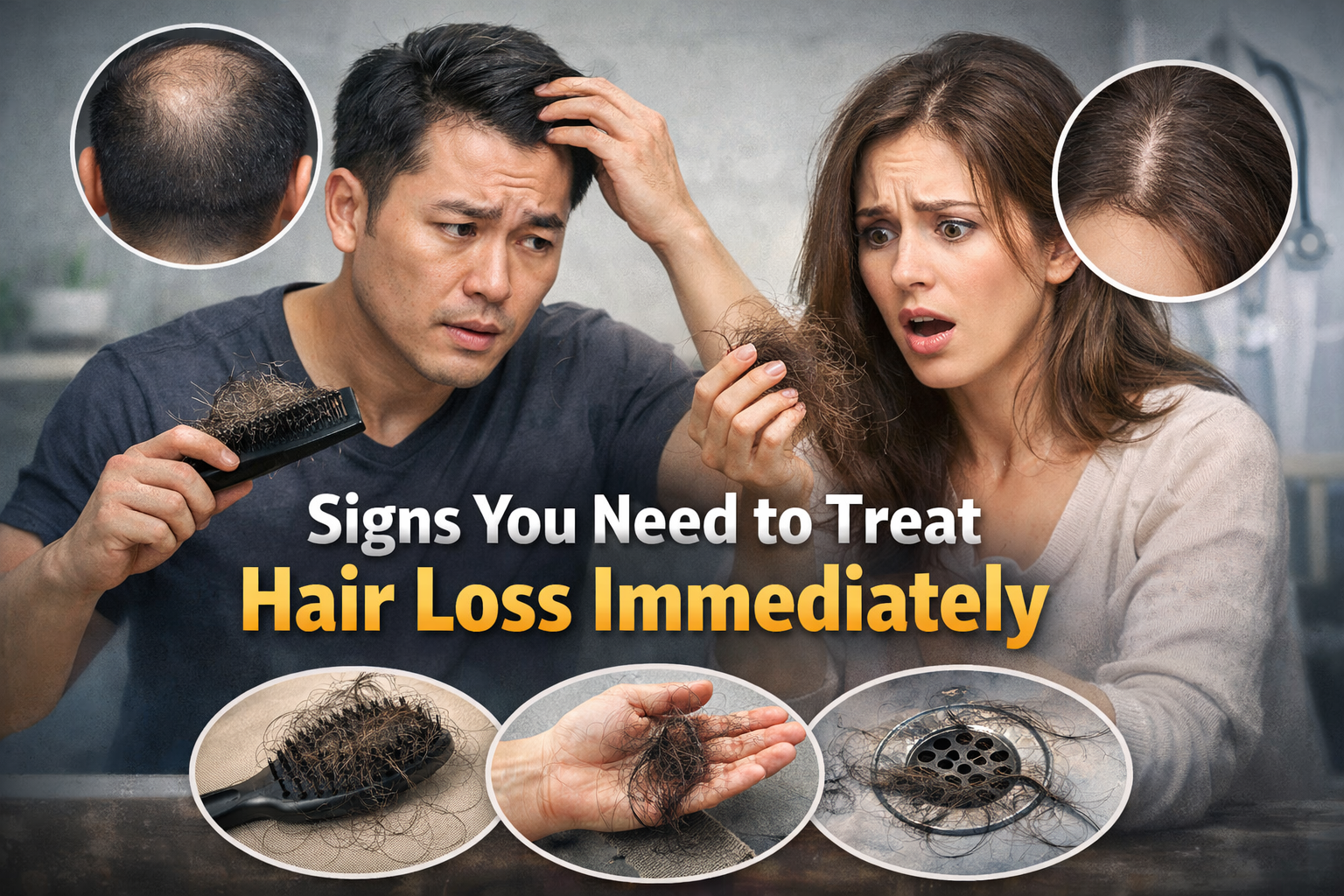
It wasn’t dramatic. No sudden clumps of hair on the pillow or alarming bald patches in the mirror. Just a subtle shift—my hairline, once something I never paid attention to, had quietly begun to retreat. At first, I brushed it off. Stress, maybe. Poor sleep. Genetics doing what genetics do.
But over time, that small change became harder to ignore.
And like so many others who find themselves on this path, I started searching—not just for solutions, but for understanding. What’s happening? Why does it happen? And more importantly… is there anything that actually works?
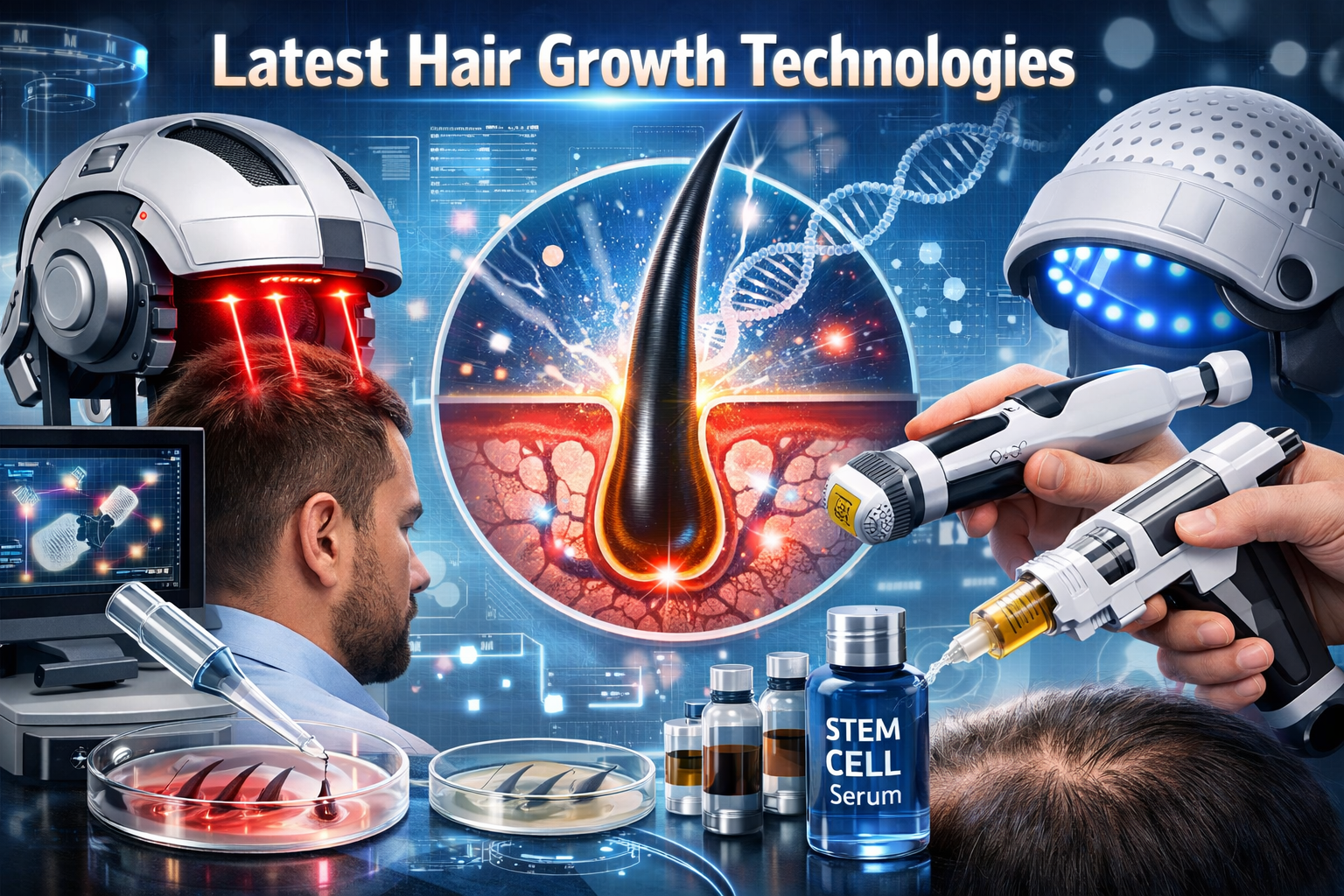
That journey led me into a fascinating world of science, technology, and innovation—one that’s evolving faster than most people realize. Hair growth is no longer just about oils, shampoos, or old-school remedies passed down through generations. Today, it’s a field driven by stem cells, artificial intelligence, regenerative medicine, and even gene editing.
Let me take you through what I discovered.
The Shift From “Cure” to “Regrowth”
For decades, the hair loss industry was stuck in a loop. Two FDA-approved treatments dominated the space: Minoxidil and Finasteride. They helped, but they weren’t perfect. Results varied. Side effects existed. And most importantly—they didn’t truly reverse hair loss in a transformative way.
What’s changed in recent years is the mindset.
Instead of asking, “How do we slow hair loss?” scientists are now asking, “How do we regenerate hair completely?”
That shift has opened the door to some of the most exciting technologies we’ve ever seen.
Stem Cell Therapy: Rebuilding From the Root
One of the most promising areas in hair restoration is stem cell therapy.
At its core, this technology taps into the body’s natural ability to repair itself. Stem cells are like blank slates—they can transform into different types of cells depending on what the body needs. In the case of hair loss, scientists are using them to regenerate hair follicles.
Imagine that: instead of trying to “save” weak follicles, we could potentially create new ones.
Some treatments involve extracting stem cells from your own fat tissue or scalp, processing them, and then injecting them back into areas experiencing hair loss. The idea is to stimulate dormant follicles and encourage new growth.
Early studies have shown promising results—thicker hair, increased density, and improved scalp health.
But it’s still early days. These treatments can be expensive, and long-term results are still being studied. Still, the potential is undeniable. For the first time, we’re not just maintaining hair—we’re rebuilding it.
Platelet-Rich Plasma (PRP): Healing With Your Own Blood
If stem cell therapy sounds futuristic, PRP is already here—and gaining popularity fast.
The process is surprisingly simple. A small amount of your blood is drawn, spun in a centrifuge to isolate platelet-rich plasma, and then injected into the scalp. These platelets are packed with growth factors that promote healing and regeneration.
When applied to the scalp, they can:
- Stimulate hair follicles
- Improve blood supply
- Extend the growth phase of hair
I remember feeling skeptical when I first read about it. The idea of using your own blood to regrow hair sounded almost too strange to be effective. But the science checks out—and many dermatologists now recommend PRP as part of a comprehensive treatment plan.
It’s not a miracle cure, but for many people, it’s a noticeable upgrade from traditional options.
Low-Level Laser Therapy (LLLT): Light as Medicine
At some point during my research, I stumbled across something that felt straight out of science fiction: using light to grow hair.
Low-Level Laser Therapy (LLLT) uses red light wavelengths to stimulate hair follicles. Devices range from laser caps and helmets to handheld combs. The idea is that the light penetrates the scalp, increasing cellular activity and improving blood flow.
What’s interesting is that LLLT isn’t just theoretical—it’s FDA-cleared and backed by multiple studies showing moderate improvements in hair density.
But here’s the catch: consistency matters.
You can’t just use it once and expect results. It requires regular sessions over several months. And while it’s non-invasive and painless, patience becomes part of the process.
Still, for those who prefer a drug-free approach, it’s an appealing option.
Hair Cloning: The Dream of Unlimited Hair
If there’s one technology that feels like the holy grail of hair restoration, it’s hair cloning.
The concept is simple—but revolutionary. Scientists take a small number of healthy hair follicles, multiply them in a lab, and then implant them back into the scalp. In theory, this could mean an unlimited supply of hair.
No more worrying about donor areas. No more limitations.
I remember reading about this and thinking, This is it. This is the future.
And it might be.
Researchers in countries like Japan and the United States are making steady progress. Companies are developing ways to culture dermal papilla cells—the key players in hair follicle formation—and reintroduce them into the scalp.
But the challenge lies in precision. Hair growth isn’t just about creating follicles—it’s about making them grow in the right direction, at the right angle, and with the right texture.
We’re close, but not quite there yet.
Still, the fact that this is even possible says a lot about how far we’ve come.
AI and Personalized Hair Care
Another surprising development in hair growth technology is the role of artificial intelligence.
At first glance, AI might not seem related to hair loss. But dig a little deeper, and it starts to make sense.
AI can analyze:
- Scalp conditions
- Hair density
- Genetic predispositions
- Lifestyle factors
Using this data, it can recommend highly personalized treatment plans—combining medications, therapies, and lifestyle changes tailored to the individual.
Some apps even allow users to track hair growth progress through photos, providing insights and adjustments over time.
What used to be guesswork is becoming data-driven.
And that changes everything.
Exosome Therapy: Tiny Messengers, Big Impact
One of the newer names in the field is exosome therapy.
Exosomes are tiny particles released by cells that act as messengers, carrying proteins and genetic material between cells. In hair restoration, they’re used to signal hair follicles to regenerate and grow.
Compared to PRP, exosomes are considered more potent and targeted. They don’t just stimulate—they communicate.
Some clinics are already offering exosome treatments, often combined with microneedling or PRP for enhanced effects.
But like many cutting-edge therapies, it comes with a big question mark: long-term safety and effectiveness.
Still, it’s another example of how deeply science is diving into the mechanics of hair growth.
Gene Editing: Rewriting the Future
This is where things get truly mind-blowing.
Gene editing technologies like CRISPR are being explored as a way to address the root causes of hair loss at the genetic level.
Imagine being able to “turn off” the genes responsible for pattern baldness.
It’s not science fiction—it’s a real area of research.
Of course, it comes with ethical and technical challenges. Gene editing is still a sensitive topic, and applying it to cosmetic conditions raises important questions.
But if successful, it could redefine not just hair restoration—but how we approach genetic conditions altogether.
The Emotional Side of Hair Loss
Somewhere along this journey, I realized something important.
Hair loss isn’t just physical.
It’s emotional. Psychological. Sometimes even deeply personal.
It affects confidence, identity, and the way we see ourselves in the mirror.
And while technology is advancing rapidly, there’s still no one-size-fits-all solution. What works for one person might not work for another.
That can be frustrating.
But it also means there’s hope—more options, more paths, more chances to find something that works.
So… What Actually Works?
After exploring all these technologies, I found myself coming back to a simple question:
What should someone actually do?
The honest answer is this:
Start simple. Build gradually.
- Consult a professional
- Understand your specific type of hair loss
- Combine treatments when appropriate
- Be patient and consistent
The most effective approaches today often combine multiple methods—like PRP with LLLT, or medication with microneedling.
It’s less about finding a miracle cure and more about creating a strategy.
Looking Ahead
If there’s one thing I’ve learned, it’s that we’re standing at a turning point.
Hair restoration is no longer stuck in the past. It’s evolving—fast.
Technologies that once sounded impossible are now in clinical trials. Treatments that seemed experimental are becoming mainstream.
And while we may not have a perfect solution yet, we’re closer than we’ve ever been.
Final Thoughts
That first moment I noticed my hair changing—it felt small, almost insignificant.
But it led me down a path I didn’t expect. A path filled with science, discovery, and a deeper understanding of how much innovation is happening behind the scenes.
Hair growth technology isn’t just about appearance.
It’s about confidence. Identity. And the quiet, persistent human desire to hold onto a part of ourselves that feels deeply personal.
And maybe, just maybe, the future holds more than just hope.
Maybe it holds answers.