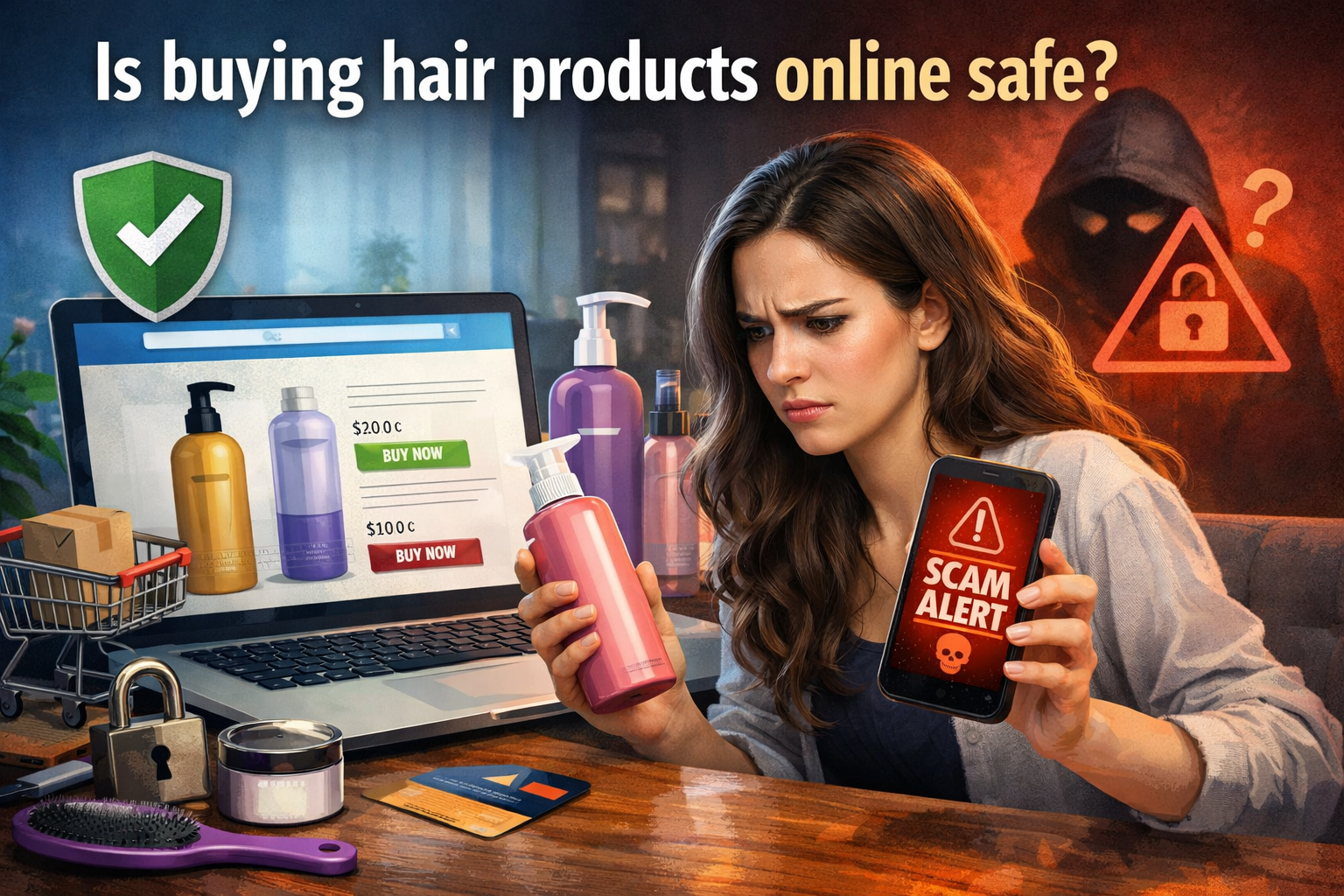
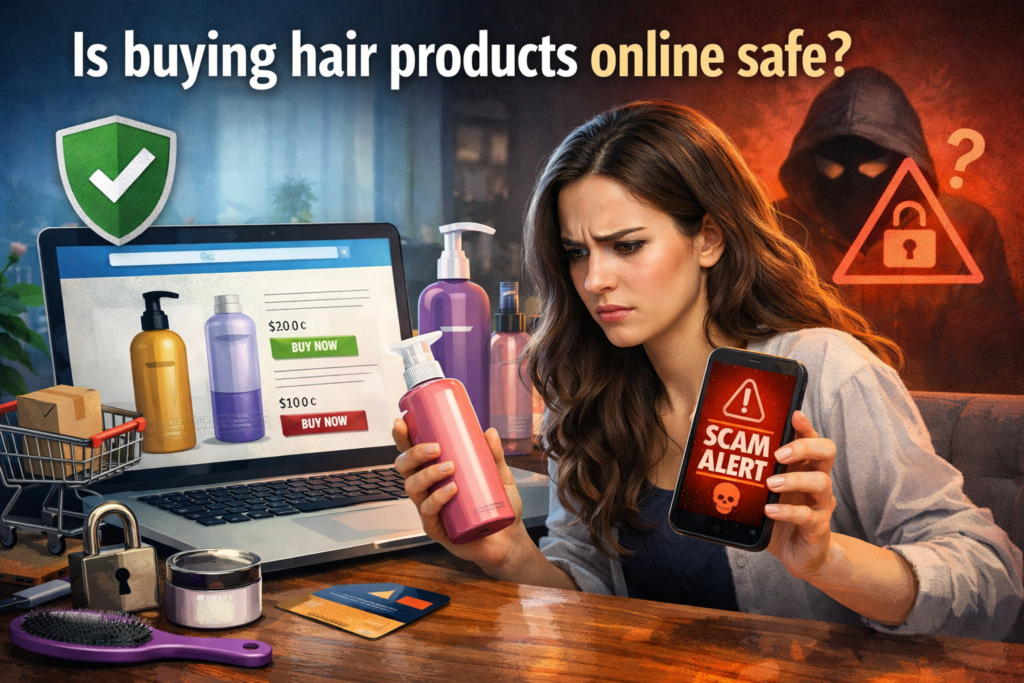
Is Buying Hair Products Online Safe?
A personal, reflective journey through trust, risk, and the quiet art of choosing well
I still remember the first time I clicked “Buy Now” on a bottle of shampoo I had never seen in real life.
It was late—one of those nights where your thoughts wander just enough to convince you that changing something small might somehow reset everything else. My hair had been feeling dull for weeks, stubborn in a way I couldn’t quite explain. A quick search led me down a rabbit hole of glowing reviews, before-and-after photos, and promises that felt almost too good to ignore.
“Transform your hair in just seven days.”
“Salon-quality results at home.”
“Trusted by thousands.”
At the time, those words didn’t feel like marketing. They felt like answers.
So I bought it.
The Arrival: Excitement Meets Doubt
When the package finally arrived, there was a strange mix of excitement and hesitation. The bottle looked slightly different from what I had seen online. Not dramatically so—just enough to make me pause.
The label font seemed thinner. The color, a bit off. Even the scent, when I finally opened it, didn’t match what I had imagined.
That was the moment a simple question surfaced:
Is buying hair products online actually safe?
It wasn’t just about this one purchase anymore. It was about trust—who we trust, what we trust, and why.
The Convenience That Draws Us In
There’s no denying the appeal of buying hair products online.
You can sit in your room, scroll endlessly, compare brands from different countries, read hundreds of reviews, and have everything delivered to your door. No queues. No pressure from salespeople. No rushing decisions.
It feels empowering.
Online platforms give us access to products we might never find locally—niche brands, organic formulas, trending items that seem to appear overnight. For someone curious about improving their hair care routine, it’s like stepping into a world without limits.
But convenience has a quiet way of lowering our guard.
Because when everything is just a click away, we sometimes forget to ask the questions we would normally ask in a physical store.
The Hidden Risks We Don’t Always See
After that first purchase, I started paying closer attention—not just to what I was buying, but how I was buying it.
And slowly, patterns began to emerge.
1. Counterfeit Products
One of the biggest concerns when buying hair products online is authenticity.
Not every seller is who they claim to be.
Some products look almost identical to the real thing but are made with lower-quality ingredients—or worse, unsafe ones. The differences can be subtle: a slightly altered logo, a missing batch code, packaging that feels just a bit cheaper.
But the impact can be significant.
Using counterfeit hair products can lead to dryness, irritation, or even long-term damage. And the hardest part? You might not realize what’s happening until it’s too late.
2. Misleading Reviews
Reviews are often the backbone of online shopping decisions. We trust them because they feel like real experiences from real people.
But not all reviews are genuine.
Some are overly enthusiastic in a way that feels scripted. Others are vague, offering praise without details. And occasionally, negative reviews are buried beneath a flood of positive ones.
I remember scrolling through dozens of five-star ratings, only to later discover that many of them were posted within the same short time frame.
It made me wonder: How much of what we see online is real?
3. Ingredient Transparency
In a physical store, you can pick up a product, turn it around, and read every ingredient listed on the label.
Online, that experience is different.
Sometimes, ingredient lists are incomplete. Other times, they’re presented in a way that’s hard to verify. And occasionally, they’re missing altogether.
For something as personal as hair care—where different ingredients can have very different effects—this lack of transparency matters.
Learning to Navigate the Space
Over time, I realized that buying hair products online isn’t inherently unsafe. It just requires a different kind of awareness.
It’s less about avoiding the online world altogether and more about learning how to move through it carefully.
Here’s what changed for me:
Choosing Where to Buy
I stopped focusing only on the product and started paying more attention to the seller.
Was it an official brand website? A verified retailer? Or a third-party seller with limited information?
The difference mattered more than I initially thought.
Buying directly from trusted sources reduced a lot of the uncertainty. It didn’t eliminate risk completely—but it made the experience feel more grounded.
Reading Between the Lines of Reviews
Instead of looking only at star ratings, I began reading reviews more critically.
I looked for:
- Specific details about how the product was used
- Balanced opinions (not just extreme praise or criticism)
- Consistency across multiple reviews
The goal wasn’t to find perfection—it was to find authenticity.
Starting Small
One of the simplest changes I made was also one of the most effective: I stopped committing to full-size products immediately.
Whenever possible, I chose smaller sizes or trial versions first.
It gave me space to test how my hair responded without fully committing. And if something didn’t work, the loss felt manageable.
The Emotional Side of Online Buying
What surprised me the most wasn’t just the practical side of online shopping—it was the emotional side.
Buying hair products isn’t just about appearance. It’s often tied to confidence, identity, and how we feel about ourselves.
When something works, it can feel like a small victory.
When it doesn’t, it can feel disproportionately disappointing.
Online shopping amplifies this experience.
The expectations are higher. The promises are bigger. And the gap between what we imagine and what we receive can feel wider.
That’s why it’s important to approach it with a certain level of realism.
Not every product will be transformative. Not every review will reflect your experience. And that’s okay.
When Online Shopping Works Beautifully
Despite the risks, there have been moments where buying hair products online felt genuinely rewarding.
I discovered a conditioner from a small brand I had never heard of—one that wasn’t available in local stores. It didn’t promise dramatic results. It didn’t have thousands of reviews.
But it worked.
Not in a life-changing way, but in a consistent, reliable way that made my hair feel healthier over time.
And that, I realized, was enough.
Online shopping, at its best, isn’t about chasing perfection. It’s about expanding your options and finding what works for you—at your own pace.
A Quiet Balance
So, is buying hair products online safe?
The answer isn’t a simple yes or no.
It’s a balance.
It’s about understanding that convenience comes with responsibility. That trust should be built, not assumed. And that a little caution can go a long way.
If you approach it thoughtfully—choosing reliable sellers, reading carefully, and managing expectations—it can be a safe and even enjoyable experience.
But if you rush in, guided only by flashy promises and surface-level impressions, the risks become much more real.
Looking Back
That first bottle of shampoo I bought?
I used it a few times before setting it aside.
Not because it was terrible—but because it didn’t feel right. And sometimes, that’s reason enough.
Since then, I’ve made better choices. Not perfect ones, but more informed ones.
And maybe that’s what this whole process is really about.
Not avoiding mistakes entirely, but learning from them—slowly building a sense of what works, what doesn’t, and who to trust along the way.
In the end, buying hair products online is a bit like navigating any unfamiliar space.
At first, everything feels uncertain.
But with time, attention, and a willingness to question what you see, it becomes something you can move through with confidence.
Not blindly—but thoughtfully.
And that makes all the difference.