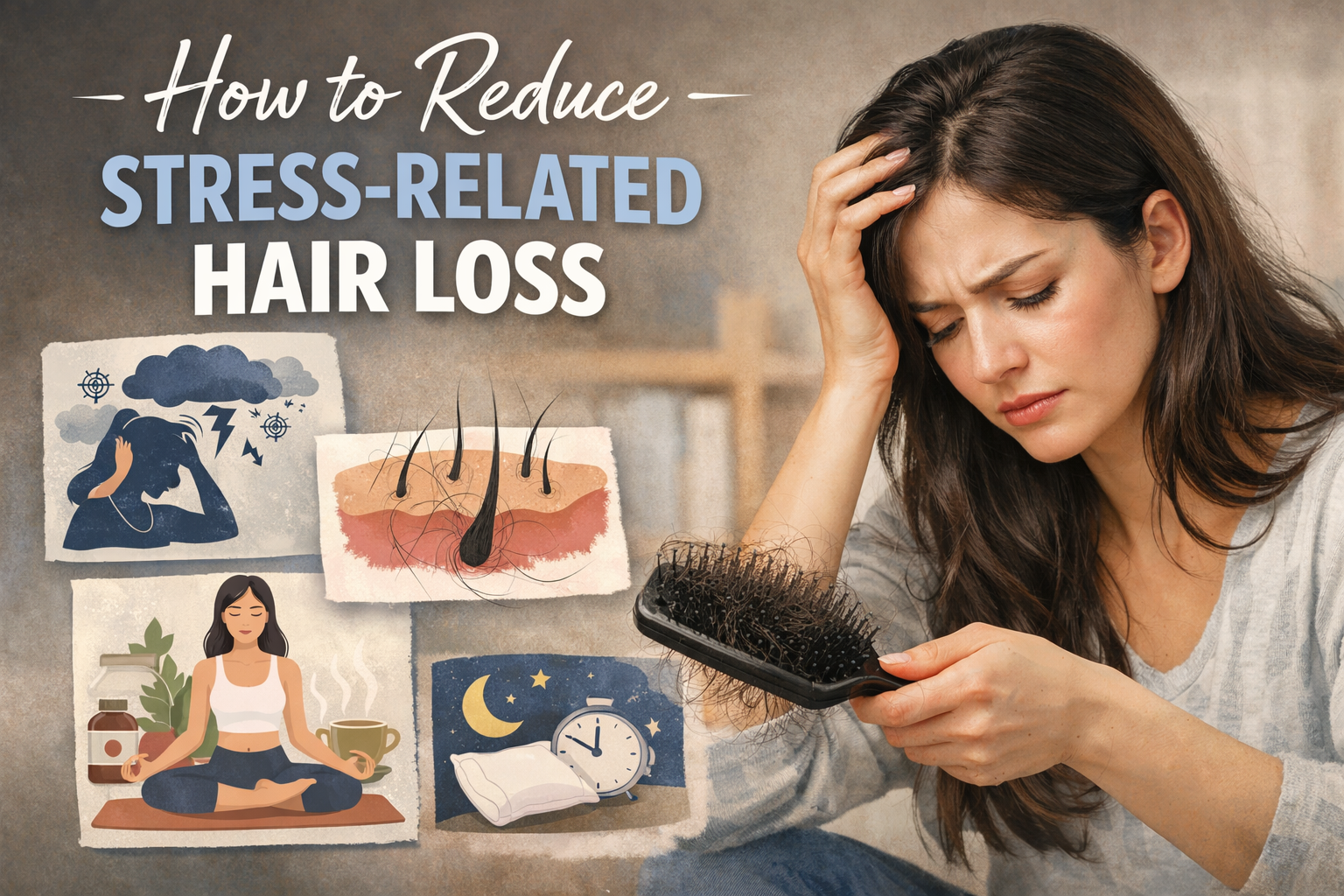
How to Reduce Stress-Related Hair Loss
I didn’t realize I was stressed.
Not in the way people usually describe it.
I wasn’t overwhelmed every second.
I wasn’t constantly anxious.
I was just… busy.
Thinking a lot.
Sleeping a little less.
Carrying more than I noticed.
And somehow, that became normal.
When “Normal” Isn’t Balanced
That’s the strange thing about stress.
It doesn’t always feel like stress.
It feels like routine.
Like something you’ve adapted to.
Something you can handle.
Until your body starts responding in ways you didn’t expect.
The First Sign That Something Was Off
For me, it wasn’t my mood.
It wasn’t my energy.
It was my hair.
More strands falling.
More than usual.
More than I could ignore.
And that made me pause.
Because nothing else had changed.
Or at least, that’s what I thought.
The Connection I Didn’t See
I didn’t connect stress to hair loss at first.
They felt unrelated.
One was emotional.
The other was physical.
But the body doesn’t separate things that way.
Everything is connected.
And stress affects more than you feel—it affects how your body functions.
What Stress Actually Does
Stress doesn’t just exist in your mind.
It affects your system.
Hormones shift.
Recovery slows.
Balance changes.
And those shifts influence the hair growth cycle.
Not instantly.
But over time.
When Hair Enters the Shedding Phase
At some point, more hairs move into the shedding phase.
Not because something is broken—
But because your body is responding to stress.
And that response shows up later.
Which makes it harder to connect cause and effect.
The Delay That Confuses Everything
This was one of the hardest parts.
The hair loss didn’t happen when I felt stressed.
It happened weeks later.
When things felt calmer.
Which made it confusing.
Because the cause didn’t feel present anymore.
When You Try to Fix the Surface
At first, I focused on my hair.
Products.
Routines.
Trying to stop the shedding.
But nothing changed.
Because I wasn’t addressing the cause.
The Shift Toward Understanding
Eventually, I stopped asking:
“What can I put on my hair?”
And started asking:
“What is my body going through?”
And that shift changed everything.
You Don’t Remove Stress—You Reduce Its Impact
This was important.
You can’t eliminate stress completely.
That’s not realistic.
But you can reduce how it affects you.
And that makes a difference.
Small Changes That Add Up
I didn’t make dramatic changes.
I made small ones.
Going to bed a little earlier.
Taking breaks during the day.
Stepping away from constant thinking.
Nothing extreme.
Just consistent.
The Role of Rest
Rest became more important than I expected.
Not just sleep—
But moments of pause.
Moments where I wasn’t doing anything.
And those moments helped my body reset.
When You Slow Down, Even Slightly
Slowing down didn’t fix everything.
But it created space.
Space for recovery.
Space for balance.
And over time, that space mattered.
The Physical Side of Relaxation
I started doing simple things.
Walking.
Breathing more intentionally.
Letting my body release tension.
Not because it directly “stops” hair loss—
But because it reduces the pressure behind it.
The Way You Think Matters Too
Stress isn’t just external.
It’s also internal.
How you think.
How you respond.
And becoming aware of that helped me reduce unnecessary tension.
The Mistake of Expecting Immediate Change
Even after reducing stress, the hair loss didn’t stop immediately.
And that was frustrating.
But then I understood—
There’s a delay.
Just like stress takes time to affect hair, recovery takes time too.
The Waiting That Feels Uncertain
There was a period where I wasn’t sure if anything was working.
The shedding continued.
The changes weren’t visible yet.
And that uncertainty was hard.
The First Signs of Stabilization
Then, slowly, something shifted.
The shedding reduced.
Not suddenly.
But gradually.
And that change felt significant.
Because it showed that the process was reversing.
You’re Not Fixing Hair—You’re Calming the System
That was the realization that stayed with me.
I wasn’t fixing my hair directly.
I was calming the system that supports it.
And my hair responded to that.
You Don’t Need Perfect Balance
Life doesn’t become stress-free.
That’s not the goal.
The goal is balance.
Enough rest.
Enough recovery.
Enough awareness.
You’re Not Failing—You’re Adjusting
Experiencing stress-related hair loss doesn’t mean you did something wrong.
It means your body responded to pressure.
And now, you’re learning how to reduce that pressure.
So, How Do You Reduce Stress-Related Hair Loss?
Not by focusing only on your hair—
But by supporting your body:
More consistent sleep
Moments of rest
Reducing mental overload
Gentle physical activity
Balanced daily habits
Each one small.
But together, effective.
You’re Not Powerless—You’re Influential
You can’t control everything.
But you can influence how your body responds.
And that influence matters.
Final Thought
Stress-related hair loss doesn’t come from one moment.
It builds.
Quietly.
Gradually.
And recovery works the same way.
It doesn’t happen all at once.
It unfolds.
Through small changes.
Through consistent support.
Until one day, you notice something different.
Not just in your hair—
But in how your body feels.
More balanced.
More stable.
And sometimes, that’s where real recovery begins.
Not in what you add—
But in what you allow yourself to release.