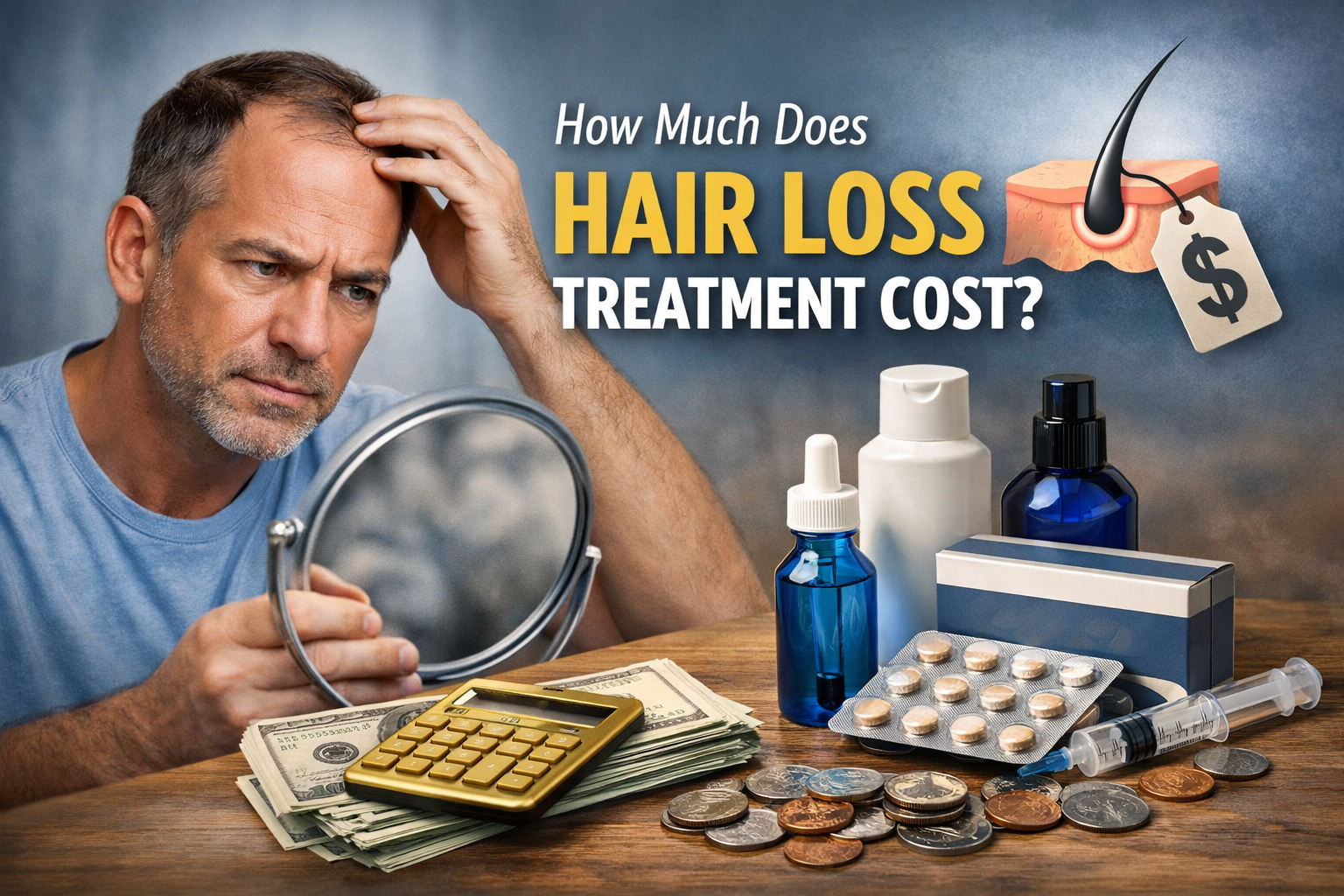
How Much Does Hair Loss Treatment Cost?
A personal journey through choices, costs, and quiet realizations
I didn’t start by asking how much hair loss treatment cost.
If I’m being honest, I started by pretending I didn’t need it.
It began subtly—just a few extra strands on my pillow, a slightly wider part in the mirror, a hesitation before stepping under bright lights. Nothing dramatic. Nothing that demanded immediate attention. At least, that’s what I told myself.
But time has a way of making quiet things louder.
One morning, as I stood in front of the mirror longer than usual, I realized I wasn’t just looking at my hair. I was measuring change. And somewhere between denial and curiosity, a question finally surfaced:
“If I do something about this… how much is it going to cost me?”
The First Search: Numbers Without Context
Like most people, I turned to the internet.
The numbers came quickly—almost too quickly.
- $20 per month
- $50 per month
- $300 per session
- $5,000… $10,000… even more
At first glance, it felt overwhelming. The range was so wide that it almost seemed meaningless. Was hair loss treatment cheap? Expensive? Somewhere in between?
What I didn’t realize at the time was this:
The cost isn’t just about money. It’s about the type of commitment you’re willing to make—with your time, your patience, and your expectations.
The Low-Cost Beginning: Hope in Small Bottles
I started small.
A bottle. A foam. Something topical that promised results over time. It was affordable—around $20 to $60 a month. It felt safe, almost casual, like dipping a toe into the water instead of diving in.
At first, there was excitement. A routine formed. Every morning, every night, I applied it carefully, as if consistency alone could guarantee change.
And in a way, it did change something—not just my hair, but my mindset.
I became more aware. More observant. Every strand that stayed felt like a victory. Every strand that fell felt personal.
But the real lesson came later:
Affordable treatments often require the most patience.
Months passed before anything noticeable happened. And even then, the results were subtle—less loss, maybe a bit more density, but nothing dramatic.
It wasn’t disappointing. But it wasn’t transformative either.
Stepping Forward: Prescription Treatments
Eventually, I wanted something stronger. Something that felt more… decisive.
That’s when I explored prescription options. These came with a slightly higher cost—anywhere from $30 to $100 per month, depending on the medication and consultation fees.
But the real difference wasn’t just the price. It was the sense of seriousness.
Taking a prescription felt like crossing a line—from experimenting to committing.
There’s something psychological about that. When you invest more, you expect more. And with that expectation comes a quiet pressure.
I remember wondering:
“What if this doesn’t work either?”
Because that’s the hidden cost no one talks about—the emotional investment. The hope you attach to each step forward.
Still, for many people, this stage offers noticeable improvement. Slower hair loss. Sometimes regrowth. A sense that you’re no longer passive, but actively responding.
And sometimes, that alone is worth the price.
The Mid-Range World: Treatments and Therapies
Not all solutions come in bottles or pills.
At some point, I came across treatments that sounded more advanced—laser therapy, PRP (platelet-rich plasma), clinic-based procedures. These weren’t daily habits; they were scheduled interventions.
And they came with a different kind of cost:
- Laser therapy devices: $200 – $1,000 (one-time)
- PRP sessions: $300 – $1,500 per session
- Multiple sessions required
This was the moment where the question changed from
“Can I afford this?”
to
“Is this worth it for me?”
Because these treatments weren’t just about money—they were about belief.
Belief that something more intensive would bring better results. Belief that investing more would somehow accelerate the process.
I tried one of these options—not out of desperation, but curiosity.
Sitting in that clinic, under bright, clinical lights, I realized something unexpected:
Hair loss treatment is not just a physical process. It’s deeply psychological.
You’re not just paying for results. You’re paying for reassurance. For control. For the feeling that you’re doing everything you can.
The High-End Option: Hair Transplant Surgery
And then, there’s the option most people think about—but often hesitate to pursue.
Hair transplant surgery.
It’s the most direct solution. The most visible. And, unsurprisingly, the most expensive.
- $4,000 to $15,000+ depending on the procedure
When I first saw those numbers, I immediately dismissed it. It felt too extreme, too permanent, too… final.
But over time, I began to understand why people choose it.
Because unlike other treatments, a transplant doesn’t ask for daily patience. It offers a more immediate, tangible transformation.
Of course, it comes with its own considerations—recovery time, risks, the need for ongoing care. And yes, even after spending thousands, maintenance treatments are often still necessary.
That was the part that surprised me most.
There is no single “final” solution.
Only different paths, each with its own costs—financial and otherwise.
The Hidden Costs No One Mentions
If you only look at price tags, you’ll miss the bigger picture.
Because hair loss treatment comes with hidden costs that don’t show up on any invoice:
- Time – daily routines, clinic visits, months (or years) of waiting
- Consistency – missing a few weeks can undo months of effort
- Uncertainty – not every treatment works for everyone
- Emotional energy – hope, doubt, frustration, and everything in between
I remember one particular evening, months into my journey, when I realized I had spent more time thinking about my hair than actually living my day.
That was a turning point.
Not because I stopped caring—but because I started seeing the full cost more clearly.
So… How Much Does It Really Cost?
If you’re looking for a simple answer, here it is:
- Basic treatments: $20 – $100/month
- Intermediate options: $200 – $1,500+
- Surgical solutions: $4,000 – $15,000+
But if you’re asking a deeper question—what does it really cost?—the answer is more complex.
It costs attention.
It costs patience.
It costs a willingness to navigate uncertainty.
And sometimes, it costs the realization that no solution is perfect.
A Personal Reflection
Looking back, I don’t regret the money I spent.
Not because every treatment worked—but because each step taught me something.
I learned that effectiveness isn’t always immediate.
That consistency matters more than intensity.
That sometimes, the smallest improvements feel the most meaningful.
And perhaps most importantly, I learned that hair loss—like many things in life—is not just about fixing a problem.
It’s about how you choose to respond to change.
Finding Your Own Balance
If you’re at the beginning of this journey, asking the same question I once did, here’s what I’d say:
Start simple.
Understand your options.
Be honest about your expectations.
Don’t rush into the most expensive solution just because it promises faster results. And don’t dismiss affordable options just because they seem slow.
Because in the end, the “right” cost isn’t about the highest price or the lowest.
It’s about what feels sustainable—for you.
There’s a quiet moment that comes after all the research, all the decisions, all the treatments.
A moment where you stop constantly checking, stop analyzing every detail, and simply… exist.
For me, that moment didn’t come from a single product or procedure.
It came from understanding that while hair loss may be about appearance, the journey through it is something much deeper.
And in that sense, the question was never just:
“How much does it cost?”
But rather:
“What am I willing to invest—and what am I hoping to find in return?”