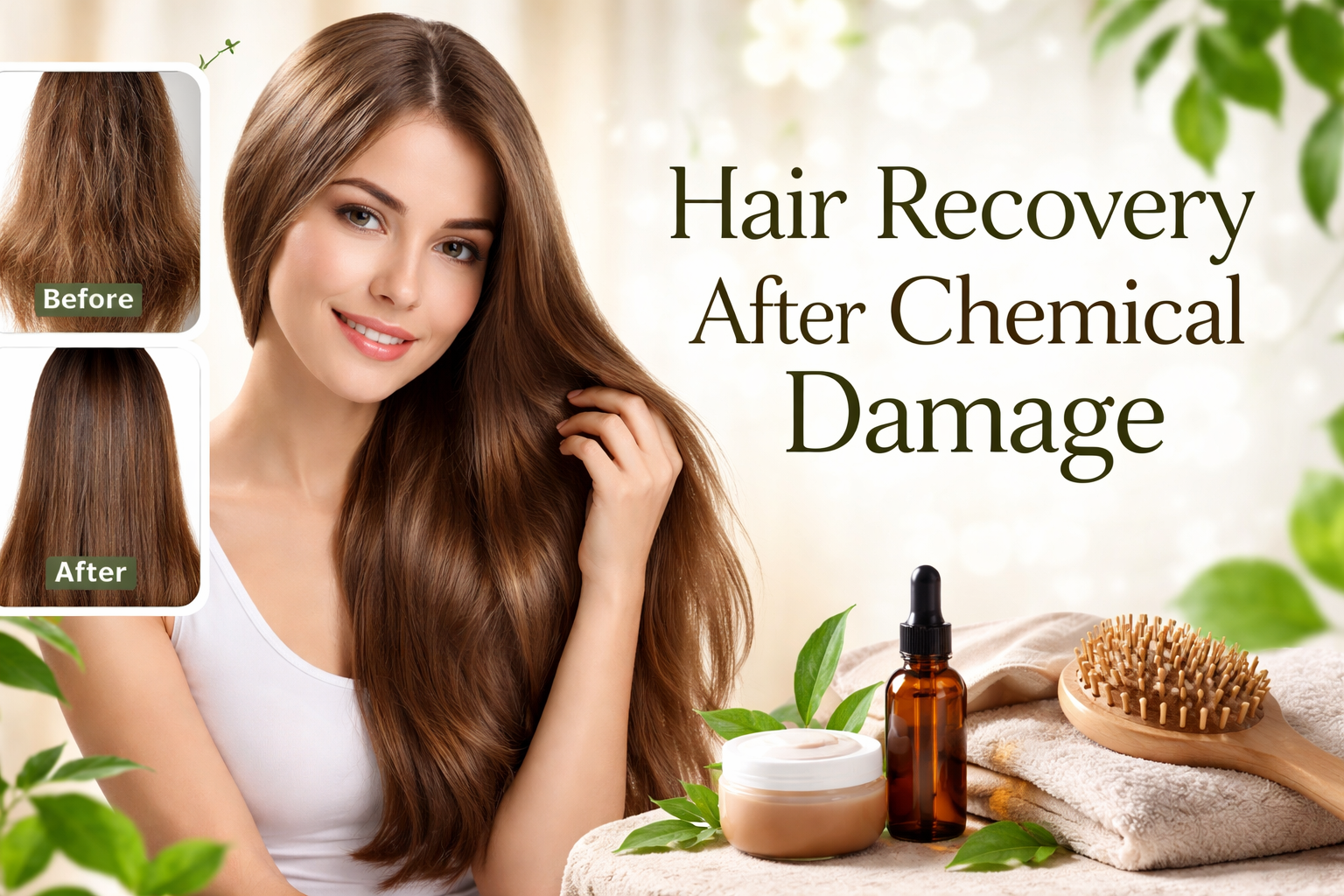
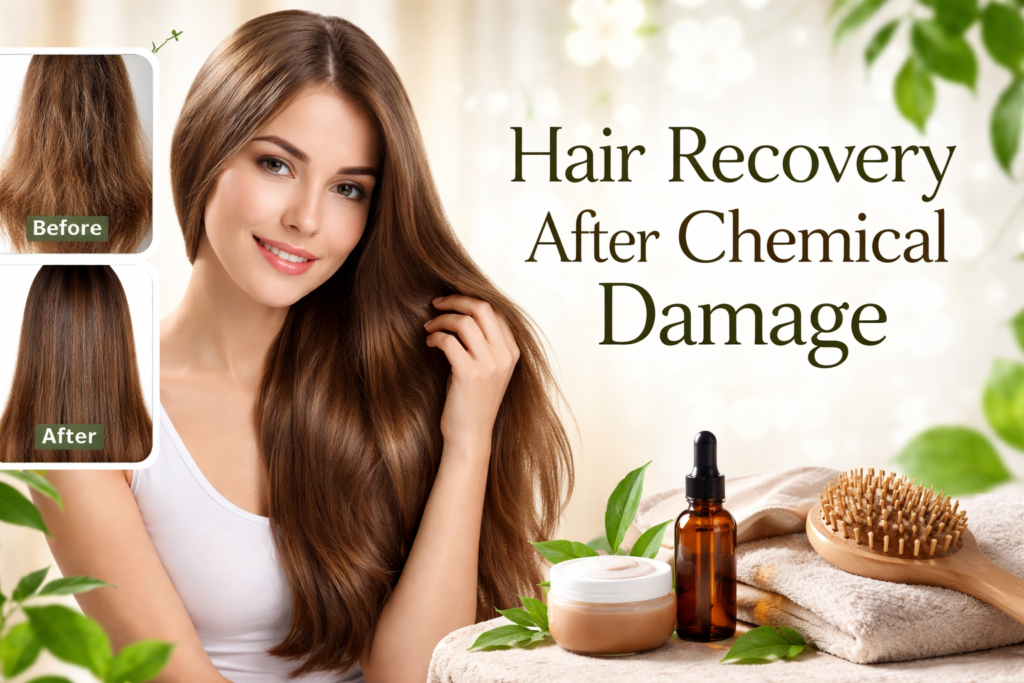
Hair Recovery After Chemical Damage: A Personal Journey Back to Life
I still remember the day I realized my hair wasn’t “just dry” anymore.
It was a quiet afternoon, the kind where sunlight slips lazily through the window and everything feels a little too still. I stood in front of the mirror, holding a strand of my hair between my fingers. It stretched—literally stretched—before snapping. Not cleanly, not neatly, but in that unsettling, uneven way that tells you something deeper is wrong.
That was the moment it hit me: my hair wasn’t just tired. It was damaged. Chemically damaged.
And honestly, I hadn’t seen it coming.
How It All Started
Like many people, my relationship with my hair had always been emotional. Hair isn’t just hair—it’s identity, confidence, expression. At least, that’s how it felt to me.
It started with something simple: a desire for change.
A lighter color. A softer texture. A more “put-together” version of myself.
So I dyed it. Then I straightened it. Then I dyed it again because the color wasn’t quite right. Then came the treatments—relaxers, toners, heat styling, and a steady cycle of “just one more time.”
At first, everything looked fine. Actually, more than fine. My hair looked amazing. Shiny. Smooth. Exactly what I had imagined.
But underneath that surface, something was slowly breaking down.
The Slow Decline
Chemical damage doesn’t always happen overnight. That’s what makes it tricky.
At first, it’s subtle:
- Your hair feels a bit drier than usual.
- It tangles more easily.
- It doesn’t hold styles the way it used to.
You brush it off. You tell yourself it just needs a deep conditioner. Maybe a trim.
But then it gets worse.
For me, the turning point came when my hair stopped behaving like hair.
It became:
- Brittle
- Elastic in a weird, unhealthy way
- Frizzy no matter what I did
- Prone to breakage even when I was being gentle
Running my fingers through it no longer felt comforting. It felt like walking through something fragile, something that could fall apart at any second.
And in many ways, it was.
Facing the Truth
The hardest part wasn’t the damage itself—it was admitting how I got there.
I had ignored the signs. I had pushed my hair beyond its limits. I had chosen quick results over long-term health.
And now, I had to deal with the consequences.
I remember sitting on my bed one evening, scrolling through photos of my hair from months earlier. It looked so different—fuller, softer, alive.
I won’t lie. It stung.
But that moment also became a turning point.
Because instead of chasing what I had lost, I decided to focus on what I could rebuild.
Understanding Chemical Damage
Before I could fix anything, I needed to understand what had actually happened.
Hair, at its core, is made up of protein—mainly keratin. When you use chemical treatments like bleach, dye, or relaxers, they alter the structure of that protein.
Sometimes gently. Sometimes… not so gently.
Repeated treatments can:
- Break down the hair’s protein bonds
- Strip away natural moisture
- Lift and damage the cuticle (the outer protective layer)
When that happens, hair loses its strength, elasticity, and resilience.
It’s like a rope that’s been worn down fiber by fiber. At some point, it can’t hold together anymore.
That’s where I was.
Letting Go of Quick Fixes
At first, I tried to “fix” my hair the way I had always approached problems: quickly.
I bought products that promised instant repair. Masks that claimed to reverse damage in one use. Oils that said they would “restore everything overnight.”
Some of them helped—temporarily.
But nothing truly changed.
That’s when I realized something important:
Hair recovery isn’t about quick fixes. It’s about consistency, patience, and respect for your hair’s limits.
That shift in mindset changed everything.
The Beginning of Recovery
I didn’t do anything dramatic at first. No big chop. No overnight transformation.
Instead, I started small.
1. I Stopped the Damage
This sounds obvious, but it’s the most important step.
I paused all chemical treatments.
No dye. No bleach. No harsh processing.
It felt strange at first—like I was giving up part of my routine, part of my identity. But it also felt… relieving.
For the first time in a while, I wasn’t asking my hair to change. I was giving it space to recover.
2. I Learned to Be Gentle
I used to treat my hair like it was stronger than it actually was.
Brushing it aggressively. Tying it tightly. Using heat without much thought.
That had to change.
So I started:
- Using a wide-tooth comb
- Detangling slowly, starting from the ends
- Avoiding tight hairstyles
- Reducing heat styling as much as possible
It wasn’t glamorous. But it made a difference.
3. I Focused on Moisture and Protein Balance
One of the biggest lessons I learned was that damaged hair needs both moisture and protein—but in the right balance.
Too much moisture, and hair can feel mushy and weak.
Too much protein, and it can become stiff and brittle.
So I paid attention.
I noticed how my hair felt after each treatment. I adjusted. I experimented—carefully.
And over time, I started to understand what my hair needed.
The Emotional Side of Recovery
What surprised me most wasn’t the physical process—it was the emotional one.
Recovering from chemical damage isn’t just about hair. It’s about patience, self-image, and letting go of unrealistic expectations.
There were days I felt frustrated.
Days when my hair didn’t cooperate.
Days when I compared it to how it used to look—or how other people’s hair looked.
But slowly, something shifted.
I stopped seeing my hair as a problem to fix.
And started seeing it as something to care for.
Progress Isn’t Always Obvious
One of the hardest parts of this journey was how slow everything felt.
Hair doesn’t heal overnight. In fact, damaged hair doesn’t “heal” in the traditional sense—it grows out.
That means recovery is a mix of:
- Protecting what you have
- Improving its condition
- And waiting for healthier hair to grow in
At first, it felt like nothing was happening.
But then I noticed small changes:
- Less breakage in the shower
- Slightly smoother texture
- Ends that didn’t look as frayed
They weren’t dramatic. But they were real.
And they added up.
The Role of Trimming
This was something I resisted for a long time.
Cutting my hair felt like losing progress.
But the truth is, holding onto severely damaged ends can prevent your hair from looking and feeling healthier.
So I started trimming—just a little at a time.
Not all at once. Not drastically.
Just enough to remove the worst damage.
And with each trim, my hair felt lighter. Stronger. More manageable.
It wasn’t about losing length.
It was about gaining health.
Redefining “Healthy Hair”
Before all of this, I thought healthy hair meant:
- Perfect shine
- Zero frizz
- Always styled
Now, my definition has changed.
Healthy hair is:
- Strong enough to resist breakage
- Flexible without snapping
- Soft without feeling weak
- Able to exist naturally, without constant correction
It’s not about perfection.
It’s about resilience.
What I Wish I Knew Earlier
Looking back, there are so many things I wish I had understood before my hair reached that point.
I wish I had known that:
- Just because your hair looks good after a treatment doesn’t mean it’s healthy
- Damage can build up slowly, even when everything seems fine
- Giving your hair breaks is just as important as styling it
- Patience matters more than perfection
But at the same time, I don’t regret the journey.
Because it taught me something I wouldn’t have learned otherwise:
How to listen.
Where I Am Now
My hair isn’t “perfect” now.
It still has its moments. Its challenges.
But it’s stronger. Softer. More alive than it was during its worst phase.
And more importantly, my relationship with it has changed.
I no longer chase trends or quick transformations.
I pay attention. I adapt. I respect its limits.
And in return, it feels like my hair is finally working with me, not against me.
Final Thoughts
Recovering from chemical damage isn’t easy.
It takes time, patience, and a willingness to let go of instant results.
But it’s also deeply rewarding.
Because somewhere along the way, it stops being just about hair.
It becomes about care.
About understanding.
About learning that sometimes, the best thing you can do isn’t to push harder—but to slow down.
And if you’re in that place right now—standing in front of the mirror, wondering what went wrong—I want you to know this:
Recovery is possible.
Not overnight. Not perfectly.
But step by step, strand by strand, it does get better.
You just have to give it the time—and the kindness—it deserves.