Hair Loss Treatment Plan That Actually Works: A Personal Journey to Regrowth and Confidence
I still remember the first time I noticed it.
It wasn’t dramatic. No clumps of hair falling out in the shower, no sudden bald patch that made me panic. It was subtle—almost easy to ignore. A few extra strands on my pillow. A slightly wider part in the mirror. The feeling that my hair, once thick and full of life, was somehow… different.
At first, I told myself it was nothing. Stress, maybe. Lack of sleep. A phase. But days turned into weeks, and weeks into months—and the signs became harder to dismiss. That’s when I realized something important: ignoring hair loss doesn’t make it go away. If anything, it quietly gets worse.
So I did what most people do—I went down the rabbit hole. Articles, forums, YouTube videos, miracle products, horror stories. Everyone had a solution. Everyone promised results. And yet, the more I learned, the more confused I became.
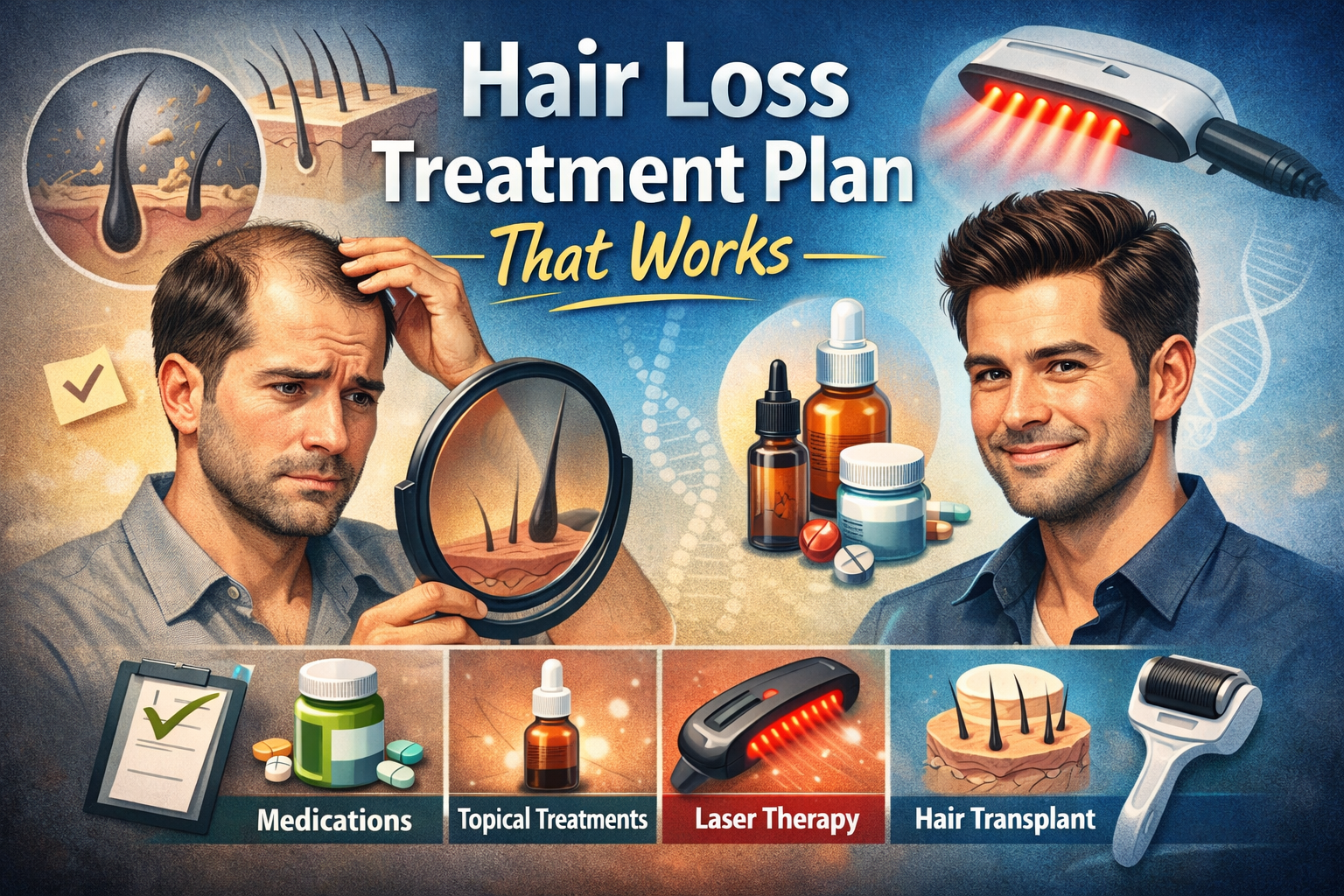
That’s why I decided to take a different approach—not chasing hype, but building a real, sustainable hair loss treatment plan that actually works.
This is that plan.
Understanding the Root Cause: Why Is Hair Falling Out?
Before jumping into treatments, I had to ask a simple question: Why is this happening?
Hair loss isn’t just one problem—it’s a symptom. And unless you understand the cause, you’re basically guessing.
Here are the most common reasons I discovered:
- Genetics (Androgenetic Alopecia): The most common cause. If hair loss runs in your family, chances are this plays a role.
- Stress: Physical or emotional stress can push hair into a resting phase, causing shedding weeks later.
- Hormonal changes: Especially during puberty, illness, or other body shifts.
- Nutritional deficiencies: Low iron, protein, vitamin D, or zinc can weaken hair.
- Poor scalp health: Inflammation, dandruff, or buildup can affect growth.
In my case, it wasn’t just one thing—it was a combination. Mild genetic predisposition mixed with stress and poor sleep habits. That realization changed everything.
Because instead of looking for a single “magic cure,” I started building a multi-layered plan.
Step 1: Fixing the Foundation (Lifestyle First)
This was the part I didn’t want to hear—but needed the most.
No treatment works well if your body isn’t functioning properly.
So I started here.
1. Sleep Like It Matters (Because It Does)
Hair growth happens in cycles, and those cycles are influenced by hormones. Poor sleep disrupts those hormones.
I made a rule:
- 7–8 hours of sleep every night
- No phone 30 minutes before bed
- Consistent sleep schedule
It wasn’t easy at first. But within weeks, I felt better—and my hair shedding slowed slightly.
2. Nutrition: Feed Your Hair
Hair is made mostly of protein. If your diet lacks it, your hair pays the price.
I focused on:
- Protein: eggs, chicken, fish, beans
- Iron: spinach, red meat (in moderation), lentils
- Healthy fats: nuts, seeds, avocado
- Vitamins: fruits and vegetables daily
I didn’t go extreme. No strict diets. Just consistency.
3. Manage Stress (Even When Life Gets Busy)
Stress doesn’t just affect your mind—it shows up physically.
I didn’t suddenly become a meditation expert. I just:
- Took short walks
- Reduced overthinking before bed
- Gave myself breaks from constant screen time
Small changes, big impact.
Step 2: Scalp Care – The Soil Matters
If your scalp isn’t healthy, your hair won’t be either.
Think of it like soil. You can plant the best seeds, but if the soil is bad, nothing grows well.
1. Gentle Cleansing
I stopped using harsh shampoos and switched to something mild.
- Washed hair 2–3 times a week
- Avoided scratching or aggressive rubbing
- Focused on cleaning the scalp, not just the hair
2. Scalp Massage
This became one of my favorite habits.
Just 5–10 minutes a day:
- Using fingertips (not nails)
- Circular motions
- Light pressure
It improves blood flow, which helps deliver nutrients to hair follicles.
And honestly, it’s relaxing too.
3. Avoiding Product Overload
Too many styling products can clog the scalp.
I simplified:
- Less gel, wax, and spray
- More natural, breathable hair days
Step 3: Evidence-Based Treatments
This is where things get more targeted.
There are countless products out there, but only a few have strong evidence behind them.
1. Minoxidil (Topical Treatment)
This is one of the most researched hair loss treatments.
- Applied directly to the scalp
- Helps stimulate hair growth and slow loss
- Works best with consistency (daily use)
Important note: results take time. Usually 3–6 months before noticeable changes.
2. Medical Consultation (When Needed)
If hair loss becomes significant, talking to a doctor or dermatologist is important.
They can:
- Confirm the cause
- Recommend appropriate treatments
- Rule out underlying conditions
This step is often overlooked—but it can save time and frustration.
Step 4: Building a Routine You Can Stick To
The biggest mistake I almost made?
Trying to do everything perfectly.
Hair regrowth isn’t about perfection—it’s about consistency.
So I created a simple routine:
Morning:
- Light scalp check
- Healthy breakfast
Evening:
- Scalp massage (5–10 minutes)
- Apply treatment (if using)
Weekly:
- Wash hair 2–3 times
- Reflect on habits (sleep, stress, diet)
Nothing complicated. Just repeatable.
Step 5: Tracking Progress (Without Obsessing)
One of the hardest parts of this journey is patience.
Hair doesn’t grow overnight. And progress can be slow.
So instead of checking the mirror every hour, I:
- Took photos once a month
- Noted shedding patterns
- Focused on long-term changes
This helped me stay realistic—and avoid unnecessary stress.
What Actually Changed Over Time
After a few months, I noticed something surprising.
Not a dramatic transformation. Not a sudden “wow” moment.
But small, meaningful changes:
- Less hair on my pillow
- Slightly thicker appearance
- More confidence when looking in the mirror
And honestly, that was enough.
Because it meant the plan was working.
Common Mistakes to Avoid
If there’s one thing I wish I knew earlier, it’s this:
Hair loss makes you vulnerable to bad advice.
Here are some mistakes to avoid:
- Jumping between treatments too quickly
- Falling for “miracle cures”
- Ignoring lifestyle factors
- Expecting instant results
- Comparing your progress to others
Hair journeys are personal. What works for one person may not work the same for another.
The Mental Side of Hair Loss
This is something people don’t talk about enough.
Hair loss isn’t just physical—it affects how you see yourself.
There were days I felt frustrated. Days I avoided mirrors. Days I overthought every detail.
But over time, I learned something important:
Taking action—even small steps—reduces anxiety.
When you have a plan, you feel more in control.
And that confidence matters just as much as the results.
Final Thoughts: What “Working” Really Means
A “working” hair loss treatment plan doesn’t mean perfect hair.
It means:
- Slowing down hair loss
- Supporting regrowth where possible
- Building habits that improve overall health
- Feeling more confident and in control
For me, this journey wasn’t just about hair.
It was about learning patience.
About taking care of my body.
About choosing consistency over quick fixes.
And maybe that’s the real lesson.
Because in the end, the goal isn’t just to fix something—it’s to build something sustainable.
If you’re at the beginning of your journey, unsure and overwhelmed, I understand.
Start simple.
Take one step.
Then another.
And give it time.
Because real results don’t come from doing everything at once—they come from doing the right things, consistently, even when progress feels slow.
And one day, you’ll look back and realize… it was worth it.