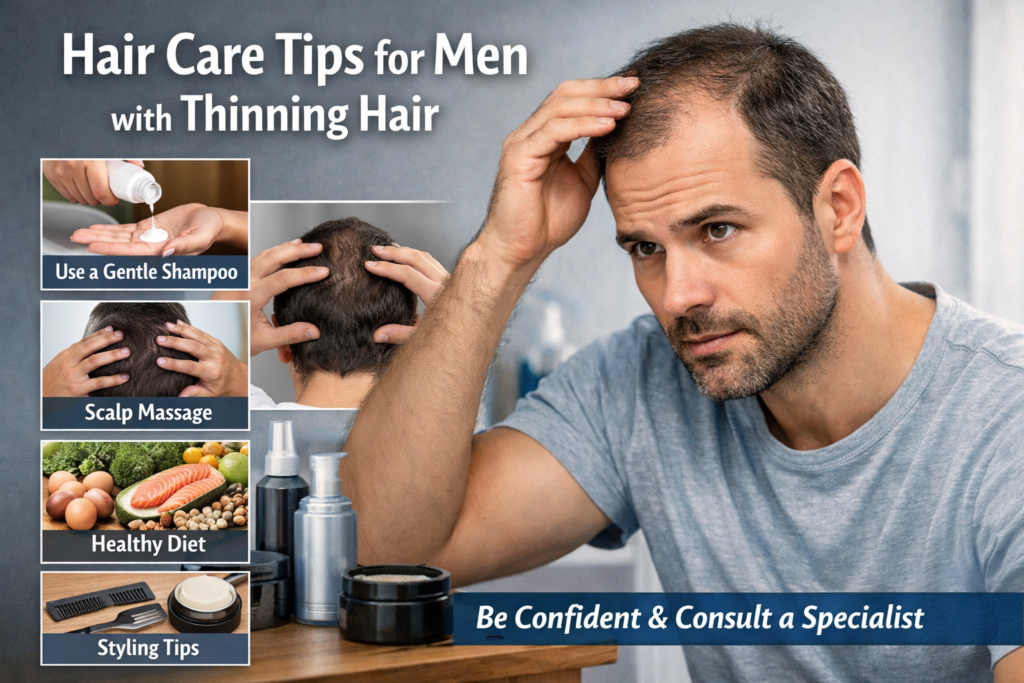
Hair Care Tips for Men with Thinning Hair
I didn’t think I would notice it this early.
Or maybe I just didn’t expect it to matter this much.
At first, it was subtle.
A little less volume.
A slightly different hairline.
Nothing dramatic—nothing that made me stop in front of the mirror for too long.
But over time, those small changes added up.
And suddenly, it wasn’t something I could ignore anymore.
The Moment It Becomes Real
There’s a moment when thinning hair stops being a possibility…
And becomes something you recognize.
Not in a single glance.
But in patterns.
Photos.
Reflections you didn’t think twice about before.
And once you see it clearly, it changes how you approach everything.
The First Instinct: Do Something—Anything
I wanted to fix it.
Immediately.
Try something.
Change something.
Because doing nothing felt like giving up.
But the more I rushed, the more I realized:
This isn’t something you fix overnight.
Thinning Hair Isn’t the Same as Hair Loss
This was one of the first things I had to understand.
Thinning hair doesn’t always mean hair is disappearing.
Sometimes it’s becoming finer.
Less dense.
Less visible.
And that difference matters.
Because it changes how you care for it.
The Way You See Your Hair Changes
I started noticing details I had never paid attention to before.
How my hair sat in different lighting.
How it looked when it was wet.
How it responded to styling.
And that awareness, while uncomfortable at first, became useful.
Because it helped me understand what I was working with.
The Mistake of Treating It Like Thick Hair
At first, I didn’t change anything.
Same routine.
Same products.
Same habits.
But thinning hair doesn’t respond the same way as thicker hair.
It needs a different approach.
Not more effort—
Just smarter care.
Keep It Light, Not Heavy
One of the biggest changes I made was switching to lighter products.
Heavy creams and conditioners made my hair flat.
Thinner.
More noticeable.
But lighter products gave it movement.
Lift.
A more natural look.
Less Product, Better Result
This felt counterintuitive.
Using less product made my hair look better.
More volume.
More texture.
More control.
Because too much product weighs thinning hair down—and makes it look even thinner.
The Right Way to Wash
I used to wash my hair without thinking.
But thinning hair needs balance.
Too much washing can dry it out.
Too little can make it flat and oily.
So I started paying attention.
Not to rules—but to response.
The Importance of the Scalp
Everything starts at the scalp.
And with thinning hair, that becomes even more important.
A healthy scalp supports better growth.
So I focused on keeping it clean, balanced, and comfortable.
Not over-treated.
Not neglected.
Haircuts Make More Difference Than You Expect
This was something I underestimated.
The right haircut changed everything.
Shorter styles.
More texture.
Less weight.
And suddenly, my hair looked fuller—not because it was thicker, but because it was styled to work with its condition.
Stop Fighting Your Hairline
At one point, I tried to hide it.
Style around it.
Force it to look the way it used to.
But that only made it more noticeable.
So I stopped fighting it.
And started working with it.
And that made a bigger difference than anything else.
Be Gentle Without Overthinking
Thinning hair is more sensitive.
More prone to breakage.
So I became more gentle.
Not obsessively—just more aware.
Less pulling.
Less aggressive styling.
And that reduced unnecessary loss.
The Role of Stress You Don’t Notice
Stress doesn’t always feel connected.
But it is.
Because it affects your body.
And your body affects your hair.
So managing stress—even slightly—became part of the process.
You’re Not Just Styling—You’re Managing
That was the shift.
Hair care stopped being just about appearance.
It became about management.
Understanding.
Adapting.
The Trap of Comparing Yourself to Others
It’s easy to compare.
To look at others with thicker hair.
Stronger hairlines.
But that comparison doesn’t help.
Because your hair is your own.
And it needs its own approach.
You’re Not Losing Everything
This was important.
Thinning doesn’t mean gone.
It means changing.
And change can be managed.
The First Signs of Improvement
The changes weren’t dramatic.
But they were noticeable.
Hair looked fuller.
More controlled.
Less flat.
And that made a difference.
Not just visually—but mentally.
Confidence Isn’t Just About Hair
At some point, I realized something:
Hair affects how you feel—but it doesn’t define you.
And once I stopped tying my confidence entirely to it, everything felt lighter.
You Don’t Need to Fix Everything
You don’t need perfect hair.
You don’t need to reverse everything.
You just need to manage what you have in a way that works.
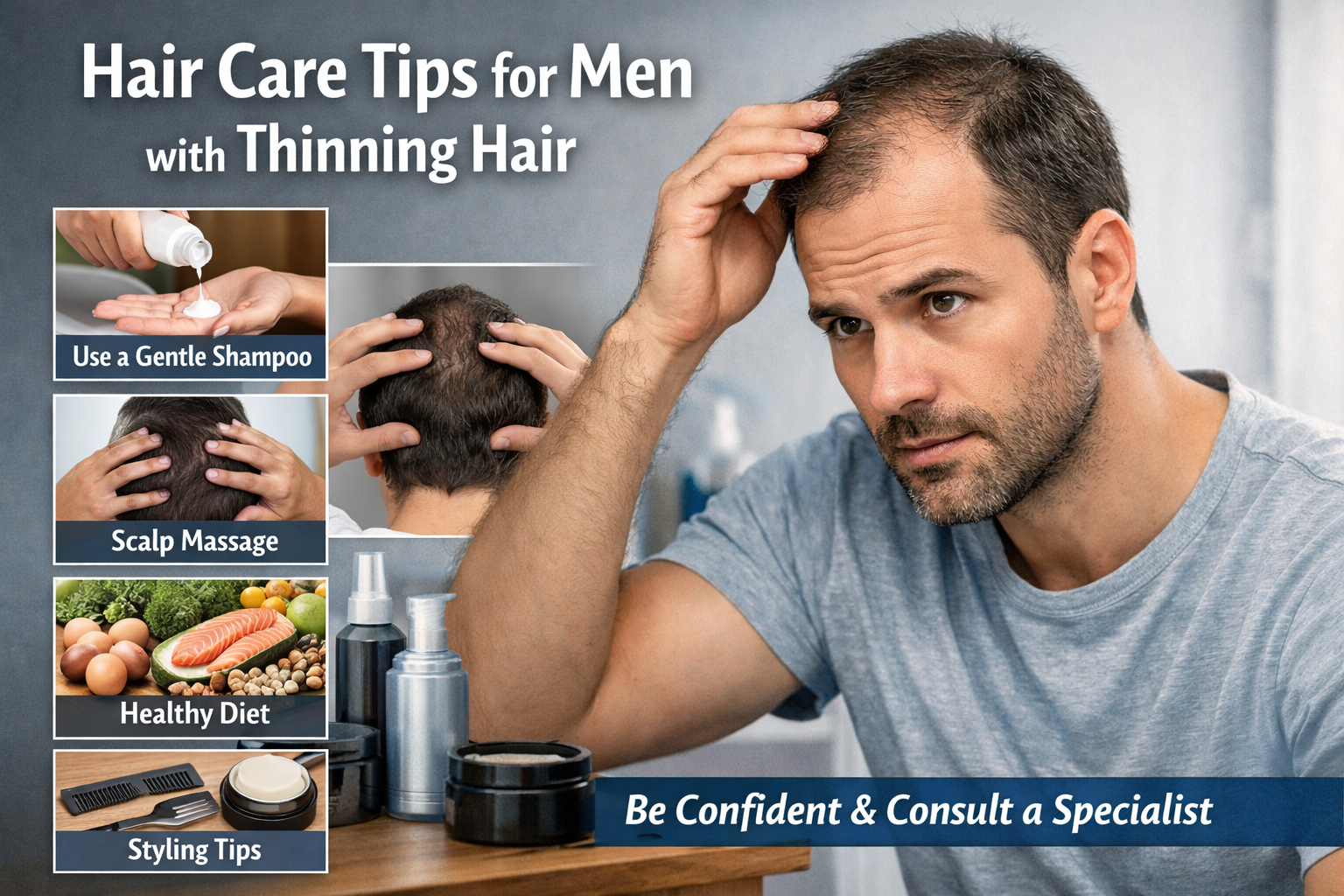
So, How Should Men Care for Thinning Hair?
Not with extreme changes.
But with thoughtful ones:
Use lightweight products
Choose the right haircut
Be gentle with styling
Keep your scalp balanced
Avoid overloading your hair
Stay consistent
Simple.
But effective.
You’re Not Fighting It—You’re Adapting
That’s the key.
Not fighting.
Not forcing.
Adapting.
Working with your hair instead of against it.
Final Thought
Thinning hair isn’t something that happens all at once.
It builds.
Gradually.
Quietly.
Until you notice it.
But once you do, you have a choice.
To fight it…
Or to understand it.
And understanding leads to better decisions.
Better habits.
Better results.
Because in the end, it’s not about having perfect hair—
It’s about knowing how to make the most of what you have.
And sometimes, that’s more powerful than anything else.