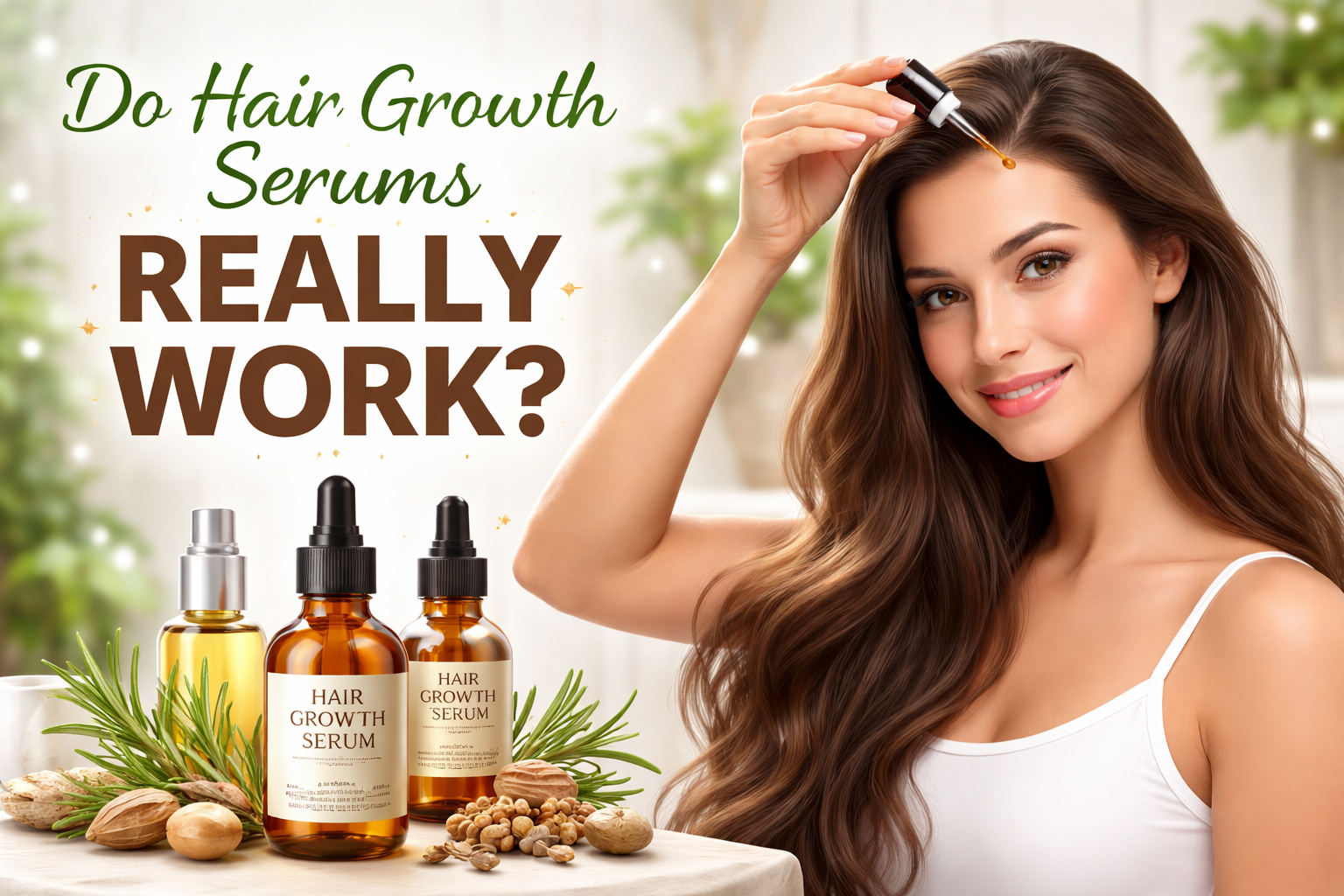
Do Hair Growth Serums Really Work?
I remember the first time I held one in my hand.
A small bottle.
Clean design.
Promising just enough to feel believable.
It didn’t claim miracles—at least not in a way that felt unrealistic. It talked about “support,” “growth,” “visible improvement.” Words that sounded careful, measured… and somehow, that made them more convincing.
Because when you’re dealing with hair loss, you don’t need exaggerated promises.
You just need something that feels possible.
The Hope That Comes With Trying Something New
Using a serum felt like taking action.
A step forward.
A way to move out of uncertainty and into something that felt proactive.
A few drops.
A gentle massage.
A routine that was easy to follow.
And for a while, that routine felt like progress.
When You Start Looking for Signs
At the beginning, I paid attention to everything.
How my hair felt.
How it looked under different lighting.
Whether shedding had changed.
Whether anything—anything—felt different.
And sometimes, it did.
My hair felt softer.
More manageable.
Healthier on the surface.
And that gave me hope.
The Difference Between Feeling Better and Being Better
But over time, I noticed something important.
Feeling better isn’t the same as changing the underlying process.
Serums can improve texture.
They can make hair appear smoother, shinier.
But hair loss doesn’t begin at the surface.
It begins deeper.
At the follicle.
Within the hair growth cycle itself.
What Serums Are Designed to Do
Once I looked closer, I realized that serums aren’t all the same.
Some are designed to nourish the scalp.
Some aim to stimulate circulation.
Others include active ingredients that target specific processes related to hair growth.
And that difference matters.
Because not all serums are trying to do the same thing.
When Expectations Become the Problem
At first, I expected too much.
I thought a serum would stop hair loss.
Reverse it completely.
Bring everything back to how it used to be.
But that expectation didn’t match reality.
Because most serums are not designed to do everything.
They’re designed to support.
The Role of Consistency
One thing became clear quickly:
Serums don’t work overnight.
They require consistency.
Daily use.
Weeks.
Sometimes months.
And even then, the results are gradual.
Subtle.
Easy to miss if you’re looking for something dramatic.
When You Think It’s Not Working
There were moments when I felt like nothing was happening.
No visible regrowth.
No major reduction in shedding.
And that made me question everything.
Was I using the wrong product?
Was it not working at all?
Or was I expecting results too quickly?
The Delay That Changes Perception
Hair growth has a delay.
What you do today affects what you see weeks later.
So even if a serum is helping, the results won’t appear immediately.
And that delay can make it feel ineffective—even when it’s not.
The Importance of the Cause
This was one of the biggest realizations.
Serums don’t work the same for everyone.
Because hair loss doesn’t have one single cause.
If the issue is related to scalp condition, a serum might help.
If it’s related to internal factors—stress, nutrition, hormones—the effect may be limited.
And that difference explains a lot.
When Serums Actually Help
In some cases, serums do make a difference.
They can:
Improve scalp health
Support the environment for growth
Strengthen existing hair
Encourage early-stage regrowth
But they work best when the underlying conditions are supportive.
Not when they’re working against them.
When They Don’t Meet Expectations
There are also times when serums don’t deliver what people hope for.
Not because they’re useless—
But because they’re being asked to do too much.
To solve a problem that’s deeper than what they can reach.
The Feeling of Trying Multiple Options
I went through more than one.
Different brands.
Different formulas.
Each one with slightly different claims.
And each time, I hoped this one would be different.
But the pattern stayed similar.
Subtle improvements.
No dramatic transformation.
The Shift in Understanding
Eventually, my perspective changed.
I stopped asking:
“Does this serum work?”
And started asking:
“What role does this serum play?”
And that made everything clearer.
You’re Not Looking for a Miracle
Serums are not miracles.
They’re tools.
And like any tool, their effectiveness depends on how and when you use them.
You’re Not Fixing Everything With One Product
Hair loss is rarely solved by a single solution.
It’s influenced by multiple factors.
And serums are just one part of that system.
Not the entire answer.
When You Combine Support
The most noticeable changes didn’t come from the serum alone.
They came when everything worked together.
Better habits.
Better balance.
More consistent care.
And the serum became part of that—not the focus of it.
You’re Not Wasting Your Effort
Using a serum isn’t pointless.
It contributes.
It supports.
But expecting it to do everything leads to disappointment.
So, Do Hair Growth Serums Really Work?
Sometimes.
In certain ways.
To a certain extent.
They can support growth.
Improve conditions.
Enhance what your hair is already capable of doing.
But they don’t replace the bigger picture.
You’re Not Just Using a Product—You’re Supporting a Process
That was the realization that stayed with me.
Hair growth is a process.
And serums are just one way to support it.
Not control it.
Not define it.
Final Thought
Hair growth serums can help—but not in the way many people expect.
They don’t create instant change.
They don’t solve every cause.
They don’t guarantee results.
But they can support your hair when used consistently and realistically.
And maybe that’s the key—
Not asking whether they work in isolation,
But understanding how they fit into everything else.
Because real progress doesn’t come from one product.
It comes from the system around it.
And once you see that, the question changes—
From “Will this fix everything?”
To “How does this help what I’m already building?”