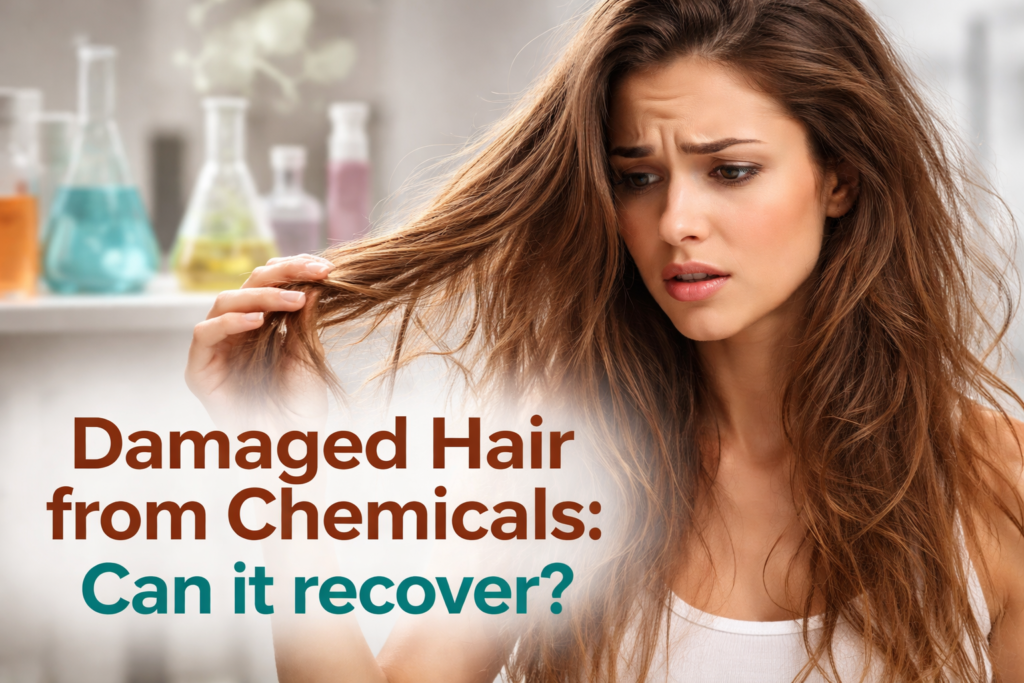
Damaged Hair from Chemicals: Can It Recover?
I didn’t think it would go that far.
At the beginning, it was just a change.
A new color.
A different look.
Something subtle enough to feel safe—but exciting enough to feel worth it.
And for a while, it was.
My hair looked exactly the way I wanted it to.
Smoother.
Shinier.
More… intentional.
But what I didn’t realize was that what looked better on the surface didn’t always mean it was better underneath.
The Moment You Notice Something Feels Off
It wasn’t immediate.
That’s what made it confusing.
Right after the treatment, my hair felt fine.
Better, even.
But over time, something shifted.
It didn’t feel as soft anymore.
It tangled more easily.
It lost that natural movement I hadn’t realized I valued.
And slowly, I started to wonder:
What changed?
When Hair Stops Behaving the Same Way
The first real sign wasn’t how it looked.
It was how it behaved.
It didn’t fall the same way.
Didn’t hold moisture the same way.
Didn’t respond to products the way it used to.
It felt… altered.
Not damaged in an obvious way.
Just different.
And that difference stayed.
What Chemicals Actually Do
I started learning more—not in a technical sense, but just enough to understand.
Chemical treatments don’t just sit on the surface.
They change the structure of your hair.
They open it.
Break and reshape bonds.
Rebuild it into something new.
And while that transformation creates the look you want…
It also changes the integrity of the hair itself.
The Cost of That Transformation
At first, the trade-off didn’t feel real.
Because the result looked good.
But over time, the cost became more visible.
Dryness that didn’t go away.
Ends that felt thinner.
Strands that broke more easily.
And once those signs appeared, they didn’t disappear quickly.
When Moisture Doesn’t Stay
One of the biggest changes I noticed was how my hair handled moisture.
It would feel soft right after conditioning.
But that softness didn’t last.
It faded quickly.
Leaving my hair feeling dry again—almost like it couldn’t hold onto what it needed.
And that’s when I realized something deeper had changed.
The Fragility You Can’t Ignore
There was a moment when I gently ran my fingers through my hair and felt resistance.
Not tangles.
Not knots.
Just… fragility.
Like the strands weren’t as strong as they used to be.
And that feeling stayed with me.
Because it wasn’t just about appearance anymore.
It was about structure.
Can Hair Actually Recover?
This was the question that kept coming back.
Can damaged hair go back to what it was before?
And the answer wasn’t as simple as I wanted it to be.
What “Recovery” Really Means
Hair that has been chemically altered doesn’t fully return to its original state.
Because the structure has been changed.
But that doesn’t mean it can’t improve.
Recovery doesn’t mean reversal.
It means restoration—of strength, of balance, of how the hair behaves over time.
The Difference Between Repair and Regrowth
This was an important distinction.
You can improve the condition of damaged hair.
Make it feel stronger.
Look healthier.
But true “new” hair comes from regrowth.
From the root.
Untouched by the previous damage.
And that takes time.
The Patience You Didn’t Expect
I wanted quick improvement.
Something immediate.
But recovery didn’t work that way.
It was slow.
Gradual.
Almost invisible at first.
And that made it hard to trust the process.
When You Start Adjusting Your Expectations
Instead of asking:
“How do I fix this quickly?”
I started asking:
“How do I support this over time?”
And that shift made everything feel more realistic.
Because recovery isn’t about speed.
It’s about consistency.
The Role of Gentle Care
I became more careful.
Not in an extreme way.
Just more aware.
How I brushed my hair.
How I dried it.
How much heat I used.
Small adjustments that reduced additional stress.
Because damaged hair doesn’t need more pressure.
It needs less.
When Less Becomes More
I also realized that doing less sometimes helped more.
Fewer products.
Fewer treatments.
Less manipulation.
Because overloading already fragile hair can make it worse.
Not better.
The Gradual Return of Strength
Over time, I noticed small changes.
Hair felt slightly stronger.
Less prone to snapping.
More manageable.
Not perfect—but improved.
And those small shifts mattered.
Because they showed that recovery was happening—even if it wasn’t complete.
The Role of New Growth
The most noticeable difference came from new hair.
Strands that hadn’t been exposed to chemicals.
They felt different.
Stronger.
More resilient.
And they reminded me that not everything was lost.
That growth continues—even after damage.
You’re Not Starting Over
That was the thought that helped me most.
I wasn’t starting from zero.
I was working with what I had—while new growth slowly replaced what had been damaged.
And that made the process feel less overwhelming.
When You Accept What Can’t Be Reversed
There’s a point where you accept that some damage won’t fully disappear.
And that’s not failure.
It’s reality.
But acceptance doesn’t mean giving up.
It means adjusting your expectations—and your approach.
So, Can Chemically Damaged Hair Recover?
Not completely in the way you might expect.
But it can improve.
It can become stronger.
Healthier.
More manageable.
And over time, new growth can replace what was damaged.
You’re Not Just Repairing Hair—You’re Growing It
That was the realization that stayed with me.
Recovery isn’t just about fixing what’s there.
It’s about supporting what’s coming next.
Final Thought
Chemical damage doesn’t show itself all at once.
And recovery doesn’t happen all at once either.
Both are gradual.
Layered.
Quiet.
But just because something has been changed doesn’t mean it’s beyond improvement.
Hair may not return to exactly what it was—
But it can move forward.
Stronger than it feels right now.
And sometimes, that’s what recovery really means.