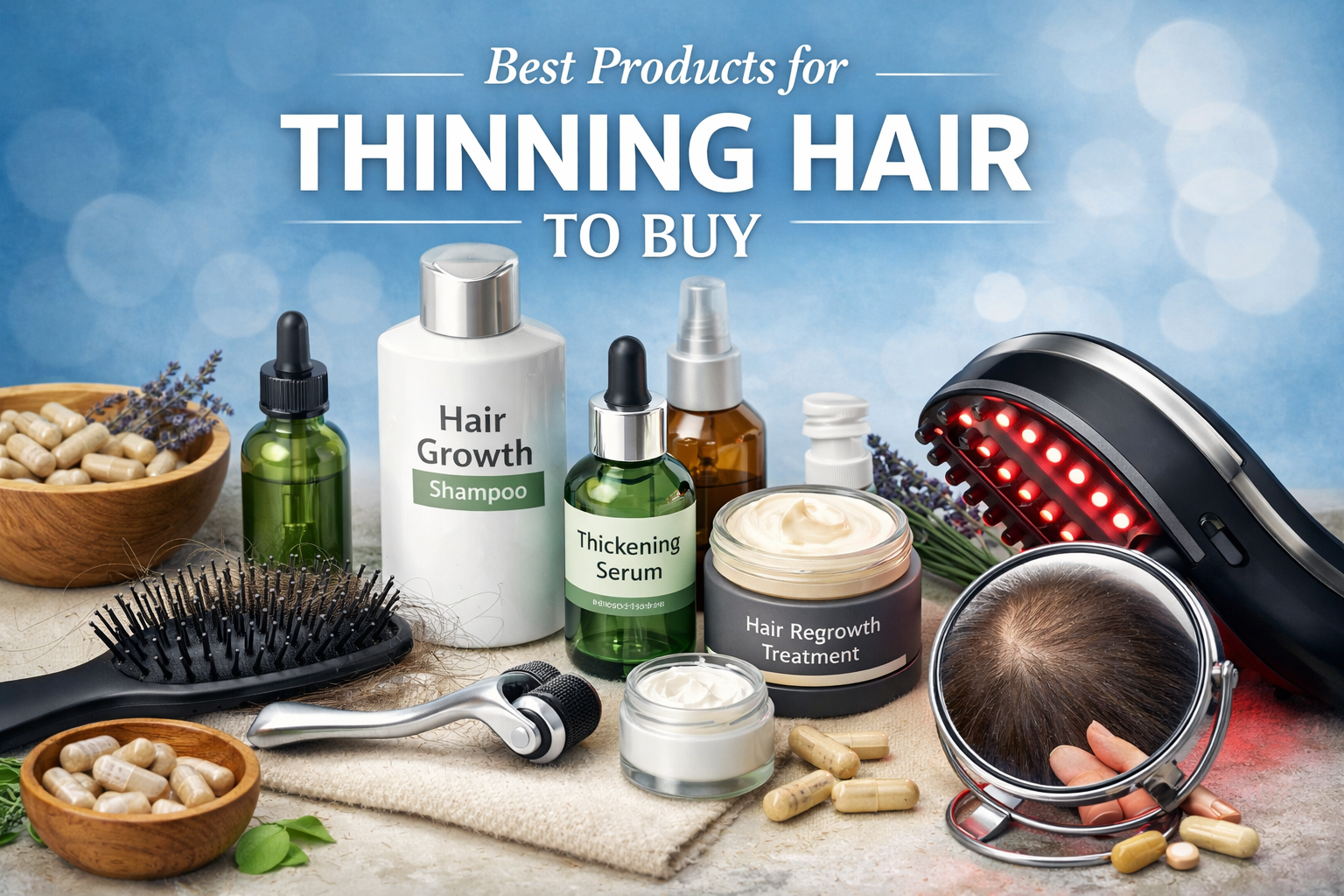
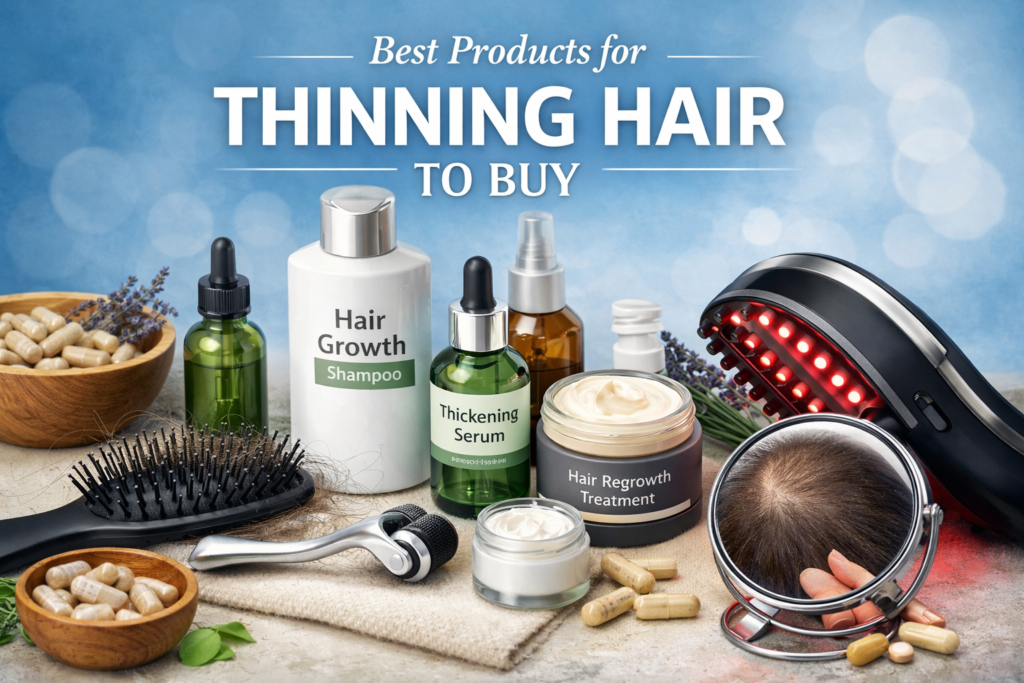
Best Products for Thinning Hair to Buy
A personal journey through trial, doubt, and small victories
I didn’t notice my hair thinning all at once. It wasn’t dramatic. There was no single moment where I stood in front of the mirror and thought, this is it. Instead, it crept in quietly—like most changes we aren’t ready to confront.
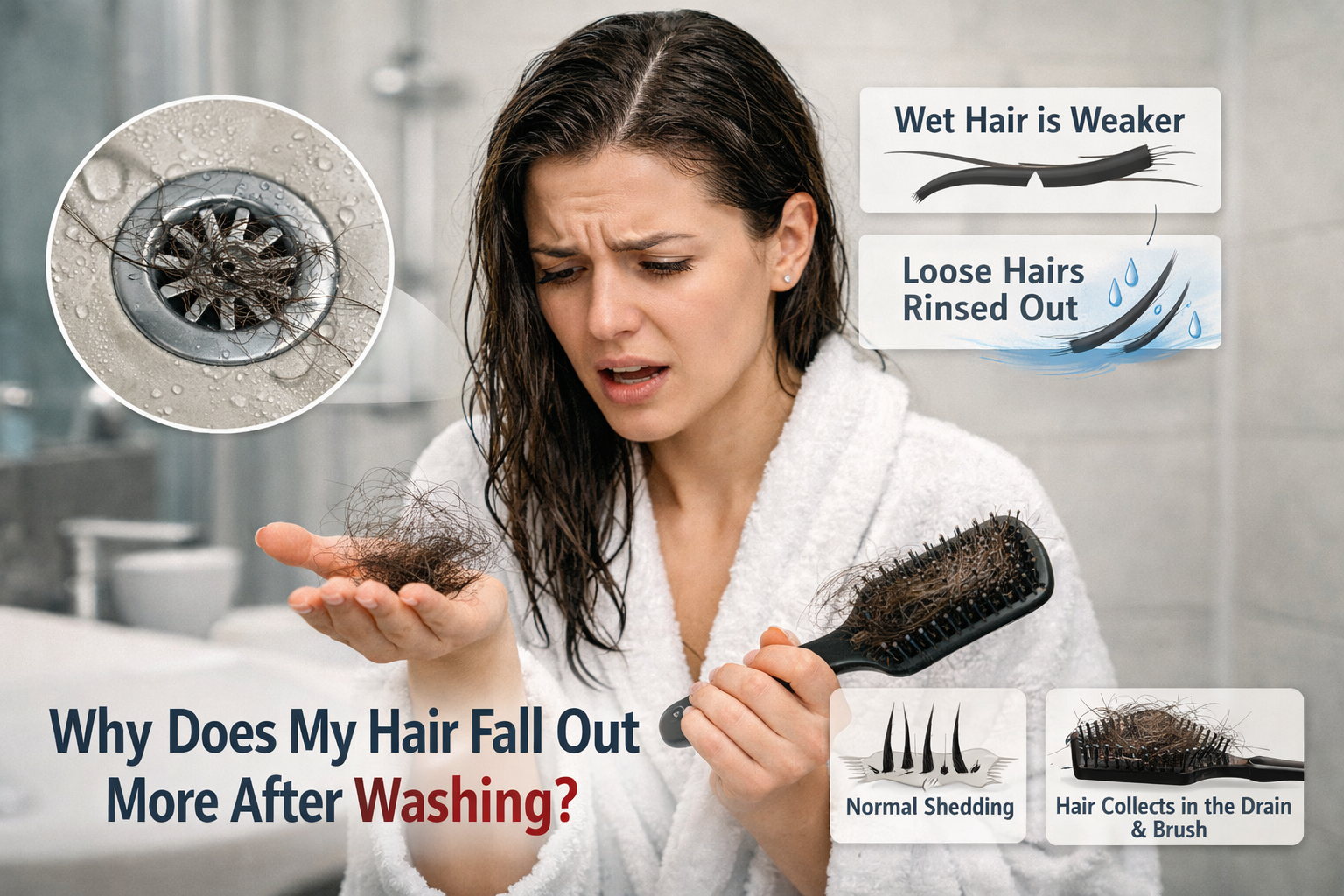
At first, it was just a little more hair on the pillow. Then the drain started collecting more than usual. Eventually, I began adjusting how I parted my hair without even realizing why. It’s strange how the body signals change long before the mind is willing to acknowledge it.
I remember the first product I bought out of concern. It was late at night, and I had fallen into one of those endless scrolling sessions—reading reviews, comparing ingredients, looking for something, anything, that promised a solution. The internet is full of hope when it comes to thinning hair. Bottles that promise regrowth, serums that claim transformation, shampoos that swear they can “revive” what feels lost.
But what I learned, slowly and sometimes frustratingly, is that not all products are created equal—and more importantly, not all of them work the same for everyone.
Understanding What You’re Really Buying
The first mistake I made was assuming that all “hair growth” products did the same thing. They don’t.
Some products are designed to stimulate growth, working at the level of the scalp and hair follicles. Others focus on strengthening existing strands, preventing breakage that can make thinning appear worse. And then there are those that simply create the illusion of volume, which, while temporary, can still be valuable.
Once I began to separate these categories, everything became clearer.
I stopped expecting a single miracle product to do everything.
Instead, I started building something closer to a system.
The First Shift: Shampoos That Do More Than Clean
For a long time, shampoo was just shampoo. I picked whatever smelled good or was on sale. But when thinning became a concern, I realized how much this basic step mattered.
I switched to shampoos that contained ingredients like biotin, caffeine, and ketoconazole. These weren’t just buzzwords—they were backed by varying degrees of research suggesting they could support scalp health or reduce factors that contribute to hair loss.
One shampoo in particular stood out. It didn’t produce instant results, but over weeks, I noticed something subtle: my hair felt less fragile. It didn’t fall out as easily when I ran my fingers through it.
That was the first small victory.
Not regrowth. Not transformation. Just… less loss.
And sometimes, that’s where progress begins.
Leave-In Treatments: Where Patience Is Tested
If shampoos are the foundation, leave-in treatments are where expectations tend to soar—and where disappointment can follow if you’re not careful.
I tried serums that promised thicker hair in weeks. Some felt luxurious but did nothing. Others left my scalp irritated. A few, though, seemed to make a difference—not in a dramatic way, but enough to keep me consistent.
The key ingredient I kept coming across was minoxidil. It’s one of the few treatments with strong clinical backing. But it comes with a caveat: it requires commitment.
Using it isn’t just a decision—it’s a routine. Miss days, and the effectiveness drops. Stop completely, and any progress may fade.
I hesitated before starting. The idea of committing to something indefinitely felt heavy. But eventually, curiosity outweighed hesitation.
The first few weeks were discouraging. There’s a phase some people experience where shedding increases. It feels counterintuitive—like things are getting worse. But understanding that this can be part of the process helped me push through.
And then, gradually, I noticed it.
Not new hair in the way I had imagined—but a subtle thickening, a sense that my hairline wasn’t receding as quickly as before.
It wasn’t dramatic.
But it was real.
Oils, Myths, and What Actually Helped
Hair oils are surrounded by a mix of tradition, culture, and anecdotal success. I grew up hearing about the benefits of coconut oil, castor oil, and rosemary oil. Each one came with its own set of promises.
So, of course, I tried them.
What I found was this: oils can be helpful—but not in the way they’re often marketed.
They didn’t magically regrow hair. But they did improve scalp condition and hair texture. My hair felt softer, less prone to breakage. And in some cases, like with rosemary oil, there is emerging evidence suggesting it may support hair growth over time.
But again, the keyword is support—not replace.
Oils became part of my routine, not the centerpiece.
Supplements: Hope in Capsule Form
At some point, I turned my attention inward—literally.
If hair health starts from within, then supplements seemed like a logical step. I tried biotin, vitamin D, zinc, and even combination formulas marketed specifically for hair growth.
This is where things get complicated.
Supplements can help if you have a deficiency. But if your levels are already normal, the impact may be minimal.
I learned this the slow way.
After months of taking supplements with little noticeable change, I realized that more isn’t always better. It’s not about throwing everything at the problem—it’s about understanding what your body actually needs.
If I could go back, I would start with a simple check-up before buying anything.
Styling Products: The Power of Perception
There’s something important that often gets overlooked in conversations about thinning hair: how it looks matters just as much as what’s happening biologically.
I started experimenting with volumizing sprays, lightweight mousses, and even hair fibers. At first, it felt like I was just covering up the problem.
But then I saw it differently.
These products didn’t fix thinning—but they changed how I felt about it.
And that matters.
A good volumizing product can make hair appear fuller instantly. Hair fibers can fill in sparse areas in seconds. They’re not permanent solutions, but they offer something equally valuable: confidence.
And sometimes, confidence is what keeps you consistent with the long-term solutions.
What Actually Made a Difference
After trying countless products, routines, and recommendations, I started to see a pattern.
The most effective approach wasn’t about finding the best single product.
It was about combining a few key elements:
- A gentle, targeted shampoo to maintain scalp health
- A clinically supported treatment like minoxidil (if appropriate)
- Occasional use of oils or serums to improve hair condition
- Realistic use of styling products for immediate results
- And perhaps most importantly, consistency over time
There was no overnight transformation.
But there was progress.
The Emotional Side of It All
What surprised me most wasn’t the products themselves—it was how much of this journey was emotional.
Hair is deeply tied to identity. Losing it, even gradually, can feel like losing a part of yourself.
There were days I avoided mirrors. Days I compared old photos to new ones, trying to measure change. Days I felt frustrated that something so seemingly small could take up so much mental space.
But there were also moments of acceptance.
Moments where I realized that while I couldn’t control everything, I could control how I responded.
I could choose to take action, to experiment, to learn.
And that, in itself, felt empowering.
A Different Definition of “Best”
If you had asked me at the beginning for the “best products for thinning hair,” I would have wanted a clear, definitive answer. A list. A guarantee.
Now, I see it differently.
The “best” products are not universal.
They’re the ones that:
- Fit into your routine
- Align with your specific needs
- Are backed by at least some credible evidence
- And most importantly, that you can use consistently
Because consistency beats perfection every time.
Closing Thoughts
If you’re at the beginning of this journey, standing in front of a mirror and wondering what changed, I understand that feeling more than I expected to.
It’s not just about hair.
It’s about control, identity, and the quiet ways we measure ourselves.
But here’s what I’ve learned:
You don’t need to try everything.
You don’t need to believe every promise.
Start small. Pay attention. Be patient.
Because progress, when it comes, is rarely loud or dramatic.
It’s subtle.
It’s gradual.
And sometimes, it begins with something as simple as choosing the right product—and giving it the time it needs to work.