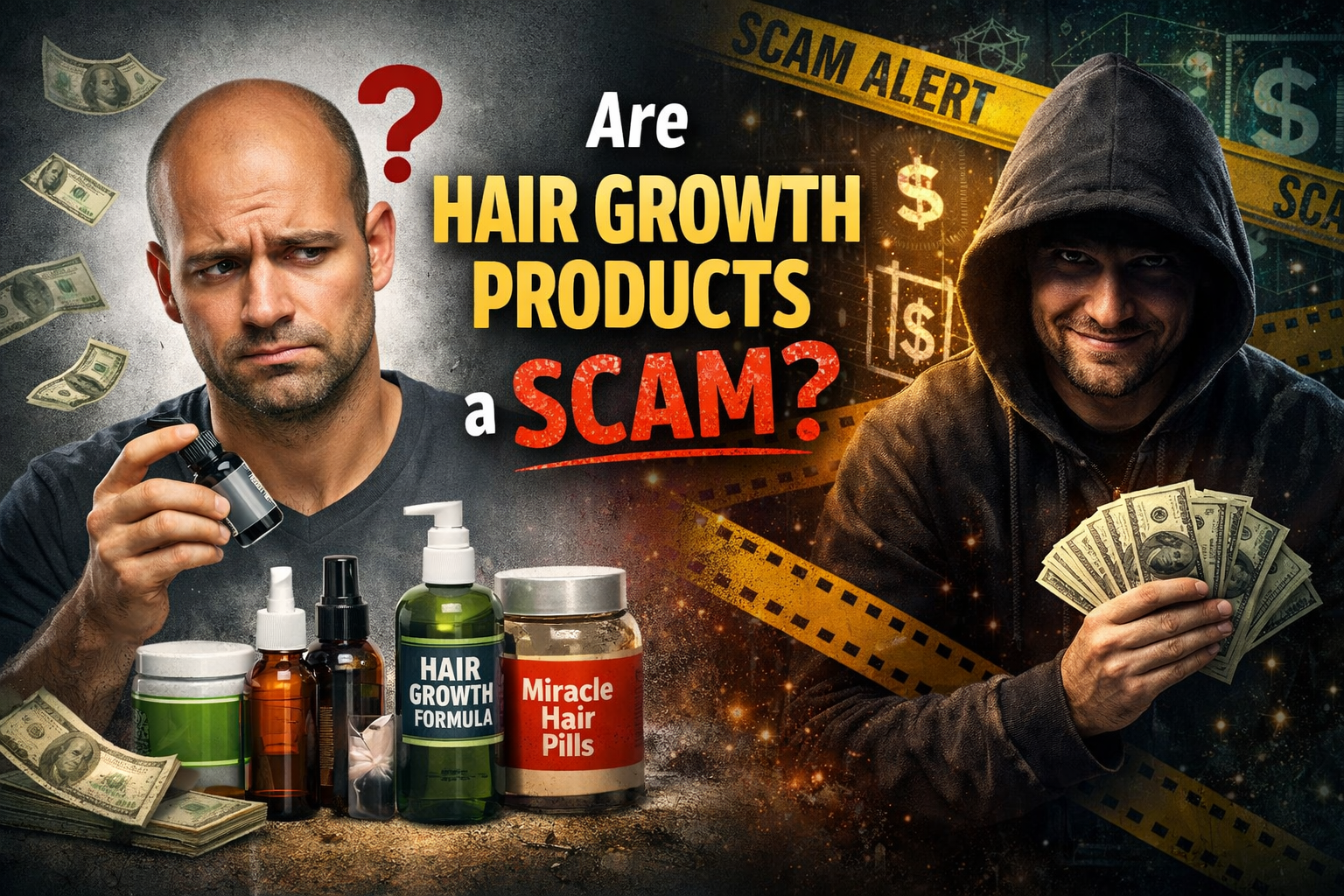
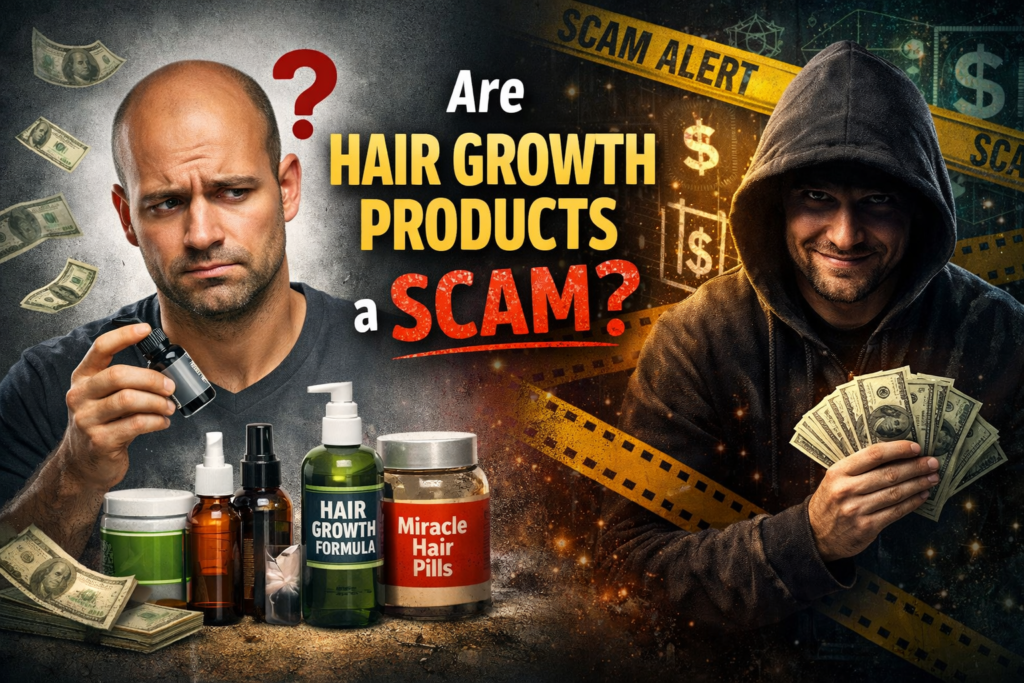
Are Hair Growth Products a Scam? — A Personal Journey Through Hope, Hype, and Hard Truths
I still remember the first time I noticed it.
It wasn’t dramatic. No clumps of hair falling out in the shower, no sudden bald patches. Just a subtle change—the way my hairline looked slightly different in photos, the way my part seemed wider under bright light. At first, I brushed it off. Stress, maybe. Bad lighting. Overthinking.
But once you see it, you can’t unsee it.
That’s how the journey usually begins—not with panic, but with curiosity. Then curiosity slowly turns into concern. And before you know it, you’re standing in front of a mirror, tilting your head at different angles, wondering: Is this the start of something worse?
That question led me into the world of hair growth products—a world filled with bold promises, scientific jargon, emotional testimonials, and, frankly, a lot of confusion.
So… are hair growth products a scam?
The honest answer is: some are, some aren’t—and most exist somewhere in between.
Let me explain.
The First Rabbit Hole: Marketing vs Reality
When I first started researching hair growth solutions, I expected clear answers. Science-backed products. Straightforward explanations. Instead, I found a marketplace that felt more like a battlefield of claims.
“Regrow hair in 30 days.”
“Clinically proven breakthrough formula.”
“Natural miracle oil used for centuries.”
Every product sounded like the one. And every review seemed to confirm it—until you dug deeper.
Here’s the first truth I learned:
The hair loss industry runs heavily on emotion.
Hair is tied to identity, confidence, and even how we think others perceive us. Companies know this. They don’t just sell products—they sell hope.
And hope, when you’re worried about losing something important, can be incredibly persuasive.
What Actually Causes Hair Loss?
Before judging the products, I had to understand the problem.
Hair loss isn’t one single condition. It can be caused by:
- Genetics (the most common reason)
- Hormonal changes
- Stress
- Nutritional deficiencies
- Medical conditions
- Hair care habits
This matters because no single product can solve all these causes.
That’s where many products start to feel like scams—not necessarily because they’re fake, but because they’re marketed as universal solutions to very specific problems.
It’s like trying to fix every type of headache with the same pill. Sometimes it works. Often, it doesn’t.
The “Real” Products (That Actually Do Something)
After sorting through the noise, I found that a few categories of hair growth treatments are supported by real evidence.
These aren’t magic. They don’t work overnight. But they do have a track record.
1. Medications (like Minoxidil)
These are among the most studied options. They can help slow hair loss and sometimes promote regrowth—but only with consistent use over months.
Even then, results vary.
2. Scalp care products
Shampoos or treatments that improve scalp health can help create a better environment for hair growth. But they won’t reverse genetic hair loss.
3. Nutritional supplements (in specific cases)
If your hair loss is linked to deficiencies (like iron or certain vitamins), supplements can help. But if your nutrition is already balanced, they won’t do much.
That’s the key pattern:
Products tend to work only when they match the actual cause of your hair loss.
The “Maybe” Zone
This is where things get tricky.
There are countless products that aren’t outright scams—but also aren’t guaranteed solutions.
Think of:
- Herbal oils
- Biotin gummies
- “Hair growth serums” with long ingredient lists
- DIY remedies trending online
Some people swear by them. Others see no results at all.
Why?
Because these products often rely on indirect effects—like improving scalp condition or reducing breakage—rather than actually triggering new hair growth.
So when someone says, “This worked for me,” they might be telling the truth.
But that doesn’t mean it will work for you.
The Straight-Up Scams
Then there’s the darker side of the industry.
Products that:
- Promise instant or dramatic regrowth
- Use fake before-and-after photos
- Hide ingredient lists
- Rely heavily on “limited-time offers” and urgency
- Have overwhelmingly generic or suspicious reviews
These aren’t just ineffective—they’re designed to exploit fear.
And once you learn to recognize the pattern, they become easier to spot.
Here’s a simple rule I wish I knew earlier:
If it sounds too good to be true, it almost always is.
My Turning Point
After trying a few products—some helpful, some completely useless—I realized something important:
I had been treating hair loss like a problem to “fix quickly.”
But it’s not that kind of problem.
Hair grows slowly. Changes happen slowly. And any real solution takes time.
Once I accepted that, my approach changed.
Instead of chasing miracle products, I started asking better questions:
- What’s actually causing this?
- What solutions are backed by evidence?
- What expectations are realistic?
And maybe most importantly:
- Am I being influenced by fear more than facts?
The Psychological Side No One Talks About
One of the biggest surprises wasn’t about the products—it was about how they made me feel.
Every new product came with a burst of optimism.
“This might be the one.”
And when it didn’t work? Disappointment. Doubt. Sometimes even more anxiety than before.
It became a cycle:
Hope → Try → Wait → Disappointment → Repeat
That cycle is where many companies quietly profit.
Because even if a product doesn’t work, it often leads you to try another one.
And another.
And another.
So… Are Hair Growth Products a Scam?
Here’s the honest, nuanced answer:
Hair growth products are not entirely a scam—but the way they are marketed often is.
Some products can help. A few are backed by science. Many are harmless but ineffective.
And a portion? Completely misleading.
The real problem isn’t just the products themselves—it’s the expectations built around them.
What I Wish Someone Told Me Earlier
If I could go back and talk to myself at the beginning of this journey, I wouldn’t recommend a specific product.
I would say this instead:
- Don’t expect fast results.
- Don’t trust dramatic promises.
- Understand your specific situation first.
- Be cautious of emotional marketing.
- And most importantly—be patient with yourself.
Because hair loss, in many ways, is not just physical.
It’s emotional. It’s personal. And it can quietly affect how you see yourself.
A More Honest Perspective
Today, I see hair growth products differently.
Not as miracle solutions. Not as complete scams.
But as tools—with limits.
Some can help, if used correctly and for the right reasons. Others are just noise.
And the real skill is learning to tell the difference.
Final Thoughts
If you’re reading this because you’ve started noticing changes in your hair, I get it.
That moment of realization can feel small—but it sticks with you.
And it’s easy to fall into the trap of searching for a quick fix.
But the truth is simpler, even if it’s not as exciting:
There is no universal miracle product.
There is no instant regrowth solution.
And no bottle can replace understanding your own body.
So are hair growth products a scam?
Not entirely.
But the illusion surrounding them often is.
And once you see through that illusion, you stop chasing promises—and start making informed decisions.
And honestly?
That shift alone is more powerful than any product I ever tried.