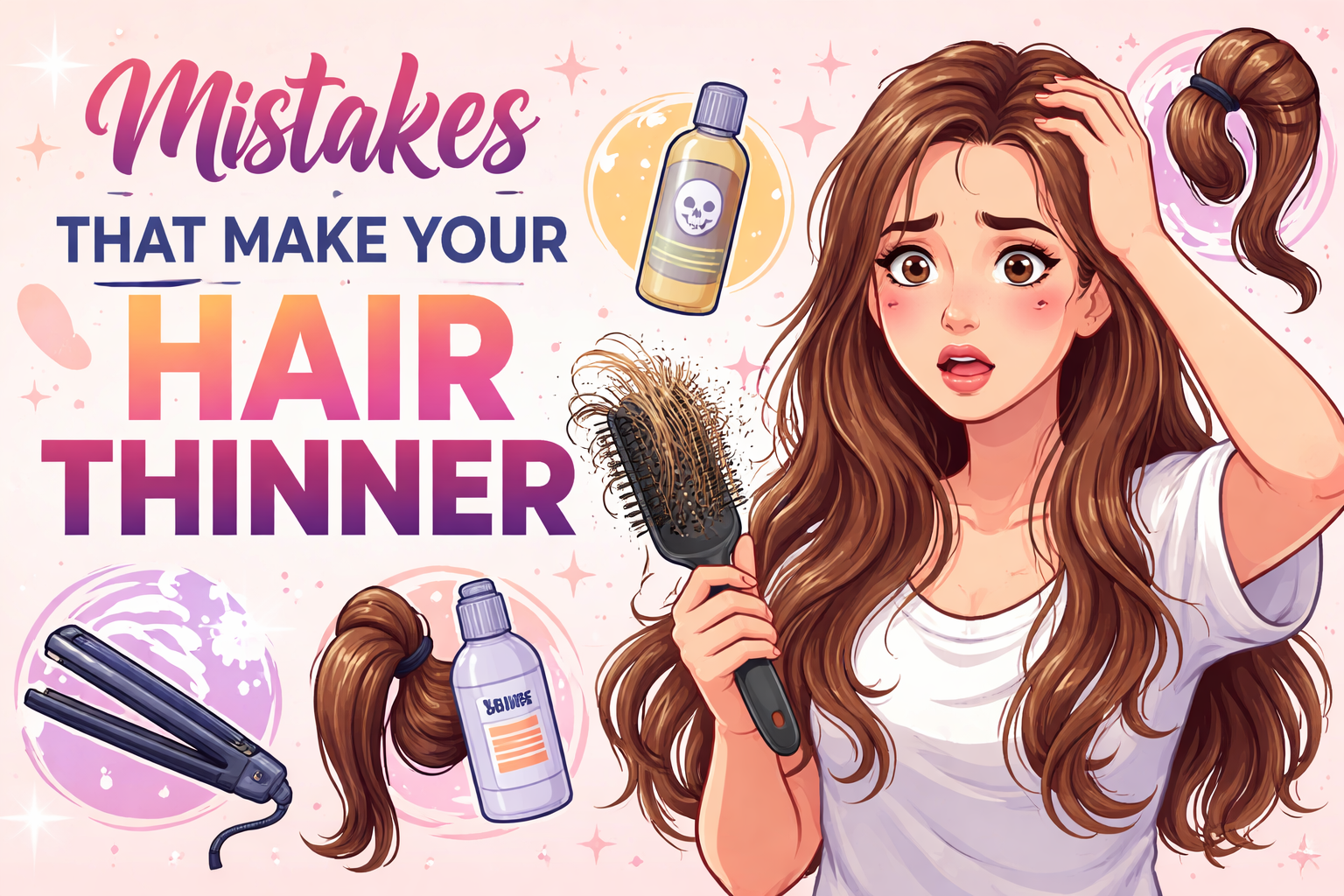
Mistakes That Make Your Hair Thinner
I didn’t think I was doing anything wrong.
That’s what made it harder to see.
Because when your routine feels normal—familiar, consistent, even careful—you don’t question it. You assume that what you’ve always done is what works.
I thought I was taking care of my hair.
Washing it regularly.
Styling it the way I liked.
Keeping it clean, manageable, presentable.
But slowly, almost quietly, something began to change.
And the hardest part?
The possibility that the cause wasn’t something external.
It might have been… me.
The Kind of Mistakes You Don’t Notice
Not all mistakes feel like mistakes.
Some feel like habits.
Things you’ve done for so long that they don’t even register as choices anymore.
And that’s what makes them powerful.
Because they repeat.
Daily.
Weekly.
Over time.
Until the effect becomes visible.
Washing Too Often—Without Realizing It
I used to think that more washing meant cleaner, healthier hair.
It felt logical.
If something feels fresh, it must be better, right?
But over time, I started noticing something different.
My hair felt drier.
More fragile.
Less balanced.
And I didn’t connect it at first.
Because washing felt like care.
Not damage.
The Subtle Loss of Natural Balance
Hair relies on natural oils.
Not in excess.
But in balance.
And when you wash too frequently—or too aggressively—you strip those oils away faster than your scalp can replace them.
The result isn’t immediate damage.
It’s gradual imbalance.
And imbalance leads to weakness.
Using Heat Without Thinking About It
Heat styling was part of my routine.
Not excessive.
Just regular.
Blow-drying.
Occasionally using tools to shape or smooth.
It felt controlled.
Safe.
But heat doesn’t always show its effect immediately.
It builds.
Weakening the hair over time.
Making it more prone to breakage.
And slowly reducing the overall thickness you see.
Brushing at the Wrong Time
I didn’t think about when I brushed my hair.
Only that I did.
Especially when it was wet—because that’s when it felt easiest to detangle.
But wet hair is more fragile.
More elastic.
More likely to stretch and snap.
And brushing it at that moment adds stress when it’s least able to handle it.
Tight Styles That Feel Harmless
Pulling my hair back felt practical.
Clean.
Out of the way.
And it didn’t hurt.
So I assumed it was fine.
But tension doesn’t always feel painful.
Sometimes, it’s subtle.
Repeated.
Focused on the same areas.
And over time, that tension can weaken the hair at the roots.
Ignoring the Scalp
For a long time, I focused only on the hair itself.
The strands.
The ends.
How it looked.
But the scalp?
I barely thought about it.
And that’s where everything begins.
If the scalp isn’t balanced—if it’s too dry, too oily, or not properly cared for—the hair that grows from it reflects that condition.
Rushing Through Care
Hair care became something I moved through quickly.
Shampoo.
Rinse.
Condition.
Done.
Efficient.
But maybe too efficient.
Because in that rush, I wasn’t paying attention to what my hair actually needed.
I was following a routine—not responding to it.
The Mistake of Doing Too Much
There’s also the opposite problem.
Trying too hard.
Using too many products.
Too many treatments.
Too many changes at once.
Thinking that more effort equals better results.
But hair doesn’t always respond well to overload.
Sometimes, it needs less.
Not more.
Diet: The Mistake You Don’t Associate
For a long time, I separated hair from everything else.
Especially food.
But what you eat affects what your hair becomes.
And if your diet lacks balance—even slightly—it shows up over time.
Not immediately.
But gradually.
In weaker strands.
Slower growth.
More shedding.
Stress That Doesn’t Feel Related
Stress doesn’t always feel connected to hair.
It feels mental.
Emotional.
Temporary.
But its effects reach further than you expect.
And over time, it can influence how your hair grows—and how long it stays.
The Accumulation Effect
None of these mistakes felt significant on their own.
Each one seemed small.
Manageable.
But together?
They created a pattern.
A cumulative effect that changed how my hair behaved.
How it felt.
How it looked.
When Thinning Isn’t Sudden
Hair doesn’t suddenly become thin.
It transitions.
Gradually.
So gradually that you adapt as it happens.
Until one day, you notice.
And by then, it feels like something has changed quickly—even though it didn’t.
The Moment of Realization
For me, it wasn’t one big moment.
It was a series of small realizations.
This habit.
That pattern.
This repeated action.
All adding up to something I hadn’t fully understood before.
The Shift From Blame to Awareness
At first, it felt like I had done something wrong.
But that perspective didn’t help.
What helped was awareness.
Understanding that these weren’t mistakes in a dramatic sense.
They were habits.
And habits can be adjusted.
Small Changes, Real Impact
I didn’t change everything at once.
I adjusted.
Gently.
Gradually.
Being more mindful of how I handled my hair.
How often I washed it.
How I treated it when it was most fragile.
And over time, those small changes made a difference.
The First Signs of Improvement
The change wasn’t immediate.
But it was noticeable.
Less breakage.
More stability.
Hair that felt slightly stronger.
And that was enough to keep going.
You’re Not Damaging Your Hair Intentionally
That’s something important to remember.
Most of these mistakes aren’t intentional.
They come from routine.
From habit.
From doing what feels normal.
And that means they can be changed—once you recognize them.
So, What Mistakes Make Your Hair Thinner?
Not one big mistake.
But many small ones:
Overwashing
Excessive heat
Brushing when hair is fragile
Tight styles
Ignoring scalp health
Rushing through care
Poor nutrition
Ongoing stress
Each one subtle.
But together, impactful.
You Don’t Need to Be Perfect
Hair doesn’t require perfection.
It responds to consistency.
Balance.
Awareness.
So it’s not about eliminating every mistake.
It’s about understanding which ones matter—and adjusting over time.
Final Thought
Hair thinning doesn’t always come from something obvious.
Sometimes, it comes from what you’ve always done.
Quiet habits.
Repeated actions.
Things that feel normal until they create change.
But once you start noticing those patterns, something shifts.
Not instantly.
But gradually.
In the same quiet way that the change began.
And maybe that’s the most important part—
Realizing that the things affecting your hair aren’t always dramatic.
They’re often small.
And that means they’re also something you can gently change.