What Is a Dead Hair Follicle? Can It Recover?
I remember the first time I heard the phrase.
“Dead hair follicle.”
It sounded final.
Like something that couldn’t be undone. Like a door that had already closed, with no way back. And the moment I heard it, I felt that quiet tension—the kind that doesn’t show on the outside, but lingers somewhere in your thoughts.
What if that’s what’s happening to me?
The Fear Behind the Word “Dead”
There’s something about that word.
Dead.
It doesn’t leave much room for interpretation. It suggests permanence. An ending. Something beyond recovery.
And when you connect that idea to your hair—something so visible, so tied to how you see yourself—it feels heavier than it should.
But what I didn’t realize at the time is this:
Not everything we call “dead” is actually gone.
Sometimes, it’s just inactive.
Understanding the Follicle Beneath the Surface
Hair doesn’t grow from the strand itself.
It grows from the follicle—something you don’t see, something that exists beneath the surface of your skin.
Each follicle is like a tiny system.
It produces hair.
It follows cycles.
It responds to what’s happening in your body.
And most importantly—it doesn’t operate on a simple on/off switch.
The Difference Between Dead and Dormant
This was the first major shift in understanding for me.
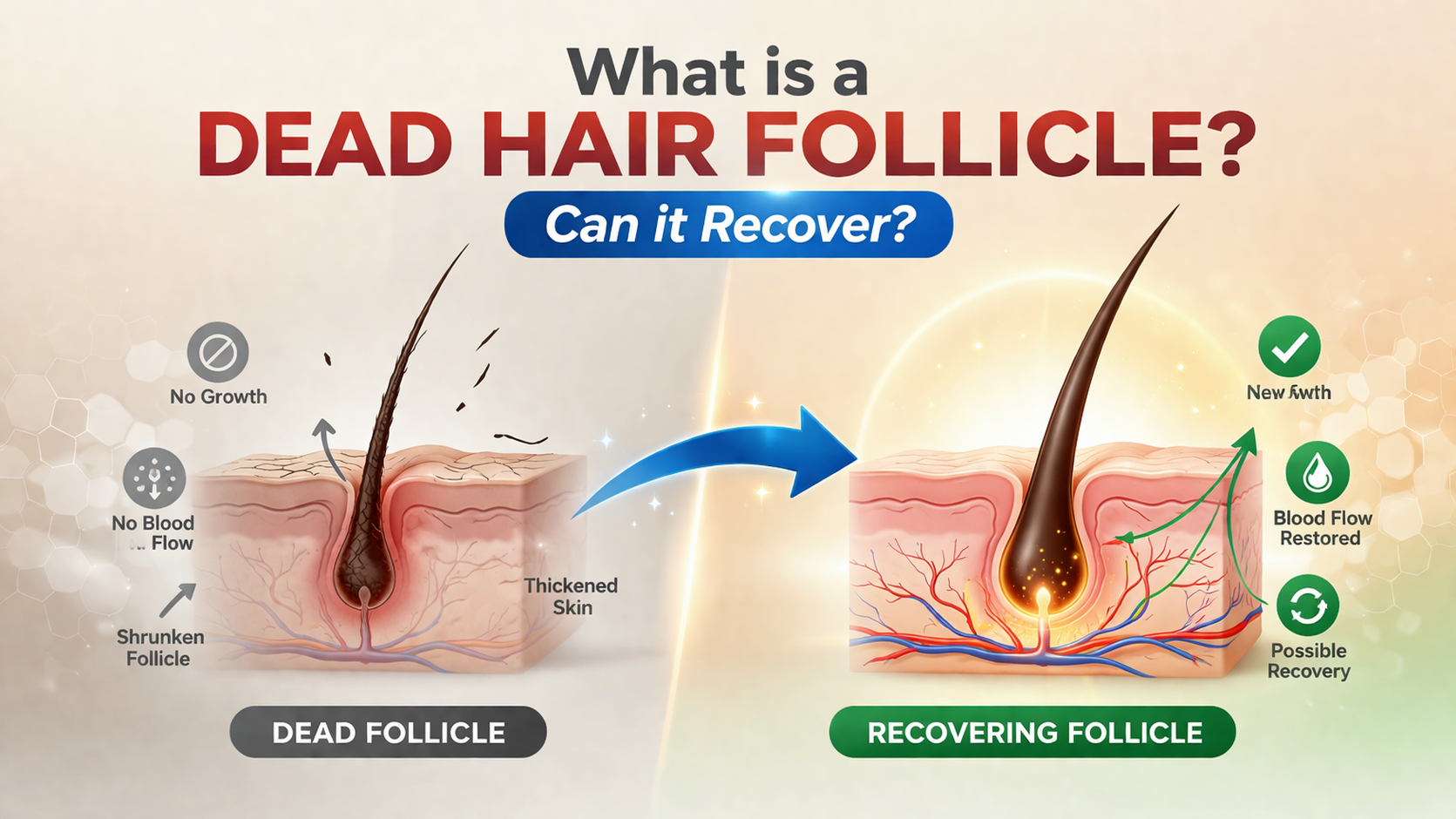
There’s a difference between a follicle that is truly “dead” and one that is simply inactive.
A dead follicle no longer produces hair at all.
A dormant follicle, on the other hand, is still there—it’s just not actively growing hair at the moment.
And from the outside, those two states can look exactly the same.
No hair.
No visible change.
Just… absence.
When Nothing Seems to Be Growing
I remember staring at certain areas of my scalp, expecting to see something.
Tiny hairs.
Soft regrowth.
Some sign that the cycle was continuing.
But there was nothing obvious.
And that’s when the question became more specific:
Is this follicle gone… or just resting?
Why Follicles Become Inactive
Hair follicles don’t just stop working for no reason.
There’s usually a cause.
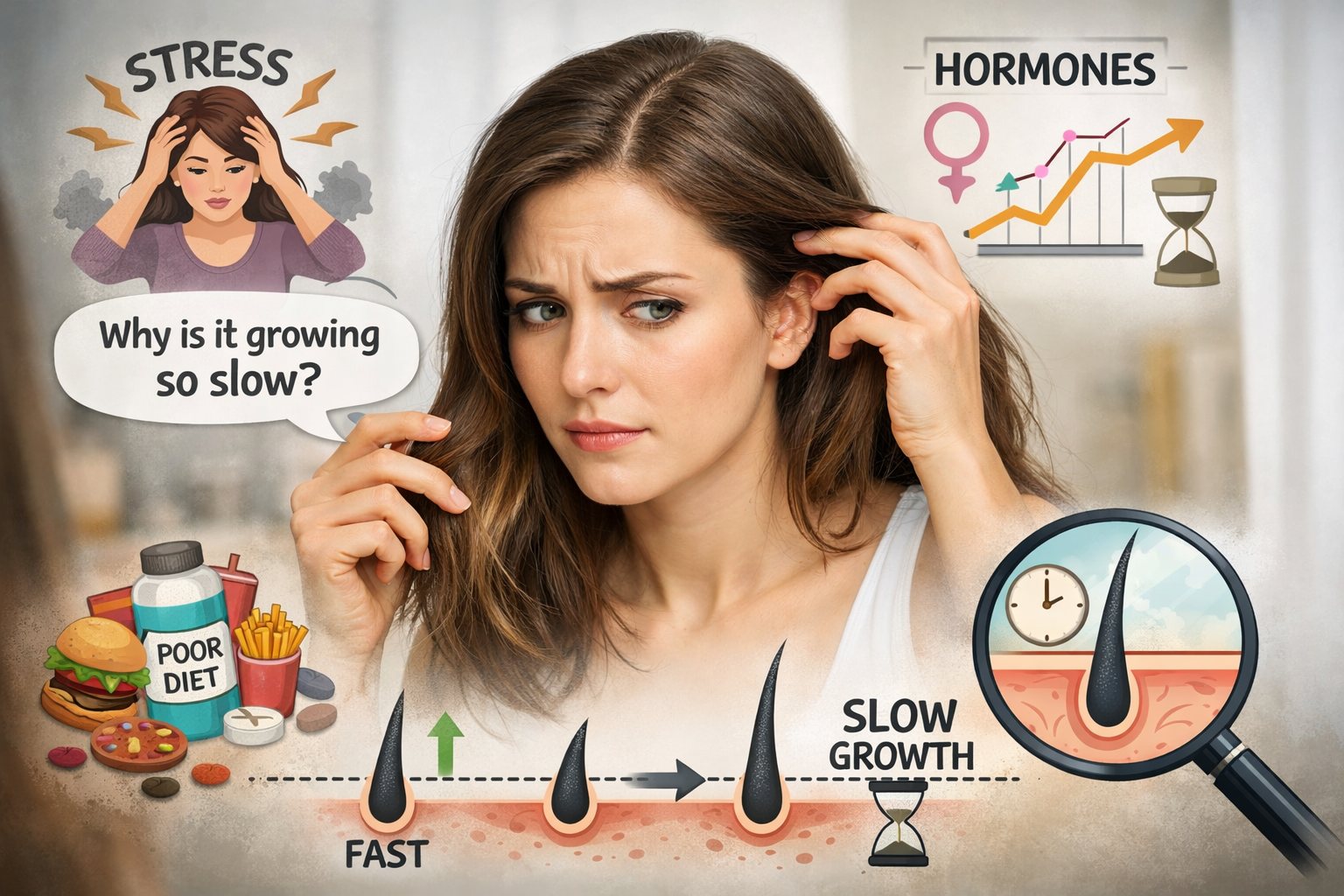
Sometimes it’s stress.
Sometimes it’s changes in the body—hormonal shifts, nutritional imbalances, or recovery after illness.
Other times, it’s gradual changes that happen over time.
The follicle doesn’t disappear.
It just slows down.
Pauses.
Waits.
The Gradual Weakening You Don’t Notice
In some cases, follicles don’t stop suddenly.
They weaken gradually.
Producing thinner hair.
Shorter strands.
Less visible growth.
Until eventually, it seems like nothing is coming out at all.
But that process is slow.
So slow that you don’t always realize it’s happening until it reaches that point.
The Role of Time (Again)
Time plays a huge role here.
Follicles don’t always respond immediately to change.
If something disrupted their cycle, they may take time to recover.
Weeks.
Months.
Sometimes longer.
And during that time, it’s easy to assume the worst.
When It Feels Permanent
There’s a moment where inactivity starts to feel permanent.
When enough time passes without visible regrowth, your mind starts to fill in the gap:
Maybe it’s not coming back.
And that thought, even if it’s quiet, carries weight.
The Possibility of Recovery
Here’s what I didn’t understand at first:
Dormant follicles can often become active again.
Not instantly.
Not dramatically.
But gradually.
If the conditions that caused the pause are addressed…
If the environment improves…
If the body returns to balance…
The follicle can re-enter the growth phase.
Why It Doesn’t Happen Overnight
Recovery isn’t immediate.
Because the follicle has to move through its cycle again.
From rest.
To activation.
To growth.
And each of those stages takes time.
So even when recovery begins, you don’t see it right away.
The First Signs You Might Miss
Regrowth doesn’t start with thick, visible hair.
It starts small.
Soft.
Almost invisible.
Tiny strands that are easy to overlook unless you’re really paying attention.
And because they’re so subtle, it can feel like nothing is happening—even when something is.
When a Follicle Truly Stops
There are cases where follicles no longer produce hair.
Where the structure itself changes to the point that regrowth doesn’t occur.
But this doesn’t happen suddenly.
It’s usually the result of a long, gradual process.
And even then, it’s not always as absolute as it sounds.
The Mistake of Assuming Too Early
One of the biggest mistakes I almost made was assuming permanence too soon.
Seeing no regrowth for a period of time and concluding that it was over.
But hair doesn’t follow short timelines.
And making long-term conclusions based on short-term observation can be misleading.
The Role of Patience (Once Again)
Patience shows up here again.
Not because there’s nothing you can do.
But because what you can do takes time to show results.
And during that time, it’s easy to doubt whether anything is changing.
Supporting the Follicle Instead of Forcing It
I realized that I couldn’t force a follicle to grow hair.
But I could support the conditions around it.
Consistency.
Balance.
Care.
Not dramatic interventions.
Just steady support.
Because follicles respond to environment.
The Mental Shift That Helped
Instead of asking:
“Is this follicle dead?”
I started asking:
“Is this follicle inactive—or just slow?”
That shift made everything feel less final.
Less fixed.
More open.
You’re Not Always Seeing the Full Picture
What you see on the surface isn’t always what’s happening underneath.
Hair growth is delayed.
Subtle.
Layered.
So absence doesn’t always mean loss.
Sometimes, it just means waiting.
So, Can a “Dead” Hair Follicle Recover?
If it’s truly dead—no.
But many follicles that appear “dead” are actually dormant.
And dormant follicles can recover.
Given time.
Given the right conditions.
Given patience.
You’re Not at the End—You’re in a Phase
That was the realization that changed everything for me.
I wasn’t at an ending.
I was in a phase.
A quiet one.
An uncertain one.
But not a final one.
Final Thought
The idea of a “dead” hair follicle sounds absolute.
Final.
Unchangeable.
But the reality is often more nuanced than that.
Hair doesn’t always stop—it pauses.
It slows.
It waits.
And sometimes, what looks like an ending is actually just a longer beginning.
So if you’re wondering whether something is gone for good—
It might be.
But it might also just be resting.
And the difference between those two?
It’s not always something you can see right away.
But it’s something time will reveal.