Hair Loss at the Crown: Early Warning Signs
I didn’t see it at first.
That’s the strange thing about the crown—it’s not a place you naturally look. It’s not part of your everyday reflection. You don’t check it the way you check your hairline, or the sides, or the front.
It exists just outside your awareness.
Until something changes.
The Moment You Catch It
For me, it wasn’t the mirror.
It was a photo.
One of those casual ones—taken without much thought, from an angle I wouldn’t normally see. I glanced at it quickly, then paused.
Something looked… different.
Not dramatic.
Not obvious.
But enough to make me look again.
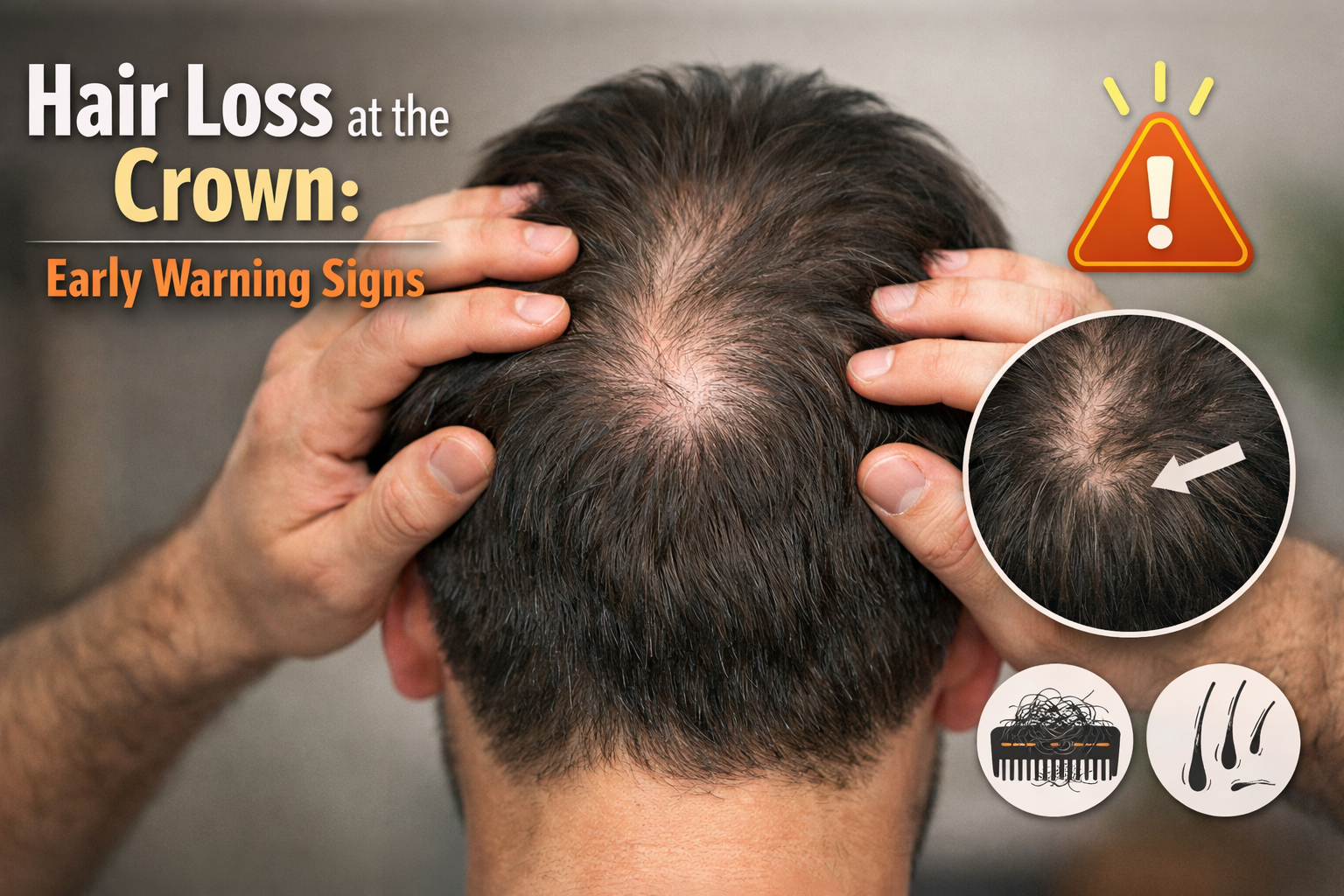
There, at the top of my head, was a slight thinning. A faint visibility of scalp that I hadn’t noticed before.
And just like that, a question formed:
Has it always been like this?
The Problem With Not Seeing It Daily
The crown is easy to ignore because it’s not part of your daily view.
Which means changes can happen gradually—without you realizing.
There’s no constant comparison.
No daily awareness.
So by the time you notice it, it often feels sudden.
Even though it wasn’t.
The First Sign Isn’t Always Visual
Before I ever saw the thinning, I had already felt something different.
My hair didn’t sit the same way.
There was less volume at the top.
It didn’t hold its shape as easily.
But I didn’t connect those changes to the crown.
Because I wasn’t looking there.
When Light Starts to Reveal More
One of the earliest visual signs is how your hair looks under certain lighting.
Bright light.
Overhead light.
Natural sunlight.
That’s when the crown becomes more visible.
The scalp reflects light differently than hair.
So even a small change in density can become noticeable.
Not all the time.
But in the right conditions.
The Illusion of “Maybe It’s Just the Lighting”
I told myself that at first.
“It’s just the lighting.”
“It’s the angle.”
“It’s the way my hair is parted.”
And sometimes, those explanations are true.
But when the same pattern appears again—and again—it becomes harder to dismiss.
Because consistency turns doubt into awareness.
The Subtle Flattening of Volume
Another sign I didn’t immediately recognize was the loss of lift.
The crown is where volume often starts.
Where hair naturally rises and creates shape.
So when thinning begins there, the first thing you notice isn’t always hair loss.
It’s flatness.
Hair that sits closer to the scalp.
Hair that doesn’t hold height the way it used to.
When Styling Starts to Change
I found myself adjusting without realizing it.
Styling my hair differently.
Avoiding certain angles.
Trying to create more volume in ways I hadn’t needed before.
At the time, it felt like preference.
But looking back, it was adaptation.
A response to something I hadn’t fully acknowledged yet.
The Role of Shedding You Don’t Connect
Around the same time, I had noticed slightly more hair shedding.
Nothing extreme.
But enough to be aware of.
What I didn’t realize was that shedding doesn’t always show up evenly.
Sometimes, it affects certain areas more than others.
And the crown is one of those areas where it becomes visible sooner.
The Pattern That Develops Slowly
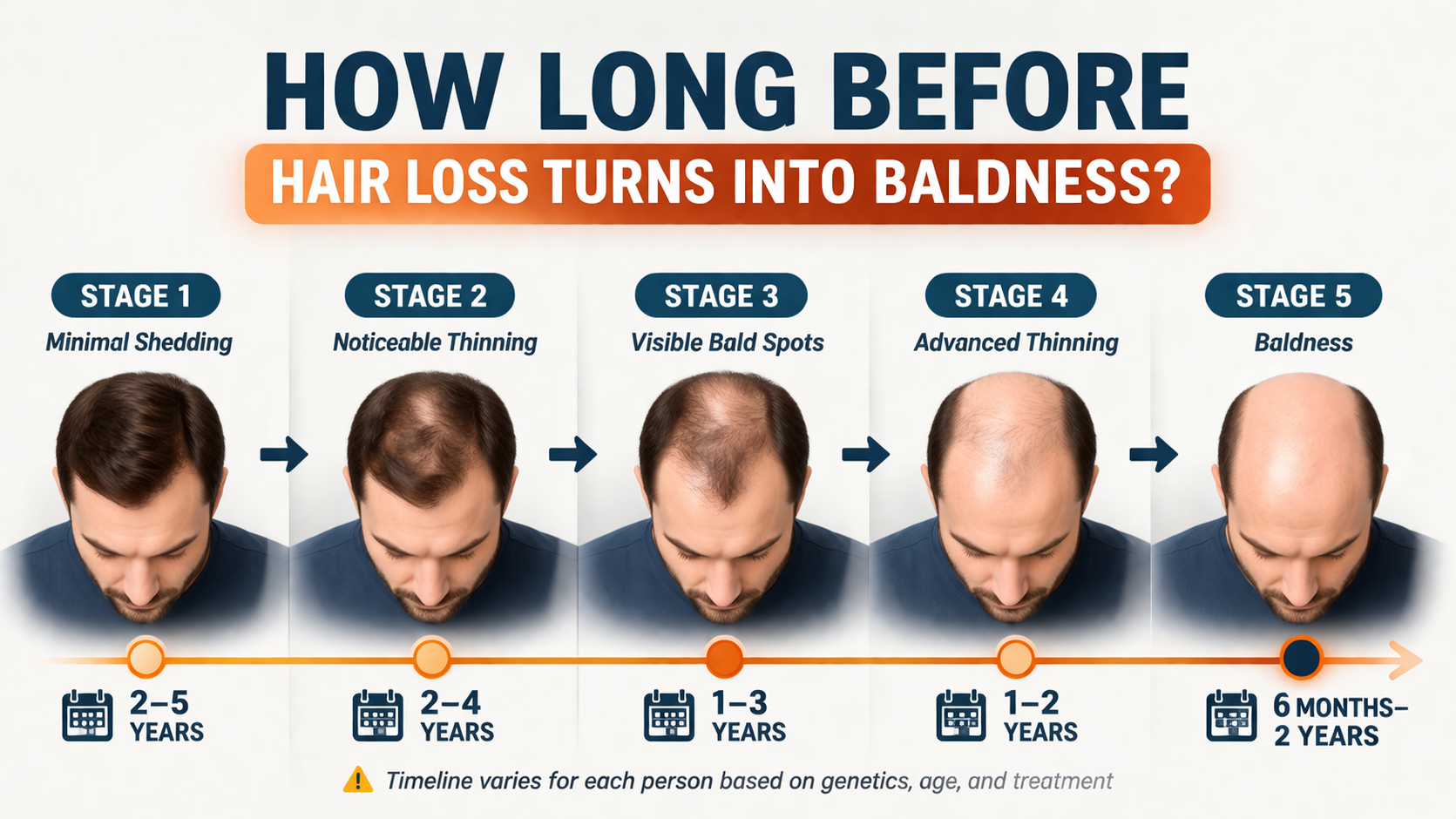
Crown thinning doesn’t usually happen all at once.
It spreads.
Gradually.
A small area becomes slightly less dense.
Then slightly more.
Then more noticeable over time.
And because it’s slow, it blends into your perception.
Until one day, it doesn’t.
The Emotional Shift
There’s a moment where observation turns into concern.
Not panic.
But awareness.
You start checking more often.
Using mirrors.
Looking from different angles.
And once that awareness is there, it’s hard to ignore.
Because now, you know where to look.
Why the Crown Is Often an Early Sign
The crown is particularly sensitive to certain types of hair thinning.
Not because it’s weaker—but because of how hair grows in that area.
The pattern.
The direction.
The natural swirl.
Even small changes in density become noticeable there.
More than in other areas.
When It’s Easy to Compare
Once I noticed it, I started comparing.
Old photos.
Different angles.
Trying to see if it had always been there.
But comparison can be tricky.
Because lighting, styling, and angle all affect what you see.
And that makes it hard to know what’s real—and what’s just perception.
The Difference Between Temporary and Progressive
One of the hardest questions is whether the change is temporary.
Or something that will continue.
And the answer isn’t always immediate.
Temporary thinning may stabilize.
Improve.
Return to normal.
Progressive thinning tends to continue.
Slowly.
Consistently.
And recognizing the pattern takes time.
What Helped Me Understand It Better
I stopped looking for instant answers.
And started observing over time.
Not day by day.
But week by week.
Month by month.
Looking for patterns instead of moments.
And that made things clearer.
The Small Signs That Matter
Early warning signs at the crown aren’t always dramatic.
They’re subtle:
Slight scalp visibility in certain lighting
Reduced volume at the top
Hair that doesn’t lift the same way
Gradual increase in shedding
A change in how your hair sits overall
Individually, they’re easy to overlook.
Together, they tell a story.
The Importance of Not Ignoring It
It’s easy to dismiss early signs.
To assume it’s nothing.
To wait and see.
And sometimes, that’s fine.
But awareness gives you options.
Time to understand.
Time to respond.
Time to decide what matters to you.
Acting Doesn’t Mean Overreacting
Noticing something doesn’t mean you have to act immediately.
But it does mean you’re informed.
And that matters.
Because early awareness allows for thoughtful decisions.
Not reactive ones.
The Quiet Nature of Change
What stood out to me most about crown thinning was how quiet it was.
No sudden shift.
No clear beginning.
Just a gradual change that became visible over time.
And that quietness is what makes it easy to miss.
You’re Not the Only One
If you’ve noticed changes at your crown, you’re not alone.
It’s one of the most common areas where thinning begins.
It just isn’t always talked about openly.
Because it’s not always visible from the front.
So, What Are the Early Warning Signs?
They’re not loud.
They don’t announce themselves.
They show up in small ways:
Changes in volume
Changes in light reflection
Changes in how your hair behaves
And they build over time.
Final Thought
Hair loss at the crown doesn’t usually start with something obvious.
It starts with something subtle.
Something easy to question.
Easy to dismiss.
Until it becomes consistent enough that you can’t ignore it anymore.
And maybe that’s the most important part—
Not catching it immediately.
But recognizing it when it becomes real.
Because once you see it clearly, you’re no longer guessing.
You’re understanding.
And that’s where everything begins to make more sense.