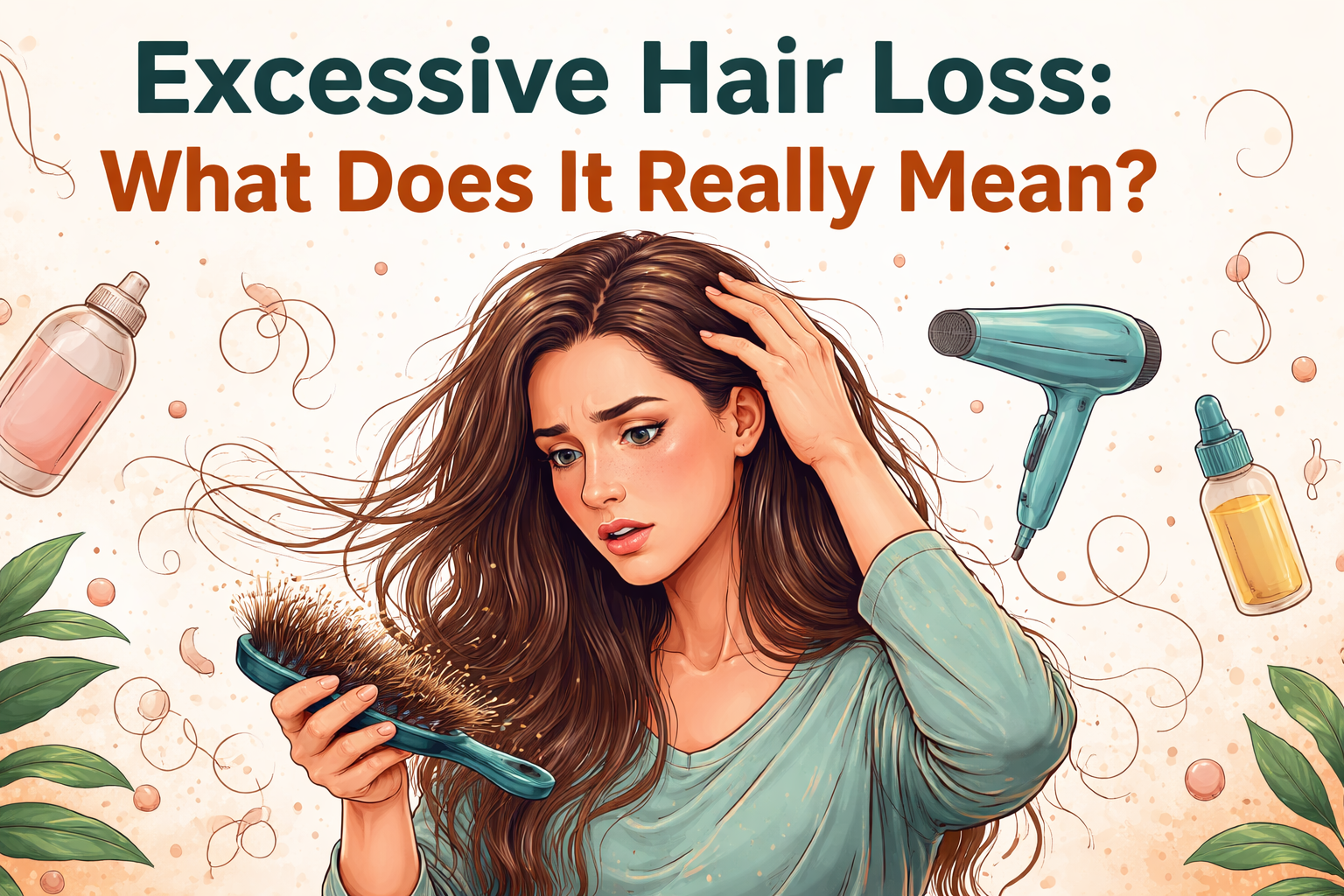
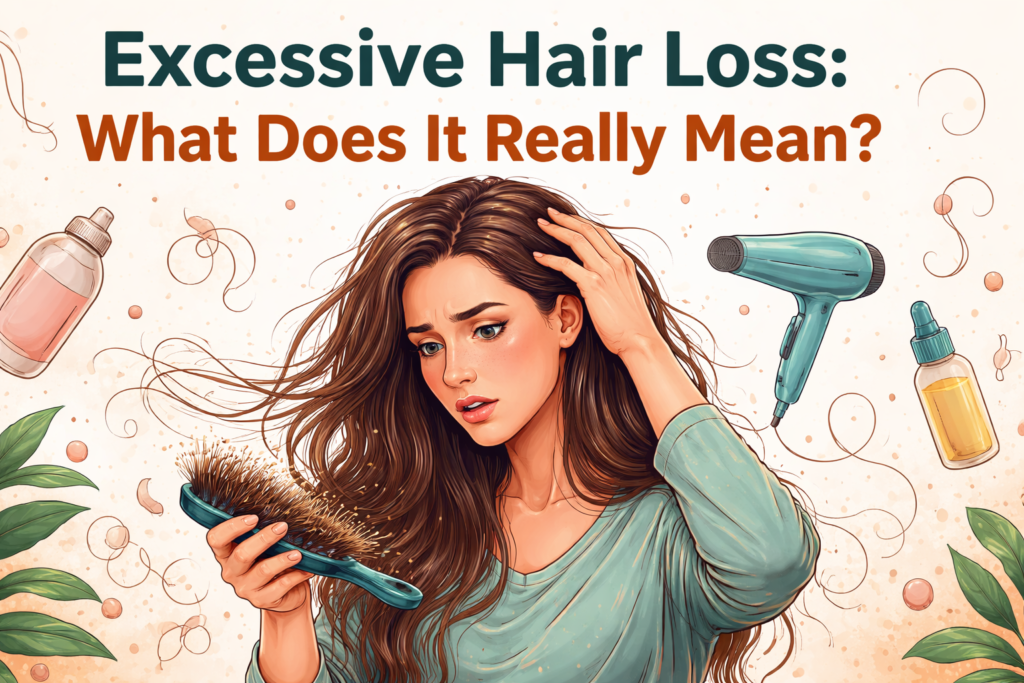
Excessive Hair Loss: What Does It Really Mean?
I remember the first time I noticed it wasn’t just “a little extra hair” on my pillow.
At first, I brushed it off. Everyone sheds hair, right? A few strands in the shower drain, a couple caught in a hairbrush—nothing unusual. That’s what I told myself. But over time, those “few strands” turned into clumps. The kind you can’t ignore. The kind that makes you pause mid-morning, staring at your reflection a little longer than usual.
That’s when the question started to creep in, quietly but persistently: What does this actually mean?
When Hair Loss Stops Feeling Normal
Hair loss isn’t just physical—it’s emotional, psychological, and sometimes even deeply personal. For many people, hair is tied to identity, confidence, and even how we show up in the world. So when it starts thinning or falling out more than usual, it can feel unsettling in ways that are hard to explain.
At first, I tried to rationalize it.
“Maybe it’s just stress.”
“Maybe it’s the weather.”
“Maybe I’m overthinking it.”
But deep down, I knew something had changed.
Excessive hair loss often begins subtly. You don’t wake up one day completely different. Instead, it’s a slow accumulation of small signs: more hair left behind on your clothes, a widening part line, a ponytail that feels thinner than it used to.
And that’s the tricky part—it sneaks up on you.
The Hidden Language of Your Body
What I eventually realized is that hair loss isn’t random. It’s often your body trying to tell you something.
Our bodies are constantly communicating with us, but not always in ways we immediately understand. Hair, in particular, can act like a signal system. When something is off internally—whether it’s physical, emotional, or hormonal—your hair might be one of the first places it shows.
Think of it like this: hair isn’t essential for survival. So when your body is under stress or lacking nutrients, it redirects energy to more critical functions. Hair growth slows down. Shedding increases. And suddenly, what used to feel stable begins to shift.
Stress: The Silent Contributor
If there’s one factor that seems to appear again and again in stories of hair loss, it’s stress.
Not just the obvious kind—like major life events—but the quiet, ongoing kind. The deadlines, the overthinking, the pressure to keep everything together. The kind of stress that doesn’t always feel dramatic, but never really goes away.
There’s even a condition called telogen effluvium, where stress pushes hair follicles into a resting phase, causing more hair to fall out than usual. What’s strange is that it often doesn’t happen immediately. The shedding can start weeks or even months after the stressful period.
Which means by the time you notice the hair loss, the cause might already feel like it’s in the past.
That disconnect can be confusing. You think, “But I’m fine now. So why is this happening?”
But your body remembers what your mind tries to move past.
Hormones: The Quiet Influencers
Another layer to this is hormones—those invisible messengers that quietly regulate so much of how our bodies function.
Changes in hormones can have a surprisingly strong effect on hair. This can happen during puberty, after illness, with changes in routine, or even due to shifts in sleep patterns and diet.
What makes it more complicated is that hormonal changes don’t always come with obvious signs. You might not feel dramatically different, but your body is adjusting behind the scenes.
And sometimes, your hair is the first place that adjustment becomes visible.
Nutrition: What You’re Missing Matters
There was a point when I started questioning my daily habits.
Not in a dramatic, overhaul-everything kind of way—but in small, honest moments. Was I eating well? Was I skipping meals? Was I getting enough of what my body actually needed?
Hair is made primarily of protein, and it relies on a range of vitamins and minerals to grow properly—iron, zinc, biotin, and more. When your body doesn’t get enough of these, it prioritizes essential functions over hair growth.
The result? Thinning, shedding, and slower regrowth.
It’s not always about extreme deficiencies, either. Sometimes it’s just a pattern of small imbalances over time.
And those small things add up.
The Emotional Side No One Talks About Enough
One of the hardest parts of hair loss isn’t just the physical change—it’s how it makes you feel.
There’s a quiet kind of frustration that comes with it. You might find yourself checking your hair more often, adjusting how you style it, or avoiding certain lighting and angles.
You might wonder if other people notice.
You might compare how your hair used to look to how it looks now.
And even if no one else says anything, the awareness stays with you.
It’s easy to feel alone in that experience, especially because hair loss isn’t always openly discussed. But the truth is, many people go through it at some point in their lives.
They just don’t always talk about it.
What Excessive Hair Loss Really Means
So what does excessive hair loss actually mean?
It doesn’t mean something is “wrong” with you in a simple, one-dimensional way.
More often, it means your body is going through something—adjusting, reacting, recovering, or asking for attention.
It could mean:
- You’ve been under more stress than you realized
- Your body needs better nutrition or more consistent care
- Your hormones are shifting
- You’re recovering from an illness or a demanding period
- Or simply that your body is out of balance in a way that needs time to correct
Hair loss is rarely just about hair.
It’s about what’s happening beneath the surface.
Learning to Respond, Not Panic
If there’s one thing I wish I had done earlier, it’s this: respond with curiosity instead of panic.
It’s easy to jump to worst-case scenarios. To search endlessly for answers and end up more overwhelmed than when you started.
But a calmer approach often helps more.
Pay attention to patterns. Notice when the shedding started. Think about what was happening in your life a few months before that.
Small reflections like that can reveal more than you expect.
And instead of trying to “fix everything” all at once, focus on gentle, consistent care—both for your body and your mind.
The Slow Path Back
Hair doesn’t change overnight, and it doesn’t recover overnight either.
That was one of the hardest lessons for me.
We live in a world that promises quick results—fast solutions, instant improvements. But hair growth doesn’t work like that. It follows its own timeline, one that requires patience.
Weeks pass. Then months.
At first, you might not notice much difference. But gradually, things begin to shift. Less shedding. Small signs of regrowth. A sense that your body is finding its balance again.
It’s not dramatic.
It’s quiet.
But it’s real.
Redefining Control
One of the unexpected things this experience taught me is that control isn’t always about forcing change.
Sometimes, it’s about creating the right conditions and then allowing your body to do what it knows how to do.
You can’t command your hair to grow faster.
But you can support your body—through rest, nutrition, and reducing unnecessary stress.
You can listen more closely.
You can respond more thoughtfully.
And over time, that makes a difference.
You’re Not Alone in This
If you’re going through excessive hair loss right now, it might feel isolating. It might feel like something only you are noticing or dealing with.
But you’re not alone.
This is a shared experience—one that many people quietly navigate at different points in their lives.
And while it can be frustrating and sometimes even discouraging, it’s also something that can improve with time, care, and understanding.
A Final Thought
Looking back, I realize that hair loss wasn’t just a problem to solve—it was a message to understand.
It asked me to slow down.
To pay attention.
To take better care of myself in ways I had been overlooking.
And while I wouldn’t say I’m grateful for the experience, I can say this: it made me more aware of how deeply connected everything in the body really is.
Hair, in the end, is just one piece of a much larger story.
And sometimes, when that piece starts to change, it’s an invitation to look at the bigger picture.
Not with fear—but with curiosity, patience, and a little more kindness toward yourself.