Why Is My Hair Falling Out in Clumps? Early Warning Signs of Baldness
A personal, reflective narrative
I didn’t notice it all at once.
It started subtly—so subtle that I could have easily dismissed it if I hadn’t paused one morning, fingers tangled in my hair, watching a few more strands than usual slip away and settle in the sink. At first, I told myself it was nothing. Everyone loses hair, right? A few strands here and there didn’t mean anything.
But then it kept happening.
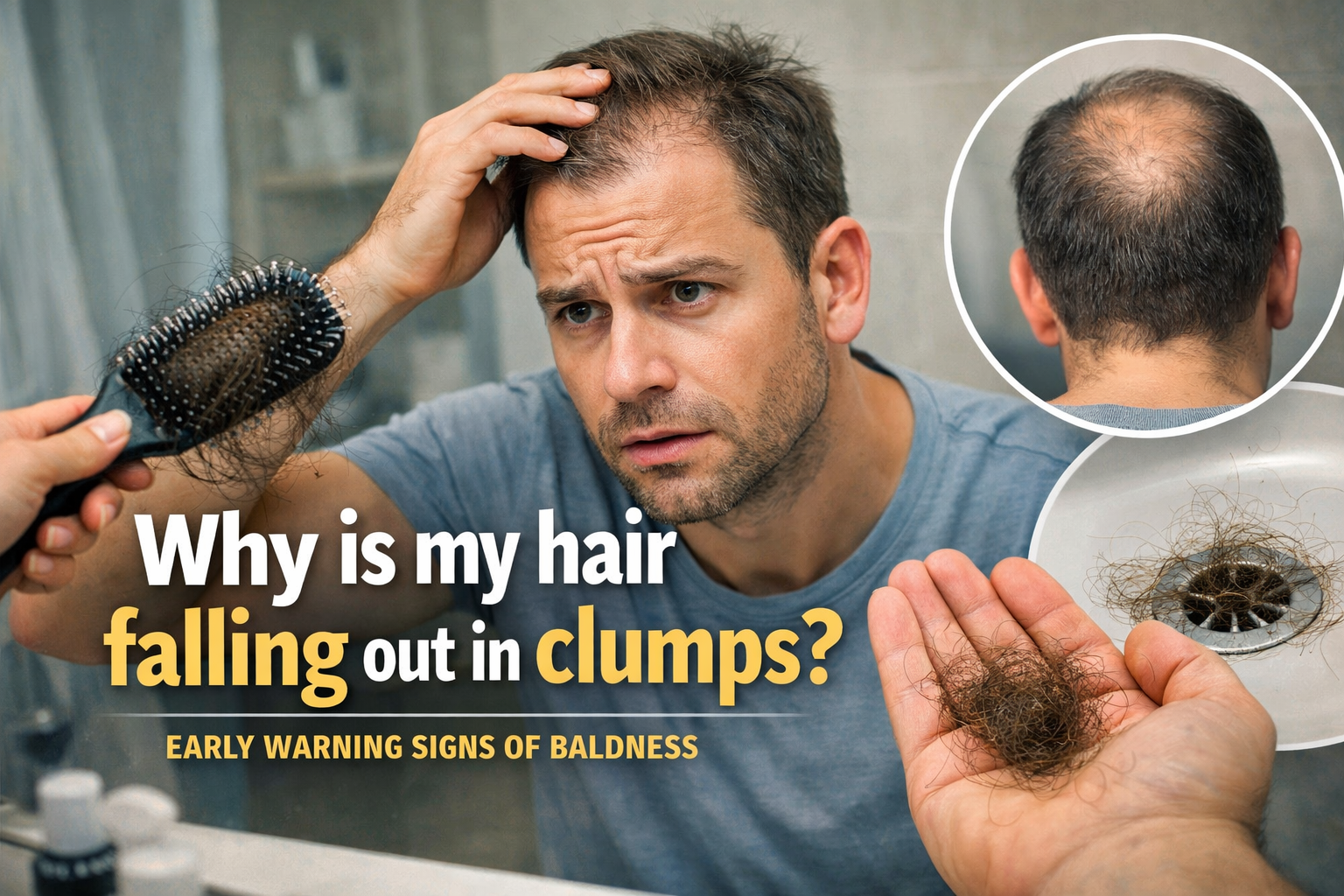
In the shower, I began to notice more hair collecting near the drain. On my pillow, a few strands turned into clusters. And one afternoon, under bright light, I caught a glimpse of my reflection and wondered—had my hair always looked this thin?
That was the moment curiosity turned into concern.
When Hair Loss Stops Feeling “Normal”
We’re often told that losing around 50 to 100 hairs a day is completely normal. It’s part of the natural hair cycle—growth, rest, and shedding. But what no one really explains is how it feels when the shedding no longer seems random or balanced.
Hair falling out in clumps doesn’t just feel physical—it feels personal.
I remember running my hand through my hair and pulling away more strands than I expected. It wasn’t just the number. It was the suddenness, the way it seemed to come out all at once, like something had shifted without warning.
That’s when I started paying closer attention.
The Early Signs We Often Miss
Looking back, the signs were there long before I acknowledged them.
It wasn’t just about hair falling out. It was about how my hair behaved differently over time.
- My hair felt thinner when I tied it back.
- My part looked slightly wider than before.
- Styling became harder—my hair didn’t hold the same volume.
- The texture changed, becoming finer and less dense.
At first, each change seemed minor. Easy to ignore. But together, they formed a pattern I couldn’t unsee.
What surprised me most was how gradual it all was. Hair loss doesn’t always arrive dramatically. Sometimes, it creeps in quietly, disguised as “just a bad hair day” that never quite goes away.
The Emotional Side No One Talks About
What I didn’t expect was how much it would affect me emotionally.
Hair, for many of us, is tied to identity. It’s part of how we present ourselves to the world. So when it starts to change—especially in a way we don’t understand—it can feel unsettling.
I found myself checking mirrors more often, adjusting angles, wondering if others noticed what I was starting to see. It wasn’t about vanity—it was about control. Or rather, the feeling of losing it.
There’s also a quiet kind of fear that comes with it: What if this doesn’t stop?
And that question, more than anything, pushed me to start looking for answers.
Understanding the Possible Causes
What I discovered is that hair loss—especially when it happens in clumps—can have many different causes. And not all of them mean permanent baldness.
In fact, some are temporary, triggered by changes in the body or environment.
1. Stress and Sudden Changes
One of the most common causes is something called telogen effluvium—a condition where a large number of hair follicles enter the shedding phase at the same time.
It can be triggered by:
- Stress (emotional or physical)
- Illness
- Major life changes
- Lack of sleep
What struck me was how delayed the effect can be. The shedding often starts weeks or even months after the stressful event, making it hard to connect cause and effect.
It made me reflect on what had been happening in my life before the hair loss began. And slowly, the pieces started to fit together.
2. Nutritional Imbalances
Another factor I hadn’t considered was nutrition.
Hair growth depends on a steady supply of nutrients—iron, protein, vitamins. Even small deficiencies can disrupt the cycle.
I realized there had been times when my eating habits weren’t exactly consistent. Skipped meals, quick snacks, not much attention to balance. It didn’t seem like a big deal at the time, but over weeks and months, it can have an impact.
3. Hormonal Changes
Hormones play a significant role in hair health.
For some people, early signs of baldness—especially pattern hair loss—are linked to genetic sensitivity to hormones like DHT (dihydrotestosterone). This type of hair loss tends to follow patterns:
- Receding hairline
- Thinning at the crown
- Gradual miniaturization of hair strands
Unlike sudden shedding, this type is more progressive. Slower, but persistent.
And that’s what makes it harder to notice at first.
4. Hair Care Habits
I also had to consider something more immediate—how I treated my hair.
- Tight hairstyles
- Frequent heat styling
- Harsh products
These habits can weaken hair over time, making it more prone to breakage and shedding. It’s not always about what’s happening internally—sometimes, it’s about daily routines we barely think about.
Clumps vs Gradual Thinning
One of the most confusing aspects is the difference between clump shedding and pattern thinning.
Clump shedding often feels alarming because it’s sudden and visible. But it can be temporary.
Pattern thinning, on the other hand, is quieter. It doesn’t shock you—it slowly reveals itself over time.
In my case, it felt like a mix of both. And that made it harder to understand what was really happening.
Was this temporary? Or the beginning of something long-term?
That uncertainty is one of the hardest parts.
When Should You Pay Attention?
There’s a moment when curiosity turns into awareness—and awareness turns into action.
For me, that moment came when the changes stopped feeling random.
If you’re noticing:
- Hair falling out in noticeable clumps regularly
- A visible decrease in volume
- Changes in hairline or parting
- Increased scalp visibility
…it’s worth paying attention.
Not panicking—but not ignoring it either.
Because early awareness gives you options.
What Helped Me Shift My Perspective
At first, I was focused on stopping the hair loss immediately. Fixing it. Reversing it.
But over time, my perspective changed.
I started to see it less as a sudden problem and more as a signal—a way my body was communicating that something needed attention.
Instead of asking, “How do I stop this right now?”
I began asking, “What might be causing this?”
That shift made a difference.
It led me to:
- Pay more attention to my stress levels
- Improve my sleep habits
- Be more mindful of what I was eating
- Treat my hair more gently
None of these changes worked overnight. But they gave me a sense of direction.
The Uncertainty of Early Signs
One of the most difficult things about early hair loss is that it doesn’t come with clear answers.
You don’t always know:
- If it’s temporary or permanent
- If it will get worse or stabilize
- If what you’re doing is helping or not
And that uncertainty can be frustrating.
But I’ve learned that not every question needs an immediate answer. Sometimes, it’s about observing, adjusting, and giving your body time to respond.
A Quiet Kind of Acceptance
There’s a moment—somewhere between worry and understanding—where things start to feel a little more manageable.
Not because the situation has completely resolved, but because you’ve stopped feeling powerless.
Hair loss, especially in the beginning, can feel like something happening to you. Something out of your control.
But the more you learn, the more you realize that while you can’t control everything, you can influence a lot.
And sometimes, that’s enough to shift the experience from fear to awareness.
Final Thoughts
If you’ve found yourself wondering why your hair is falling out in clumps, you’re not alone.
It’s a question that often begins quietly, in small observations that gradually grow into something harder to ignore.
But here’s what I’ve come to understand:
Not all hair loss means baldness.
Not all shedding is permanent.
And not all changes happen without reason.
Sometimes, it’s your body responding to stress.
Sometimes, it’s a reflection of your habits.
Sometimes, it’s something that needs a bit more attention and care.
And sometimes, it’s a combination of all of these.
The important thing isn’t to jump to conclusions—but to stay curious, aware, and patient with the process.
Because in the end, this isn’t just about hair.
It’s about understanding the subtle ways your body communicates—and learning how to listen before the message becomes impossible to ignore.