I didn’t notice it all at once.
At first, it was just a few extra strands on my pillow in the morning. Then it was the shower drain clogging a little faster than usual. Nothing dramatic, nothing alarming—just small signs that were easy to brush off. I told myself it was seasonal, or maybe just stress. After all, hair falls out, doesn’t it? That’s normal.
But then one day, I caught my reflection under a different kind of light—harsh, unforgiving, the kind that doesn’t hide anything. And for the first time, I saw it clearly. My hair wasn’t just “shedding.” It was thinning.
That moment stayed with me longer than I expected. Not because of vanity, but because of what it made me realize: sometimes, our bodies whisper before they ever scream. And when it comes to hair loss, those whispers are often tied to causes we don’t even think to question.
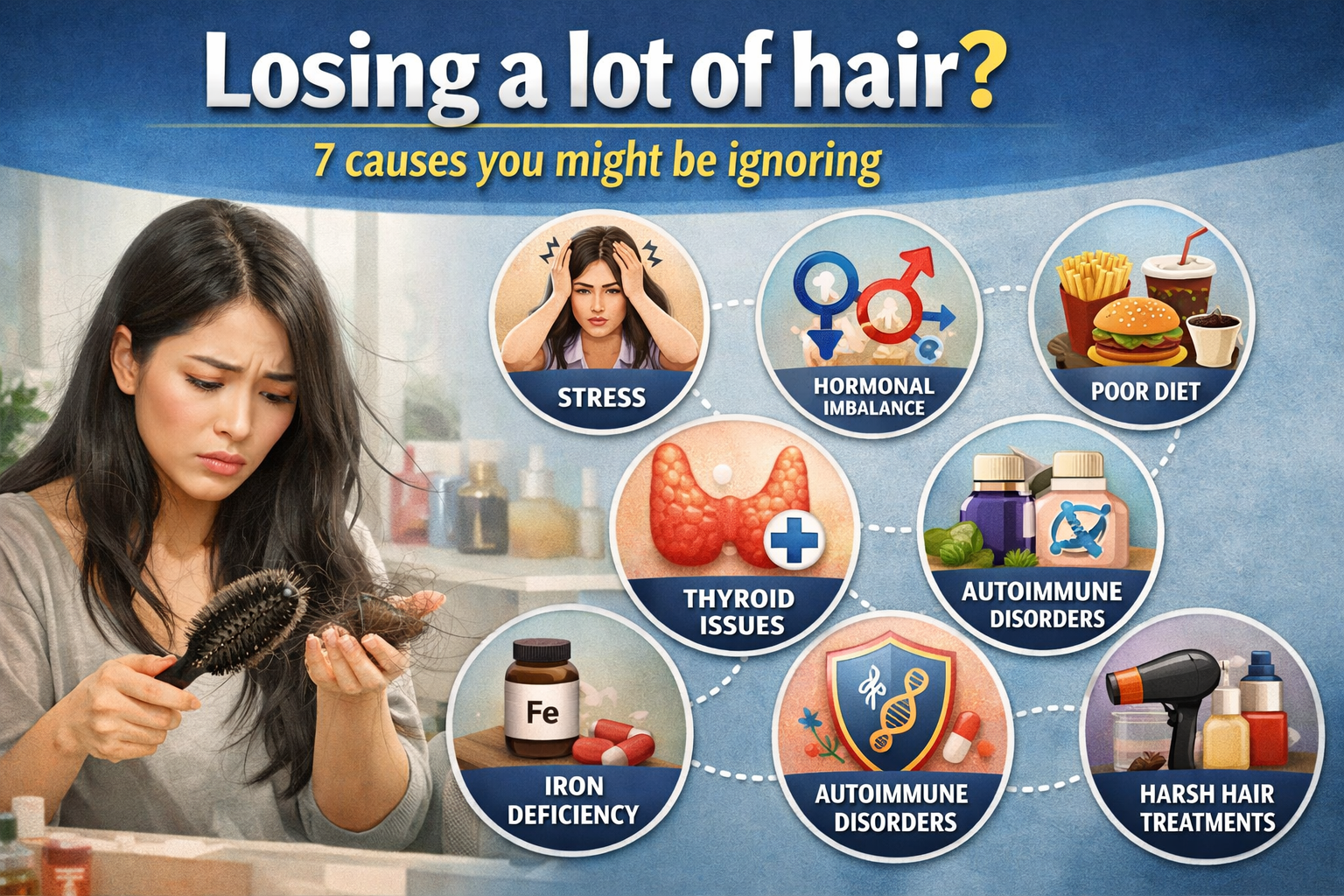
This is the story of what I learned along the way—seven causes of hair loss that many of us ignore until it becomes impossible to do so.
1. Stress That Never Really Leaves
I used to think stress had to feel overwhelming to be harmful. The kind that keeps you up at night or makes your chest feel tight. But what I didn’t realize was how dangerous low, constant stress could be.
The kind you carry quietly.
Deadlines. Expectations. Overthinking conversations. That subtle pressure to always be doing something productive. It doesn’t feel dramatic, but it lingers—and your body keeps score.
Hair, as it turns out, is incredibly sensitive to this.
There’s a condition called telogen effluvium, where stress pushes more hair follicles into a resting phase, causing noticeable shedding weeks or even months later. What makes it tricky is the delay—you might not connect your current hair loss to something that stressed you out months ago.
Looking back, I realized my hair didn’t start falling during the stressful time. It started after, when I thought everything was “fine.”
2. Not Eating as Well as You Think
For a long time, I believed I was eating “healthy enough.” I wasn’t skipping meals, I wasn’t living on junk food, and I thought that was sufficient.
But hair doesn’t just need “enough.” It needs specific nutrients.
Protein, iron, zinc, biotin—these aren’t just buzzwords. They are the building blocks of your hair. And even a mild deficiency can slowly affect growth and strength.
I remember going through a phase where I ate less, not intentionally starving myself, just… being too busy. Meals became smaller, quicker, less balanced. It didn’t feel like a big deal at the time.
But hair is one of the first things your body sacrifices when nutrients are limited. It prioritizes vital organs, not appearance.
So while I felt “fine,” my hair was quietly paying the price.
3. Hormonal Shifts You Didn’t Notice
Hormones are strange. They can change subtly, without any obvious signs—until something external, like hair loss, starts to reflect what’s happening internally.
For some people, it’s related to thyroid imbalances. For others, it could be changes during puberty, menstrual cycles, or other natural fluctuations. Even slight shifts can disrupt the hair growth cycle.
What surprised me most was how gradual it can be.
There’s no sudden event, no clear moment when things change. Just a slow, almost invisible shift until one day you realize something is different.
And by then, it’s been happening for a while.
4. Hair Care Habits That Seem Harmless
I used to think damage only came from extreme things—bleaching, excessive heat styling, or harsh chemicals. But sometimes, it’s the everyday habits that matter most.
Tight hairstyles. Rough towel drying. Brushing wet hair too aggressively. Using products that don’t suit your scalp.
None of these seem serious on their own. But repeated over time, they create stress on the hair and scalp that adds up.
I remember always tying my hair the same way—tight, secure, practical. It felt neat, controlled. But over time, that constant tension began to weaken the roots.
It wasn’t immediate. It wasn’t obvious. But it was real.
5. Lack of Sleep (More Than Just Feeling Tired)
Sleep is one of those things we tend to compromise first.
“Just one more episode.”
“Just one more scroll.”
“I’ll sleep later.”
It feels harmless in the moment. But your body relies on sleep to repair, regulate, and restore—including processes that affect hair growth.
When sleep becomes inconsistent or insufficient, it can disrupt hormone levels, increase stress, and slow down regeneration.
I didn’t connect my irregular sleep schedule to my hair at first. I only noticed the fatigue, the lack of focus. But over time, I began to see how everything was connected.
Hair loss wasn’t an isolated issue. It was part of a larger pattern.
6. Ignoring Your Scalp
We talk a lot about hair, but rarely about the scalp—the environment where hair actually grows.
A healthy scalp is essential. If it’s too oily, too dry, irritated, or clogged with product buildup, it can affect the strength and growth of your hair.
I used to focus entirely on shampoos and conditioners that made my hair look good. Smooth, shiny, manageable. But I wasn’t paying attention to how my scalp felt.
Sometimes it was itchy. Sometimes it felt tight. I ignored it.
But over time, I learned that these small discomforts can be signs of imbalance. And when the scalp isn’t healthy, hair struggles to thrive.
7. Assuming It Will Fix Itself
This might be the most overlooked cause of all.
The assumption that things will just… go back to normal.
I told myself it was temporary. That it would stop on its own. That I didn’t need to think about it too much.
And sometimes, that’s true. Hair loss can be temporary.
But sometimes, it’s your body asking for attention. Not in a dramatic way, but in a quiet, persistent one.
Waiting too long to understand the cause doesn’t just delay the solution—it can make the recovery slower.
What I Learned From It All
If there’s one thing this experience taught me, it’s that hair loss is rarely about just hair.
It’s about patterns.
It’s about how you live, how you eat, how you rest, how you handle stress, and how you treat your body on a daily basis. It’s about the small things that don’t seem important—until they are.
I stopped looking for a single cause and started looking at the bigger picture.
Was I sleeping enough?
Was I eating properly?
Was I constantly stressed without realizing it?
Was I being too rough with my hair?
Was I ignoring signals my body was trying to send?
The answers weren’t always comfortable. But they were necessary.
A Different Way of Seeing It
Over time, my perspective shifted.
Instead of seeing hair loss as something to panic about, I began to see it as feedback. Not a failure, not something to hide—but something to understand.
That didn’t mean ignoring it or accepting it without question. It meant paying attention.
Making small changes. Being more aware. Giving my body what it needed, even when it wasn’t convenient.
And slowly, things began to improve.
Not overnight. Not dramatically. But gradually.
And maybe that’s the most important part to remember—just like hair loss doesn’t happen instantly, recovery doesn’t either.
In the End
If you’re losing more hair than usual, it’s easy to focus on what you see—the strands, the thinning, the visible changes.
But the real story often lies beneath that.
In the habits you’ve built.
In the stress you’ve carried.
In the routines you’ve overlooked.
Hair, in its own quiet way, reflects all of it.
So instead of asking, “How do I stop this?”
It might be more helpful to ask, “What is this trying to tell me?”
Because sometimes, the answer isn’t in a product or a quick fix.
Sometimes, it’s in the way you’ve been living all along—and the small, meaningful changes you choose to make next.