
Do Hair Products Come with Guarantees?
A personal reflection on promises, expectations, and what really works
I still remember the first time I truly believed a hair product could change everything.
It was one of those late evenings where you fall into a spiral of scrolling—ads, reviews, before-and-after photos that seem almost too perfect to be real. There it was: a sleek bottle, minimalist design, and a bold claim printed right across the label—“Visible results in 7 days. Guaranteed.”
Guaranteed.
That word stayed with me longer than anything else. It didn’t just promise improvement; it promised certainty. And in a world where so much about our appearance feels unpredictable, certainty is incredibly persuasive.
So I bought it.
The Allure of a Promise
When it comes to hair care, we’re not just buying products—we’re buying hope. Hope that frizz will finally be tamed, that thinning areas will somehow fill in, that dull strands will regain a kind of effortless shine we’ve only seen in commercials.
Guarantees tap directly into that hope. They simplify a complex reality into something clean and reassuring: use this, and you will see results. No ambiguity. No risk—at least, that’s how it feels.
But the first time I used that product, nothing dramatic happened. Not on day one. Not even by day seven.
At first, I thought I was doing something wrong. Maybe I wasn’t applying it correctly. Maybe I needed more time. Maybe my hair was just… different.
And that’s when I started to question what a “guarantee” really means in the world of hair care.
What Are Companies Actually Guaranteeing?
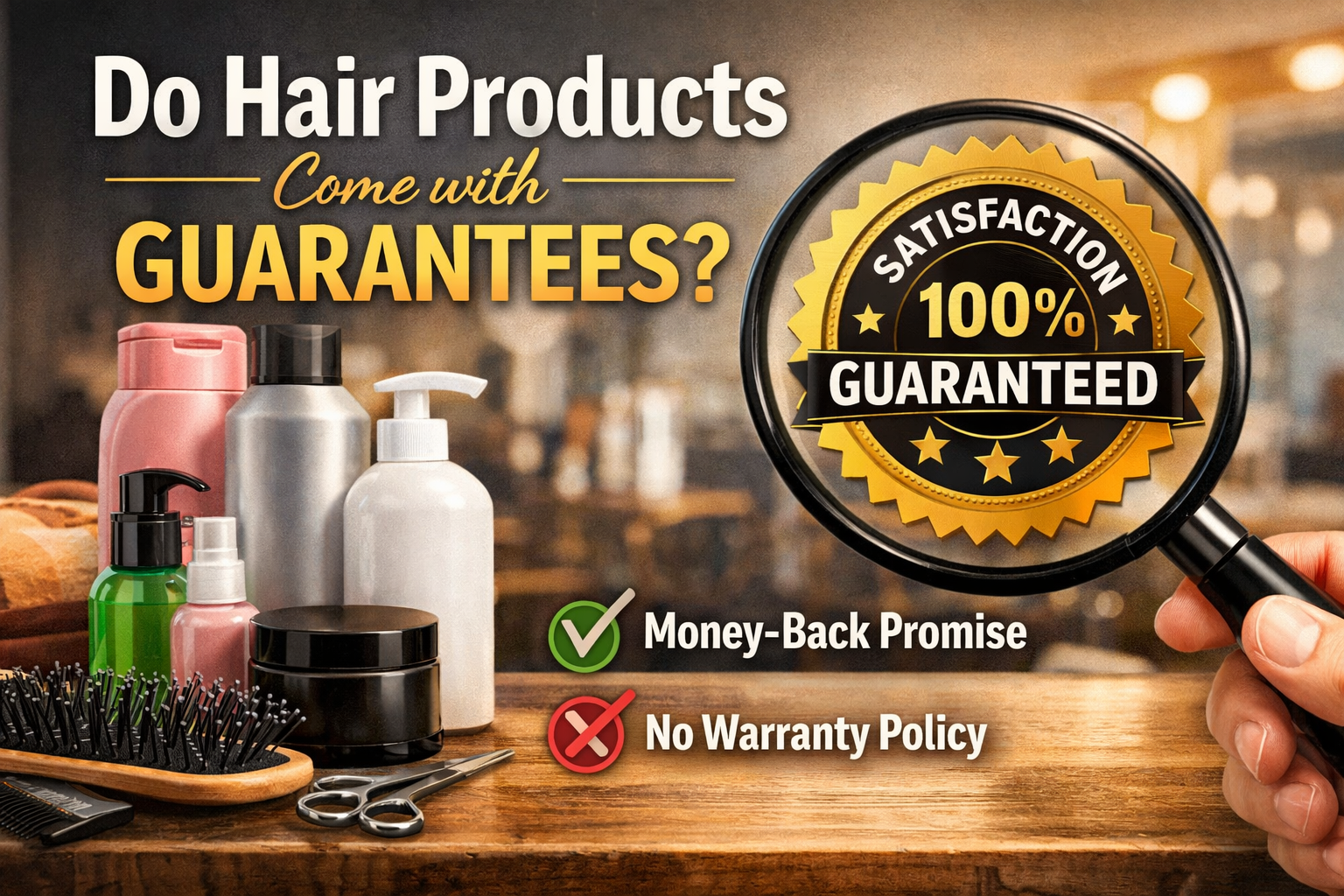
Over time, I realized that most guarantees in hair products are not as absolute as they sound. They often come in the form of:
- Money-back guarantees
- “Results may vary” disclaimers
- Conditional promises based on consistent use
The bold claim on the front of the bottle is usually supported by fine print somewhere else—on the packaging, the website, or tucked away in terms and conditions.
In other words, the guarantee is rarely about results. It’s about reducing the risk of purchase.
And that’s an important distinction.
A money-back guarantee doesn’t mean the product will work. It just means you can get your money back if it doesn’t. It shifts the transaction from “trust us, this will work” to “try it and see.”
At first, that felt disappointing. But eventually, I began to see it differently—not as deception, but as a reflection of something deeper.
The Complexity of Hair Itself
Hair is personal. Not just emotionally, but biologically.
What works for one person might do absolutely nothing for another. Texture, scalp condition, genetics, climate, diet, stress levels—so many variables influence how our hair behaves.
I once recommended a shampoo to a friend after it worked wonders for me. Within a week, she told me it made her hair feel dry and unmanageable. Same product, completely different outcome.
That’s when it clicked: no company can truly guarantee results for everyone, because no two heads of hair are exactly the same.
So instead of asking, “Does this product come with a guarantee?” I started asking a different question:
“Is this product compatible with me?”
The Subtle Power of Expectations
There’s another layer to this that I didn’t notice at first—the role of expectations.
When we use a product labeled as “guaranteed,” we tend to look for results more intensely. We analyze every strand, every change, every possible improvement. Sometimes, we even convince ourselves that we’re seeing results because we expect to.
Other times, the opposite happens. If the results aren’t immediate or dramatic, we feel disappointed—even if there is some improvement.
I experienced this with a conditioning treatment that, objectively, made my hair softer over time. But because it didn’t deliver a dramatic transformation overnight, I initially dismissed it as ineffective.
Looking back, I realize the product wasn’t the problem—my expectations were.
The Role of Consistency
One of the most overlooked aspects of hair care is consistency. We often expect quick results from products that are designed to work gradually.
Think about it: we don’t expect to build strength from a single workout or learn a skill overnight. Yet, when it comes to hair, we often expect visible changes almost immediately.
Many products require weeks—sometimes months—of regular use to show noticeable effects. But marketing rarely emphasizes patience. It emphasizes speed.
And that creates a disconnect.
I’ve had products that seemed ineffective at first but became staples in my routine over time. Not because they performed miracles, but because they delivered small, consistent improvements.
No bold claims. No guarantees. Just quiet reliability.
When Guarantees Do Matter
Despite all this, I don’t think guarantees are meaningless. They serve a purpose—just not the one we often assume.
A guarantee can signal:
- Confidence from the brand
- A willingness to stand behind the product
- A lower-risk opportunity for the consumer
In that sense, a guarantee isn’t about certainty of results—it’s about trust.
Would I be more likely to try a new product if it offered a refund policy? Probably. Not because I believe it will definitely work, but because I know I won’t be stuck with something that doesn’t.
And in a market saturated with options, that kind of reassurance can make a difference.
Learning to Read Between the Lines
Over time, I’ve become more attentive—not just to what products promise, but to how they communicate those promises.
I’ve learned to look beyond phrases like:
- “Clinically proven”
- “Visible results”
- “Guaranteed improvement”
And instead focus on:
- Ingredients
- User reviews (especially detailed ones)
- Realistic timelines
- My own past experiences with similar products
It’s not about becoming cynical. It’s about becoming informed.
Because once you understand how these promises are framed, they lose their power to mislead—and start to serve as just one piece of a larger puzzle.
A Shift in Perspective
If I could go back to that moment—the one where I first saw that “guaranteed” label—I think I would approach it differently.
I would still be curious. Still open to trying something new. But I wouldn’t expect certainty.
I would understand that:
- A guarantee doesn’t equal transformation
- Results take time
- And most importantly, that my hair doesn’t need to match anyone else’s standard to be considered “improved”
That shift didn’t happen overnight. It came through trial and error, through products that didn’t work, and a few that quietly did.
So, Do Hair Products Come with Guarantees?
The answer is both simple and complicated.
Yes, many hair products come with guarantees—but those guarantees are usually about the purchase, not the outcome.
They can promise refunds. They can promise satisfaction policies. But they cannot promise that your hair will look or feel a certain way.
And maybe that’s not a limitation—it’s just reality.
Because hair care, at its core, isn’t about certainty. It’s about exploration. It’s about understanding what works for you, even if that takes time.
A More Honest Kind of Trust
These days, I trust products differently.
Not because they make bold claims, but because they fit into my routine in a way that feels sustainable. Because they work—not instantly, not dramatically, but consistently.
And in a way, that feels more reliable than any guarantee printed on a label.
Because the truth is, the most meaningful changes rarely come with promises.
They come quietly, over time, in ways you only notice when you stop looking for perfection—and start paying attention to what actually works.
And maybe that’s the real takeaway.
Not whether hair products come with guarantees, but whether we’re willing to move beyond them—to trade certainty for understanding, and promises for patience.
Because in the end, the relationship we have with our hair isn’t defined by a single product or claim.
It’s shaped by the choices we make, the expectations we carry, and the way we learn—slowly, sometimes imperfectly—what truly works for us.