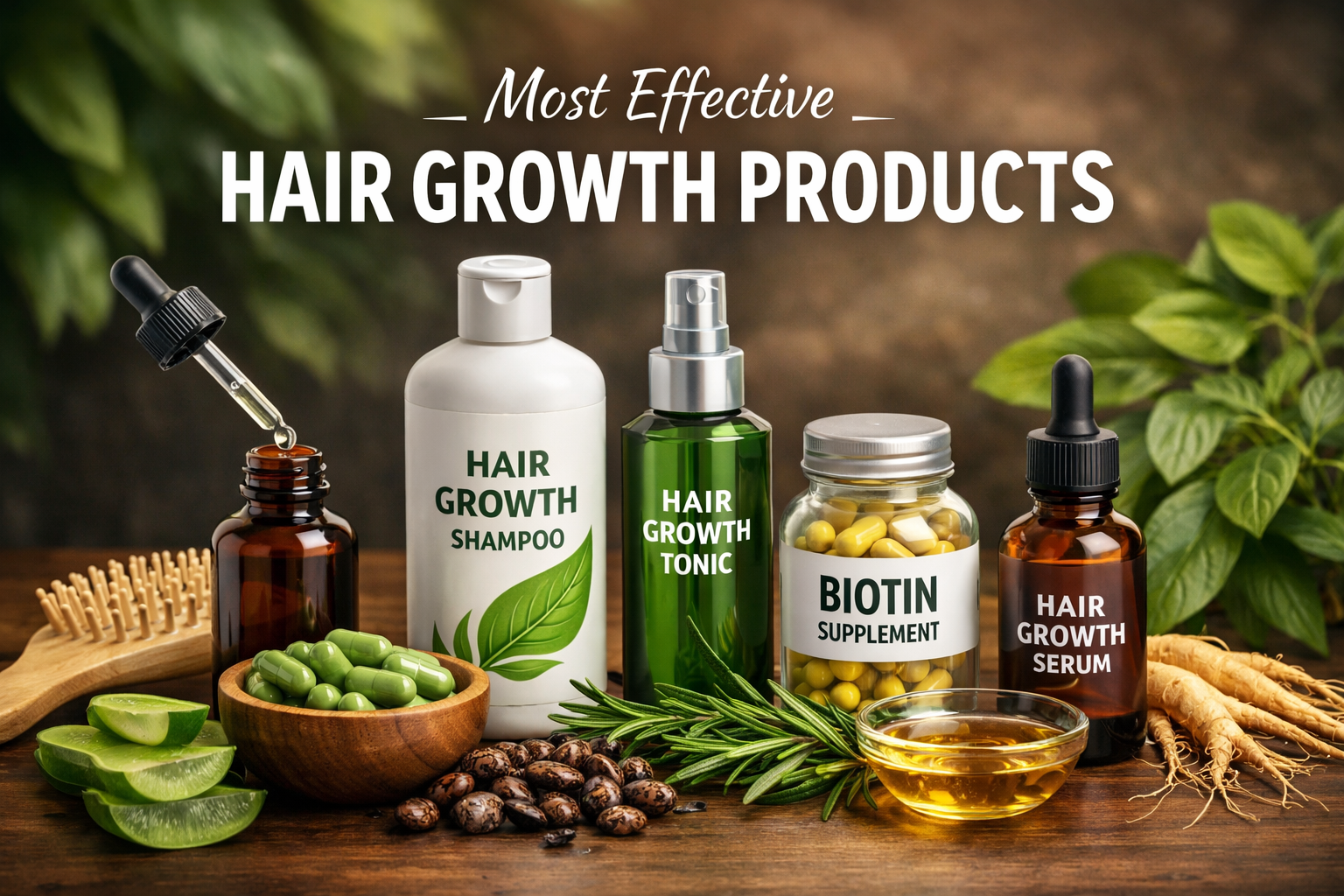
Most Effective Hair Growth Products
A personal, reflective journey through trial, patience, and quiet transformation
I didn’t notice it all at once.
At first, it was just a few extra strands on my pillow in the morning. Nothing alarming—just enough to make me pause for a second longer than usual. Then it was the way my hair felt thinner when I ran my fingers through it, like something subtle had shifted overnight. The mirror didn’t scream change, but it whispered it, gently, persistently.
And like most people in that moment, I did what we all tend to do—I searched for solutions.
What I didn’t expect was that the search itself would become a journey, not just through products, but through patience, expectation, and a deeper understanding of what “effectiveness” really means.
The First Bottle: Hope in a Label
The first product I bought was something I found late at night, scrolling through reviews that all seemed to say the same thing: “This changed everything.”
The bottle was small, but the promises were big—stronger roots, faster growth, visible results in weeks. I remember holding it in my hand, feeling a strange mix of skepticism and hope. There’s something powerful about believing that a single product might fix what feels out of your control.
I followed the instructions carefully. Every drop felt intentional, like I was actively doing something to reclaim what I thought I was losing.
But days passed. Then weeks.
Nothing dramatic happened.
And that was my first real lesson: effective hair growth products don’t work overnight—and anything that claims they do is usually selling something other than truth.
Understanding What “Effective” Really Means
It took me a while to realize that effectiveness in hair growth isn’t about speed. It’s about consistency, compatibility, and biology.
Hair grows slowly. On average, about half an inch per month. No product can rewrite that completely. What they can do—if they’re truly effective—is support the conditions that allow your hair to grow healthier, stronger, and with less breakage.
That shift in perspective changed everything.
I stopped looking for miracles and started looking for mechanisms.
The Products That Actually Made a Difference
Over time, I narrowed down a few categories of products that consistently showed real, noticeable impact—not instantly, but steadily.
1. Scalp Treatments: Where Growth Begins
If there’s one thing I wish I had understood earlier, it’s this: healthy hair starts with a healthy scalp.
I began using scalp serums that focused on improving circulation and reducing buildup. Some contained ingredients like caffeine, niacinamide, or botanical extracts. At first, it felt like an extra step I didn’t need.
But after a few weeks, something changed—not in length, but in texture. My hair felt… stronger. Less fragile.
It made sense. If the scalp is the environment where hair grows, then improving that environment is the foundation of everything else.
Effectiveness, I realized, often starts where we’re not even looking.
2. Gentle Shampoos: The Unexpected Shift
For years, I had been using whatever shampoo smelled the best or was easiest to find. I never thought much about it.
But switching to a gentler, sulfate-free shampoo made a noticeable difference. My hair felt less dry, less prone to breakage. It wasn’t growing faster, but it was lasting longer.
And that’s an important distinction.
Sometimes, what we interpret as “hair growth” is actually just reduced hair loss and breakage. The length was always possible—but only if the strands could survive long enough to reach it.
3. Leave-In Treatments and Oils: Small Rituals, Big Impact
I was skeptical about oils at first. They felt old-fashioned, almost too simple to be effective.
But incorporating a lightweight hair oil into my routine—just a few drops, applied carefully—became one of the most consistent habits I developed.
It wasn’t dramatic. There was no sudden transformation.
But over time, my hair looked healthier. Shinier. More resilient.
What surprised me most was how these small rituals changed my relationship with the process. Hair care stopped feeling like a problem to fix and started feeling like something to nurture.
And that shift, more than any product, made consistency easier.
4. Clinically Backed Treatments: The Serious Step
At some point, curiosity led me toward more clinically studied options. These weren’t marketed with flashy promises, but with data and research.
Using them felt different—more intentional, more grounded.
The results were still gradual, but they were measurable. Less shedding. Slightly fuller areas where thinning had been more noticeable.
It wasn’t a complete reversal. And that’s important to say.
No product is magic. But some are genuinely effective when used correctly and consistently over time.
The Emotional Side of the Journey
What surprised me most wasn’t the products themselves—it was how much emotion was tied to the process.
Hair, for many of us, is deeply personal. It’s tied to identity, confidence, even how we see ourselves in different stages of life.
Every new product carried a quiet question: Will this be the one?
And every time something didn’t work immediately, there was a subtle disappointment—not just in the product, but in the expectation behind it.
Over time, I learned to separate the two.
A product not delivering instant results doesn’t mean it’s ineffective. It might mean it needs more time. Or that it works in ways that aren’t immediately visible.
Patience, I realized, isn’t just helpful—it’s necessary.
What I Would Do Differently
Looking back, there are a few things I would change if I could start over.
I wouldn’t jump from product to product so quickly. Effectiveness takes time to reveal itself, and switching too often makes it impossible to know what’s actually working.
I would focus more on consistency than variety. A simple routine followed regularly often outperforms a complex one followed inconsistently.
And I would pay more attention to overall health—sleep, stress, nutrition. Because no product, no matter how effective, operates in isolation from the body it’s supporting.
The Quiet Results
The changes didn’t happen all at once.
There was no single moment where I looked in the mirror and thought, “Everything is different now.”
Instead, it was gradual.
A little less hair in the shower drain. A little more volume when styling. A subtle but undeniable sense that something was improving.
And maybe that’s what real effectiveness looks like—not dramatic transformation, but steady progress that almost goes unnoticed until you stop and really look.
A Different Kind of Conclusion
If you’re searching for the most effective hair growth products, you’ll find countless lists, rankings, and bold claims.
Some will be helpful. Many will be exaggerated.
But what those lists often miss is the experience—the waiting, the experimenting, the learning.
Effectiveness isn’t just about the product itself. It’s about how it fits into your routine, your biology, your patience.
It’s about understanding that:
- Growth takes time, no matter what you use
- Consistency matters more than novelty
- The scalp is just as important as the hair
- And sometimes, the biggest changes are the ones that happen quietly
If there’s one thing I’ve come to appreciate, it’s that this process isn’t just about hair.
It’s about learning to work with time instead of against it. To value small improvements. To stay consistent even when results aren’t immediately visible.
Because in the end, the most effective approach isn’t just found in a bottle.
It’s built in the habits you choose to keep—and the patience you’re willing to practice along the way.