I remember the first time I noticed my hair changing.
It wasn’t dramatic—no sudden clumps falling out in the shower, no shocking bald patches staring back at me in the mirror. It was quieter than that. Subtle. The kind of change you almost convince yourself isn’t real. My hairline looked just a little different under certain lighting. My part seemed slightly wider on days when I was already tired. And yet, once I noticed it, I couldn’t unsee it.
That’s how the journey began—not with panic, but with curiosity.
Curiosity led me down a rabbit hole I never expected: the world of hair growth technologies. What I thought would be a quick search turned into weeks of reading, testing, doubting, and hoping. And somewhere along the way, I realized this wasn’t just about hair. It was about identity, confidence, and how far technology has come in trying to restore something so deeply personal.
So if you’re here, maybe your journey has just started too. Let me walk you through what I discovered.
The Shift From “Miracle Oils” to Real Science
Growing up, the idea of fixing hair loss always sounded… a little magical. Oils, herbal remedies, secret family recipes—everyone seemed to have a solution. But most of them lacked one thing: evidence.
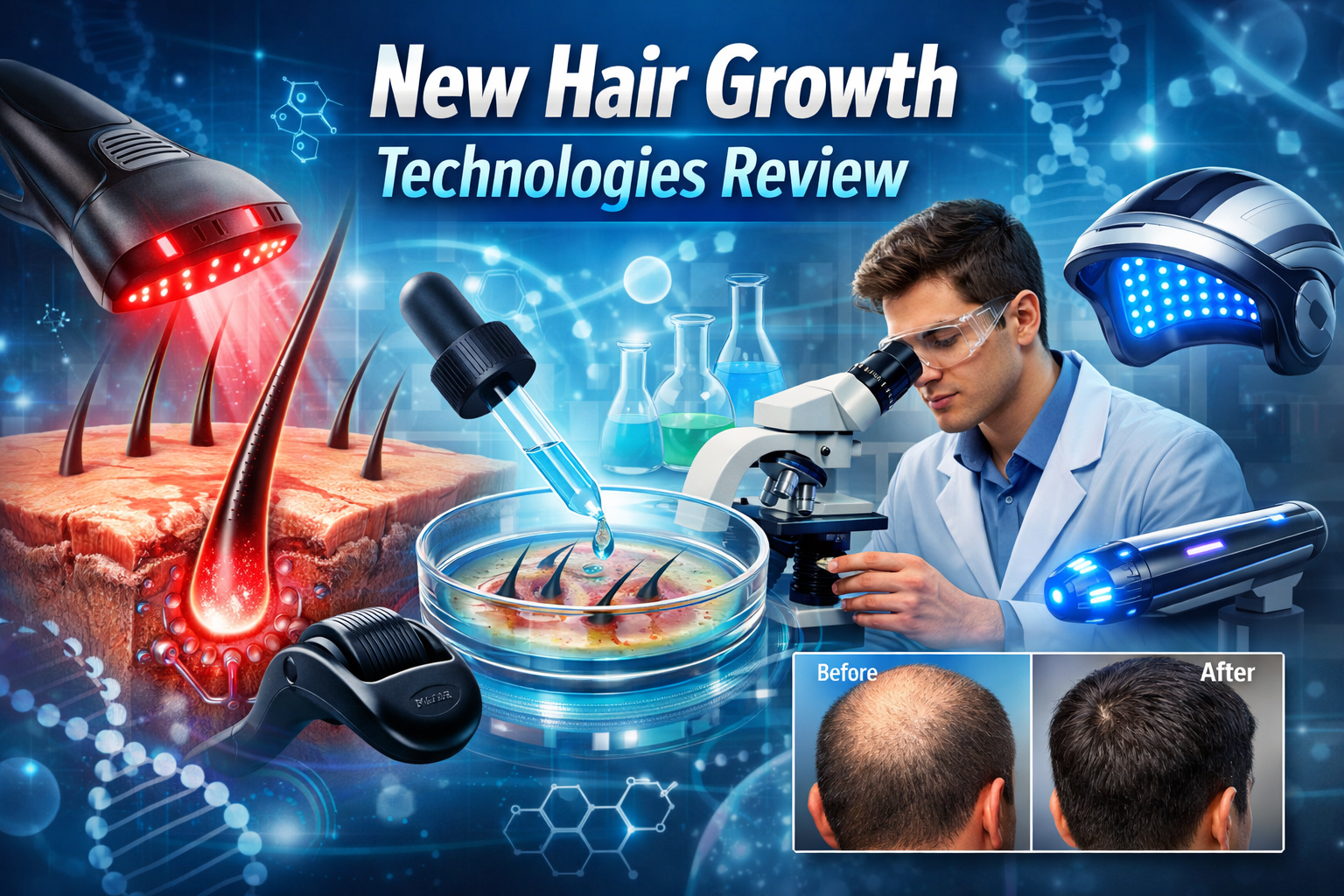
What struck me about modern hair growth technologies is how different they feel. Less myth, more method. Instead of vague promises, there are clinical trials, measurable results, and actual mechanisms explained in plain language.
For the first time, it felt like we were moving away from hope-based solutions toward science-backed ones.
But that doesn’t mean everything works equally well.
Minoxidil: The Old Guard That Still Stands Strong
Let’s start with something that’s been around for decades: Minoxidil.
I’ll be honest—at first, I dismissed it. It felt too common, too “basic” compared to all the futuristic treatments I kept reading about. But the more I learned, the more I understood why it’s still relevant.
Minoxidil works by increasing blood flow to hair follicles and extending the growth phase of hair. It doesn’t create new follicles out of nowhere, but it helps existing ones perform better.
When I tried it, the experience was… mixed.
The first few weeks were frustrating. There was shedding—more than I expected. It felt counterintuitive, almost like things were getting worse. But that’s actually part of the process. Weak hairs fall out to make room for stronger ones.
And then, slowly, something changed.
Tiny, almost invisible hairs started appearing. Not dramatic, not instant—but real.
Minoxidil taught me an important lesson: consistency matters more than excitement. It’s not glamorous, but it’s reliable.
Finasteride and the Hormone Conversation
If Minoxidil is about stimulation, Finasteride is about prevention.
This is where things get a bit more complex.
Hair loss, especially in men, is often linked to a hormone called DHT (dihydrotestosterone). Finasteride works by reducing DHT levels, which helps prevent hair follicles from shrinking.
When I first read about it, I hesitated.
Not because it didn’t work—it clearly does for many people—but because it affects hormones. That makes it a more serious decision.
I spent days reading personal experiences, clinical data, and medical explanations. What I realized is that this isn’t a one-size-fits-all solution. For some, it’s incredibly effective. For others, it’s not worth the potential trade-offs.
What stood out most wasn’t just the science, but the importance of informed choice.
Hair growth technologies aren’t just about what’s possible—they’re about what feels right for you.
Low-Level Laser Therapy (LLLT): Science Fiction That Actually Exists
This was the moment I felt like I had stepped into the future.
Laser caps. Light therapy helmets. Devices that look like they belong in a sci-fi movie—but are actually used at home.
Low-Level Laser Therapy (LLLT) uses specific wavelengths of light to stimulate hair follicles. The idea is that it increases cellular activity and promotes growth.
I was skeptical.
Shining light on your head to grow hair? It sounded almost too simple.
But the research is surprisingly solid. And when I tried it, the experience was… calming, in a strange way. Sitting still for a few minutes, letting the device do its thing—it felt less like a treatment and more like a ritual.
The results weren’t immediate. In fact, they were easy to miss at first. But over time, there was a subtle improvement in density and texture.
Not dramatic. But noticeable.
LLLT made me realize that not all progress is loud. Sometimes it’s quiet, gradual, and only visible if you’re paying attention.
PRP Therapy: Using Your Own Body as the Solution
If there’s one treatment that made me pause and think, “Okay, this is serious,” it’s PRP (Platelet-Rich Plasma) therapy.
The concept is fascinating.
A small amount of your blood is drawn, processed to concentrate the platelets, and then injected into your scalp. These platelets contain growth factors that can help stimulate hair follicles.
It sounds intense—because it is.
This isn’t something you do casually at home. It requires a professional setting, multiple sessions, and a fair amount of commitment.
But the idea of using your own biology to trigger growth? That felt… different.
More natural, in a way.
People who undergo PRP often report improvements in thickness and reduced shedding. It’s not a miracle cure, but it’s one of the more advanced options available today.
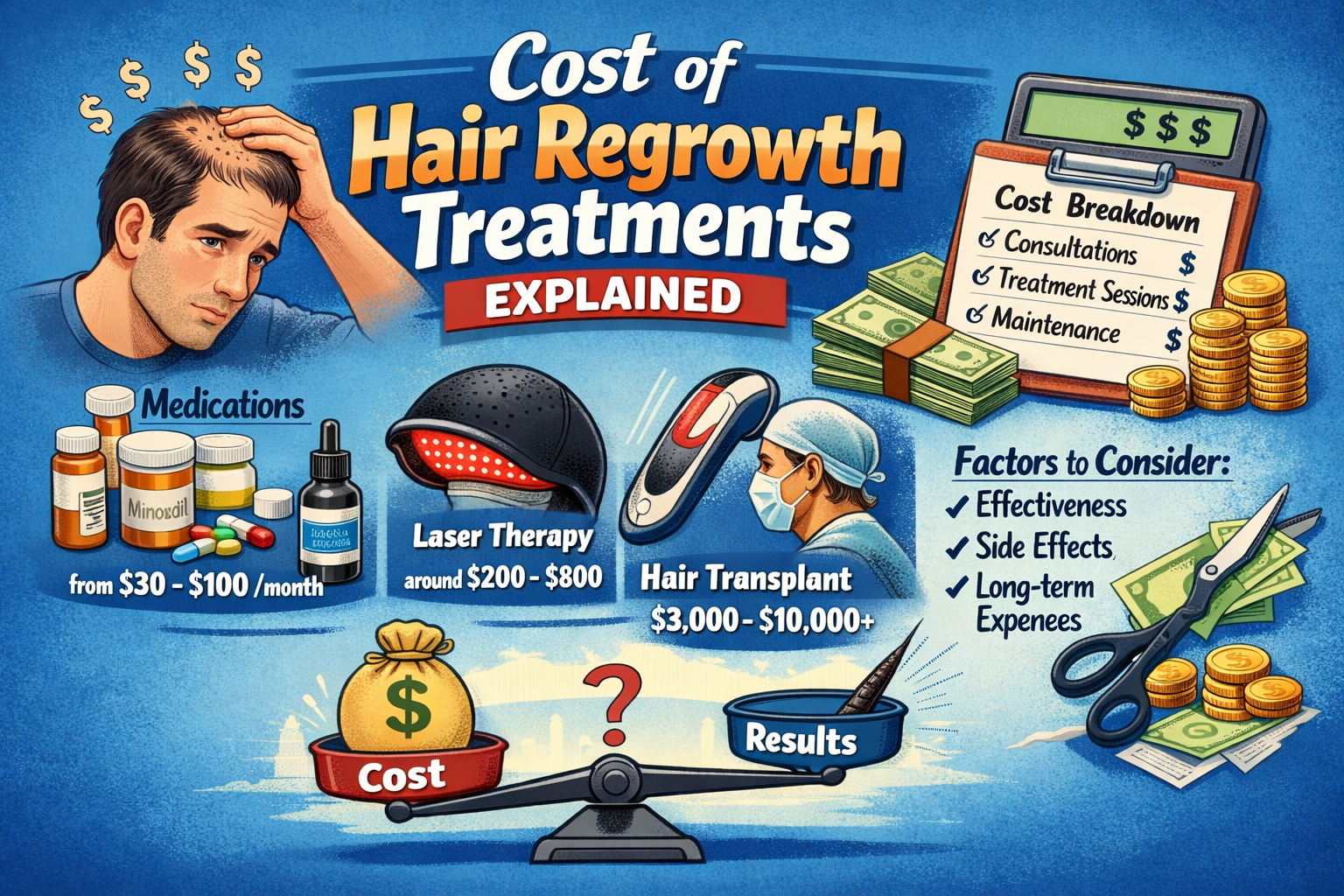
Still, I couldn’t ignore the reality: it’s expensive, and results vary.
PRP represents something important in the evolution of hair restoration—moving toward personalized, biologically driven treatments.
Microneedling: Small Needles, Big Impact
This was one of the most surprising discoveries.
Microneedling involves using tiny needles to create micro-injuries in the scalp. That might sound alarming at first, but the purpose is to stimulate healing and increase collagen production.
And when combined with treatments like Minoxidil, it can significantly enhance results.
I remember holding the device for the first time, unsure if I was really going to go through with it.
But once I did, it wasn’t as intimidating as it seemed.
There’s something oddly empowering about taking an active role in the process—not just applying a product, but physically stimulating your scalp.
Over time, I noticed improved absorption of treatments and a slight boost in growth.
Microneedling taught me that sometimes, progress requires a little discomfort.
Stem Cell Therapy and the Future of Hair Growth
Now we step into territory that feels almost unreal.
Stem cell therapy is one of the most exciting—and still developing—areas in hair restoration. The idea is to use regenerative cells to repair or even create new hair follicles.
This isn’t widely accessible yet, and much of it is still in experimental stages. But the potential is enormous.
Imagine a future where hair loss isn’t just slowed down or managed—but reversed.
Where dormant follicles can be reactivated, or new ones generated entirely.
We’re not fully there yet.
But we’re closer than we’ve ever been.
And that realization stayed with me: the story of hair growth technology is still being written.
The Emotional Side No One Talks About
Somewhere between all the research, treatments, and experiments, I noticed something else changing.
Not just my hair—but how I felt about it.
At the beginning, there was urgency. A quiet fear of losing something I wasn’t ready to let go of.
But over time, that urgency softened.
Learning about these technologies didn’t just give me options—it gave me perspective.
I realized that hair, while important, isn’t the only thing that defines how we see ourselves. And yet, it’s okay to care about it. It’s okay to want to maintain it, improve it, or restore it.
There’s no shame in that.
What matters is how you approach it—not from panic, but from understanding.
So, What Actually Works?
If you’re hoping for a simple answer, I wish I could give you one.
But the truth is, the best approach is usually a combination.
Minoxidil for stimulation.
Finasteride (if مناسب for you) for prevention.
Microneedling to enhance absorption.
LLLT for additional support.
And for those willing to go further, treatments like PRP.
Hair growth isn’t about a single breakthrough—it’s about stacking small advantages over time.
Consistency beats intensity. Every single time.
Final Thoughts: A Journey, Not a Fix
If there’s one thing I’ve learned from exploring hair growth technologies, it’s this:
There is no instant solution.
But there is progress.
Real, measurable, meaningful progress.
And maybe that’s enough.
Because in the end, this journey isn’t just about getting your hair back. It’s about understanding your options, making informed decisions, and finding a path that feels right for you.
Some people will choose to treat hair loss aggressively. Others will accept it and move on.
Both choices are valid.
As for me?
I’m still somewhere in the middle—experimenting, learning, adjusting.
And strangely enough, I’m okay with that.
Because for the first time, it doesn’t feel like I’m losing control.
It feels like I’m part of the process.