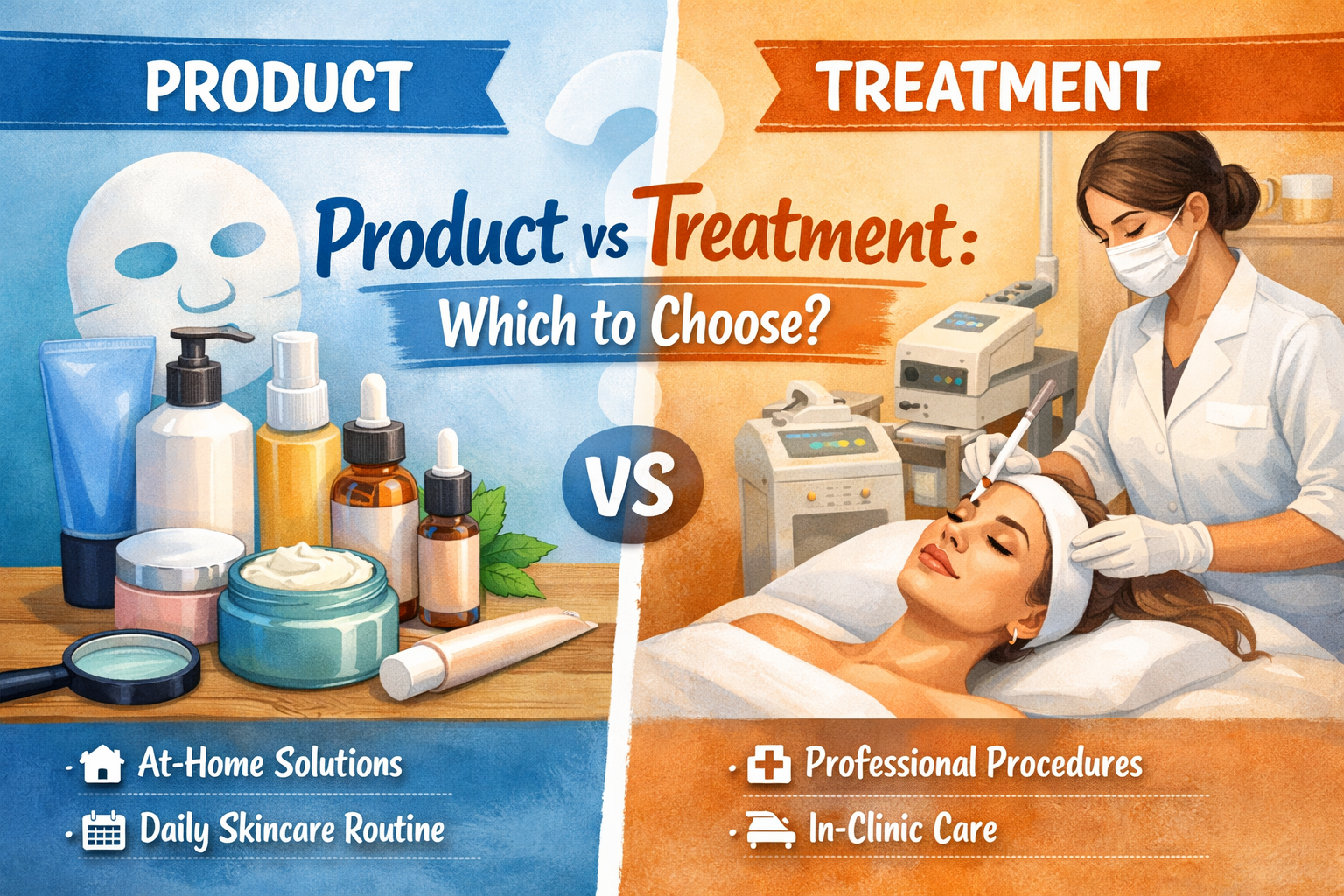
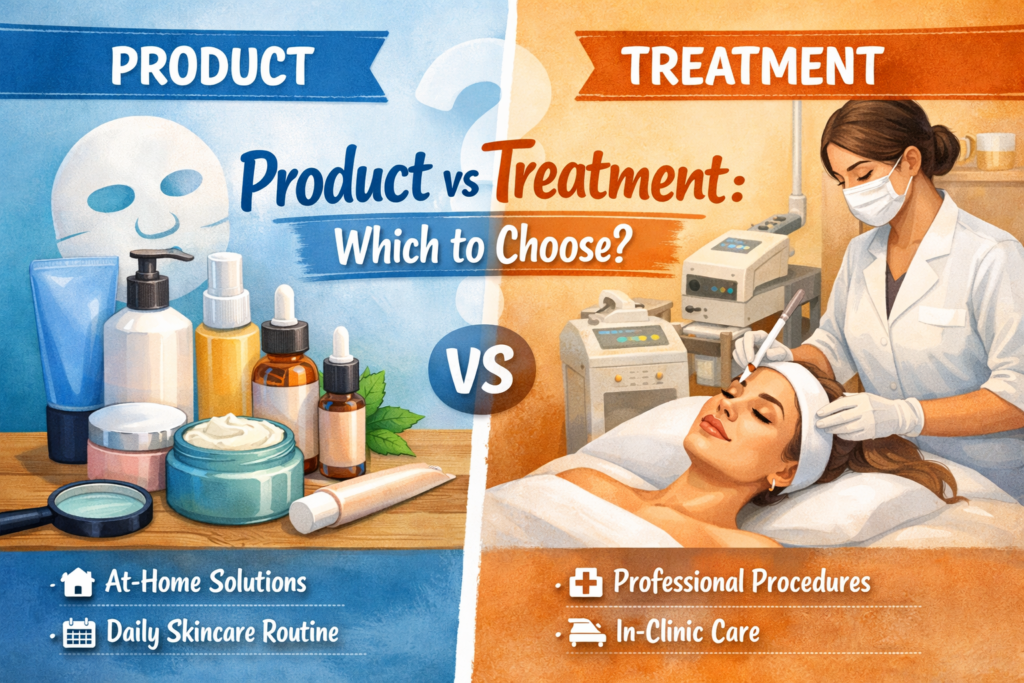
Product vs Treatment: Which to Choose?
(A personal story about choices, confusion, and learning to listen to what actually works)
I remember standing in the aisle of a brightly lit store, staring at shelves filled with bottles, boxes, and promises. Every product claimed to be “the solution.” Every label whispered confidence: clearer skin, stronger hair, better health, faster results. It all sounded so certain, so easy.
And yet, I stood there completely unsure.
Because just a week before that moment, I had sat in a quiet clinic room, listening to a professional explain a treatment plan—structured, personalized, and, frankly, a bit intimidating. It wasn’t something I could just pick up and try casually. It required commitment, time, and trust.
That was the first time I truly felt the tension between products and treatments. Not just as concepts, but as choices that shape how we take care of ourselves.
This blog is not just about comparing two options. It’s about understanding how we make decisions when faced with quick fixes versus deeper solutions—and why the answer is rarely as simple as we want it to be.
The Allure of Products: Convenience in a Bottle
Let’s start with products, because they’re usually the first thing we reach for.
There’s something comforting about buying a product. It feels proactive. You’re doing something. Whether it’s skincare, supplements, or hair care, products are accessible. No appointment needed. No awkward conversations. No long-term commitment.
Just you, a purchase, and hope.
I used to believe that the right product was all I needed. If something wasn’t working, I assumed I just hadn’t found the right one yet. So I kept trying—new brands, new formulas, new trends.
At first, it felt exciting. Like solving a puzzle.
But over time, it started to feel… repetitive.
I’d get small improvements, sometimes even noticeable ones. But they rarely lasted. The issue would come back, or plateau, or shift into something slightly different.
That’s when I began to realize something important:
Products are often designed to manage symptoms, not necessarily address the root cause.
That doesn’t make them bad. In fact, products can be incredibly useful. They can maintain results, support your routine, and sometimes even prevent problems from getting worse.
But they often operate on the surface—both literally and metaphorically.
The Weight of Treatments: Structured, But Demanding
Treatments, on the other hand, feel like stepping into a different world.
They require more than money—they require trust.
Whether it’s a medical treatment, a professional procedure, or a guided plan, treatments usually involve someone else assessing your situation and recommending a course of action.
I’ll be honest: that part scared me.
Because treatments come with uncertainty. What if it doesn’t work? What if it’s too much? What if I commit and regret it?
Unlike products, treatments aren’t something you can casually abandon after a few days without consequence. They often require consistency and patience.
But here’s what surprised me the most:
Treatments are designed to target the cause, not just the symptoms.
When I finally decided to follow a treatment plan, I noticed something different. It wasn’t about quick wins. It was about gradual, meaningful change.
It wasn’t flashy. It didn’t promise overnight results. But it offered something products rarely did: direction.
Instead of guessing what to try next, I had a path.
The Real Question: What Are You Actually Looking For?
At some point, I realized I had been asking the wrong question.
I kept asking:
“Which one is better—products or treatments?”
But that’s not the right comparison.
The better question is:
“What do I actually need right now?”
Because the answer changes depending on your situation.
When Products Make Sense
There are times when products are exactly what you need.
If your concern is mild, temporary, or part of normal maintenance, products can be incredibly effective.
For example:
- You want to maintain healthy skin or hair
- You’re dealing with minor, occasional issues
- You’re exploring what works for you
- You’re not ready to commit to a long-term plan
In these cases, products offer flexibility. You can experiment, adjust, and learn about your preferences without much risk.
They also play an important role even when you are undergoing treatment. Many treatments rely on supportive products to enhance or maintain results.
So it’s not an either-or situation. Products are often part of the bigger picture.
When Treatments Become Necessary
But there are also moments when products stop being enough.
You might notice:
- The same issue keeps coming back
- Results are inconsistent or minimal
- You’ve tried multiple products without success
- The problem is affecting your confidence or daily life
That’s usually a sign that the issue runs deeper.
And that’s where treatments come in.
Treatments provide structure. They’re based on assessment, not guesswork. Instead of trying random solutions, you’re following a plan designed for your specific situation.
It can feel like a big step—but often, it’s the step that actually leads to lasting change.
My Turning Point
For me, the turning point wasn’t dramatic. There wasn’t a single moment where everything suddenly became clear.
It was more like a quiet realization.
I noticed how much time and energy I had spent trying product after product, hoping each one would be the one. I wasn’t just spending money—I was spending attention, patience, and emotional energy.
And I was tired.
Not just of the problem itself, but of the constant cycle of trying, hoping, and being disappointed.
So I decided to try something different.
I stopped asking, “What should I buy next?”
And started asking, “What’s actually causing this?”
That shift changed everything.
The Hidden Cost of Choosing Wrong
One thing people don’t talk about enough is the cost of choosing the wrong approach.
Products can seem cheaper upfront, but if you keep buying new ones without solving the problem, the cost adds up—financially and emotionally.
Treatments, on the other hand, can feel expensive or overwhelming at first. But if they address the issue effectively, they might save you time, stress, and money in the long run.
It’s not just about price. It’s about value over time.
The Balance: It’s Not Either-Or
If there’s one thing I’ve learned, it’s this:
You don’t have to choose between products and treatments. You have to learn how to use them together.
Think of treatments as the foundation, and products as the support system.
Treatments help you fix or manage the core issue.
Products help you maintain, protect, and enhance the results.
When used together, they’re not competing—they’re complementing each other.
Listening to Yourself (Not Just the Marketing)
One of the hardest parts of making this decision is filtering out all the noise.
Marketing is powerful. It’s designed to make everything seem urgent and necessary. Every product feels like a must-have. Every treatment sounds like a miracle.
But your situation is unique.
What works for someone else might not work for you. What looks impressive online might not be relevant to your needs.
So instead of asking:
- “What’s trending?”
- “What’s popular?”
Try asking:
- “What am I actually experiencing?”
- “How long has this been going on?”
- “What have I already tried?”
Those questions lead to better decisions.
If You’re Still Unsure
If you’re standing where I once stood—confused, overwhelmed, and unsure what to choose—here’s something simple to guide you:
Start small, but stay aware.
Try products if your situation allows it. But pay attention to the results. If things don’t improve, don’t just keep repeating the same cycle.
Be open to stepping into treatments when needed.
It’s not about giving up independence. It’s about recognizing when you need a more structured approach.
Final Thoughts: Choosing with Intention
Looking back, I don’t regret trying all those products. They taught me what doesn’t work for me. They helped me understand my preferences and my limits.
But I do wish I had realized sooner that not every problem can be solved with something you can buy off a shelf.
Some things require deeper attention.
So, product vs treatment—which should you choose?
The honest answer is:
Choose based on your needs, not your habits.
If you need convenience, start with products.
If you need real change, consider treatments.
And if you want the best results, learn how to use both wisely.
Because at the end of the day, it’s not about choosing what’s easier or more popular.
It’s about choosing what actually works—for you.