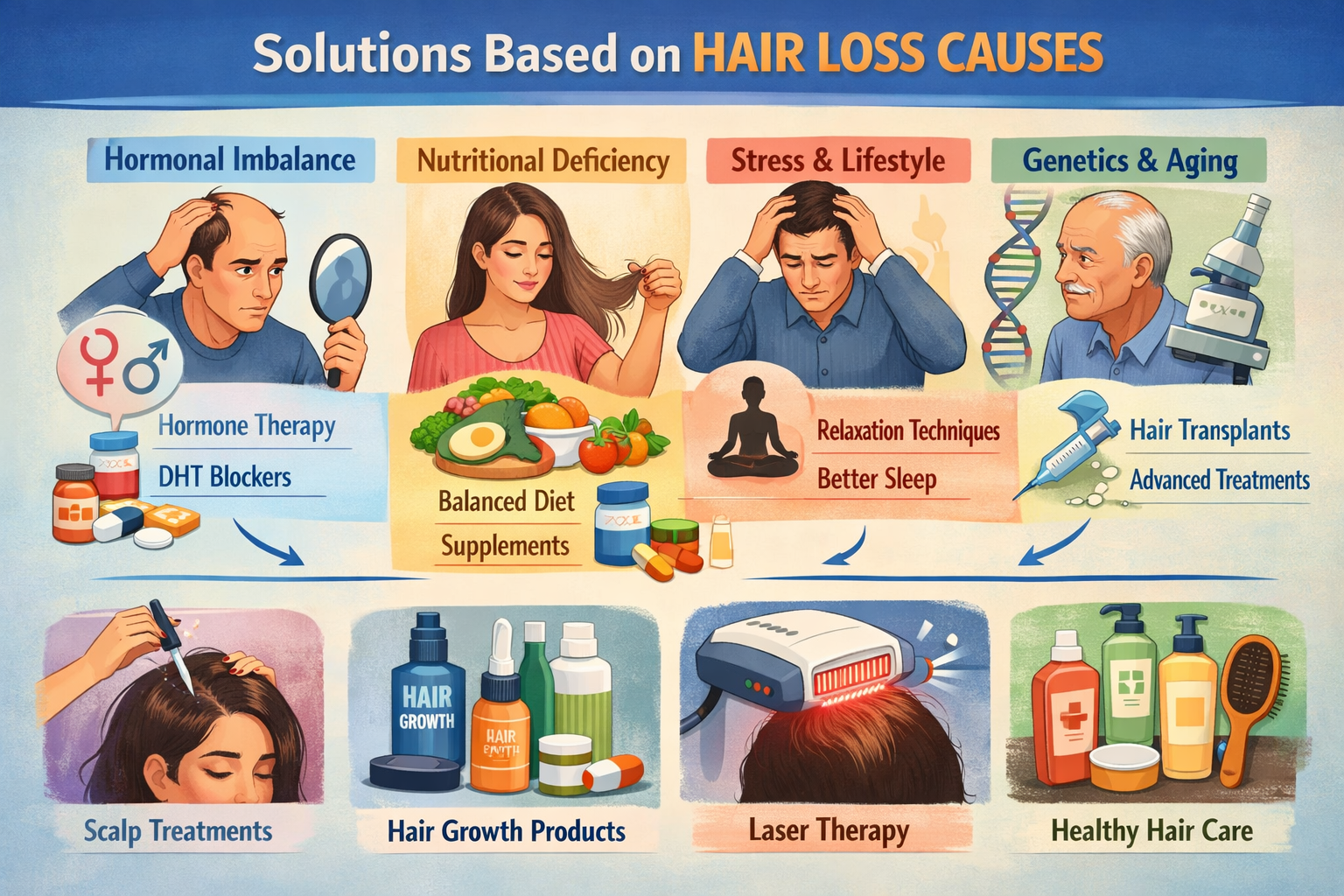
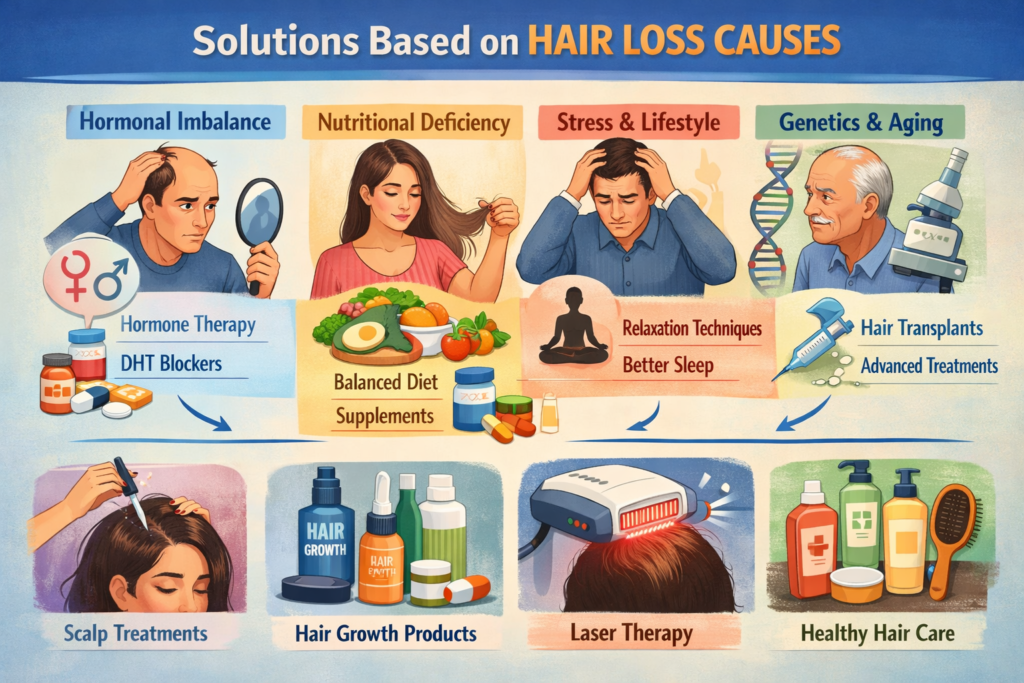
Solutions Based on Hair Loss Causes
I still remember the first time I noticed it—just a little more hair than usual tangled in the comb. At first, I brushed it off. Everyone sheds hair, right? But days turned into weeks, and the strands kept coming, silently collecting on my pillow, my clothes, the shower drain. It wasn’t just hair anymore; it felt like a part of my identity was slipping away, one strand at a time.
Hair loss is rarely just about appearance. It’s emotional, personal, and sometimes even confusing. What makes it harder is that there isn’t a single cause—or a single solution. The journey to understanding hair loss often begins with asking the right question: Why is this happening?
When Stress Takes the Lead
There was a period in my life when everything felt overwhelming—deadlines piling up, lack of sleep, constant anxiety. That was when my hair started thinning the most. I later learned that this condition has a name: telogen effluvium, a stress-related hair loss that pushes hair follicles into a resting phase prematurely.
What surprised me most was that the hair didn’t fall out immediately after the stressful event—it showed up months later, like a delayed echo of everything I had been through.
The solution here wasn’t hidden in expensive products or miracle oils. It was simpler, yet harder: learning to slow down. I started with small changes—getting enough sleep, taking short walks without my phone, and practicing breathing exercises. Over time, my body began to recover, and so did my hair.
Sometimes, the best treatment isn’t something you apply—it’s something you remove: stress.
Hormones: The Silent Influencers
Another chapter of my journey came with hormonal changes. Whether it’s puberty, thyroid imbalance, or conditions like PCOS, hormones can quietly reshape your hair’s growth cycle.
I remember speaking with a friend who struggled with sudden hair thinning. She tried everything—oils, masks, supplements—but nothing worked. Eventually, she visited a doctor and discovered her thyroid levels were off. Once treated, her hair slowly began to return.
This taught me something important: when hair loss is internal, external solutions can only do so much.
If hormones are the root cause, the real solution lies in medical guidance. Blood tests, proper diagnosis, and consistent treatment can restore balance—not just for your hair, but for your overall health.
Genetics: The Story Written Early
Then there’s the cause we often can’t avoid: genetics.
If you’ve ever looked at your parents or grandparents and wondered if their hair story might become yours, you’re not alone. Genetic hair loss, also known as androgenetic alopecia, tends to follow patterns—receding hairlines, thinning crowns, gradual loss over time.
At first, this realization felt discouraging. How do you fight something that’s already written in your DNA?
But here’s what I’ve learned: genetics may set the stage, but they don’t control the entire story.
Early intervention can make a difference. Treatments like topical solutions, lifestyle adjustments, and scalp care can slow the process. While you may not completely reverse genetic hair loss, you can manage it—and sometimes, that’s enough to regain confidence.
Nutrition: Feeding Your Hair from Within
There was a time when I focused only on what I put on my hair—shampoos, conditioners, serums—without thinking much about what I put into my body.
Hair, like any part of your body, depends on nutrients. When your diet lacks essential vitamins and minerals, your hair is often one of the first places it shows.
I began paying attention to what I ate: more protein, leafy greens, nuts, and foods rich in iron and biotin. It wasn’t an overnight transformation, but gradually, my hair felt stronger, less fragile.
One thing I realized is that hair health reflects overall health. If your body is struggling, your hair will quietly tell the story.
Scalp Health: The Forgotten Foundation
We often treat hair as if it exists independently, forgetting that it grows from the scalp. Neglecting scalp health is like trying to grow a plant in poor soil.
There was a time when I ignored issues like dandruff and itchiness, assuming they were minor. But over time, I noticed that unhealthy scalp conditions were affecting my hair growth.
Once I started caring for my scalp—gentle cleansing, avoiding harsh chemicals, and occasionally using natural oils—the difference became noticeable. A healthier scalp created a better environment for hair to grow.
It made me realize that sometimes, the solution isn’t about fixing the hair itself, but about improving where it begins.
Overstyling and Heat Damage
I used to think styling my hair every day made me look more put together. Straighteners, curling irons, tight hairstyles—I didn’t realize the damage I was causing.
Hair loss caused by physical stress—like heat and tension—is something many people overlook. Unlike other causes, this one is often within our control.
When I finally gave my hair a break—less heat, looser styles, more natural days—I noticed fewer strands falling out. It felt like my hair was finally able to breathe.
Sometimes, loving your hair means doing less to it.
Medical Conditions and Medications
Hair loss can also be linked to underlying medical conditions or even certain medications. This was something I hadn’t considered until someone close to me experienced it after starting a new treatment.
It’s easy to panic when hair starts falling out, but sometimes, it’s a side effect—not a permanent condition.
In these cases, the best approach is awareness and communication. Talking to a healthcare professional can help you understand whether the hair loss is temporary and what alternatives might exist.
The Emotional Side of Hair Loss
What people don’t often talk about is how deeply hair loss can affect your confidence. It’s not just about appearance—it’s about how you see yourself.
There were days when I avoided mirrors, when I felt less like myself. But over time, I realized something important: while hair is a part of identity, it doesn’t define it.
Understanding the cause of hair loss gave me a sense of control. Instead of feeling helpless, I started making informed choices. Each small improvement felt like a step forward—not just for my hair, but for my confidence.
Finding What Works for You
If there’s one thing I’ve learned through this journey, it’s that there is no universal solution. What works for one person may not work for another, because the cause is different.
The key is patience and curiosity. Pay attention to your body. Notice patterns. Seek professional advice when needed.
Hair loss isn’t a single problem—it’s a signal. And when you understand what it’s trying to tell you, you can respond in the right way.
A Gentle Reminder
If you’re going through hair loss right now, you’re not alone. It might feel frustrating, even overwhelming at times. But remember, this is a process—and most importantly, it’s one you can navigate.
Start with understanding the cause. Be kind to yourself along the way. And don’t rush the journey.
Because sometimes, healing—whether it’s your hair or yourself—takes time.
And that’s okay.