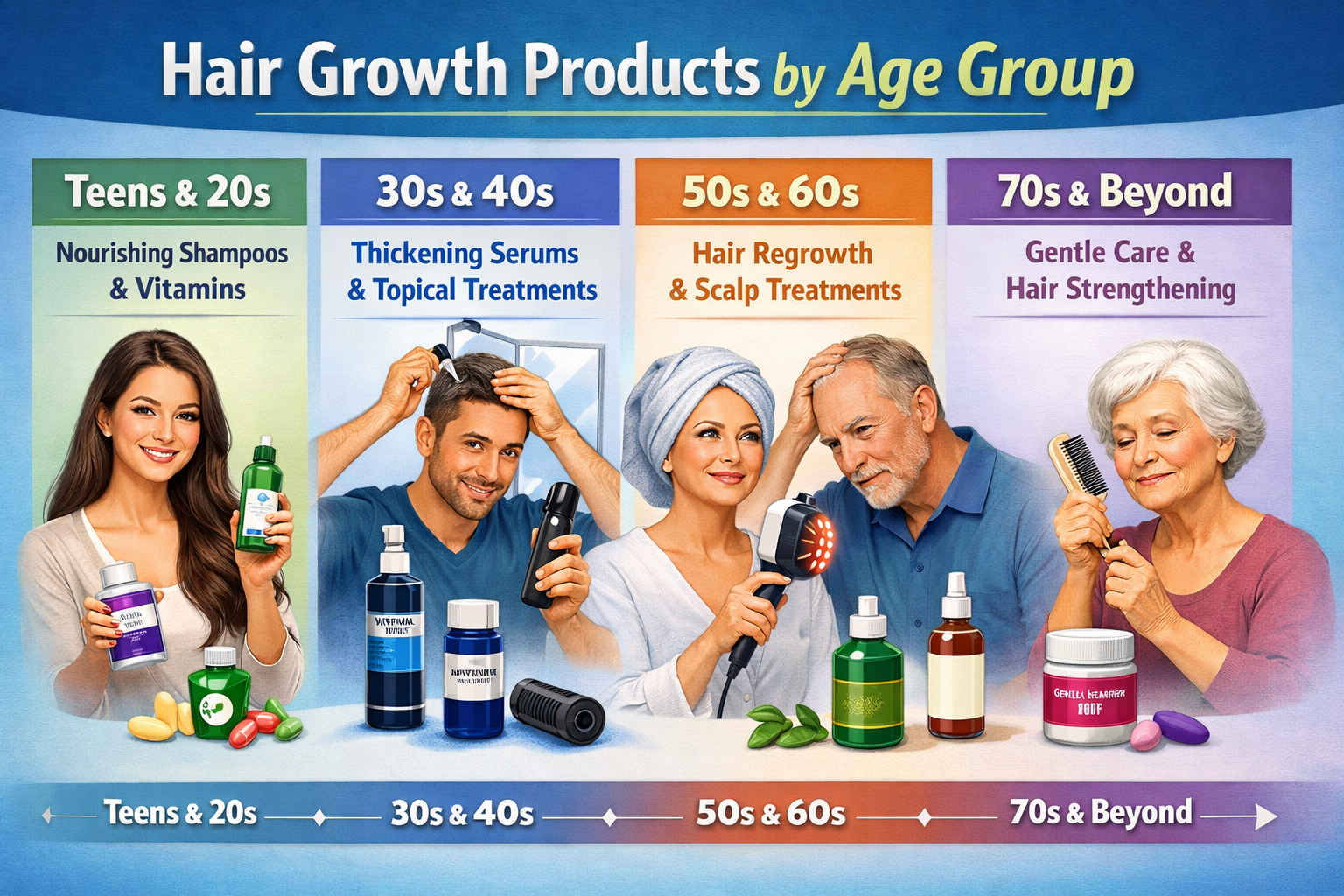
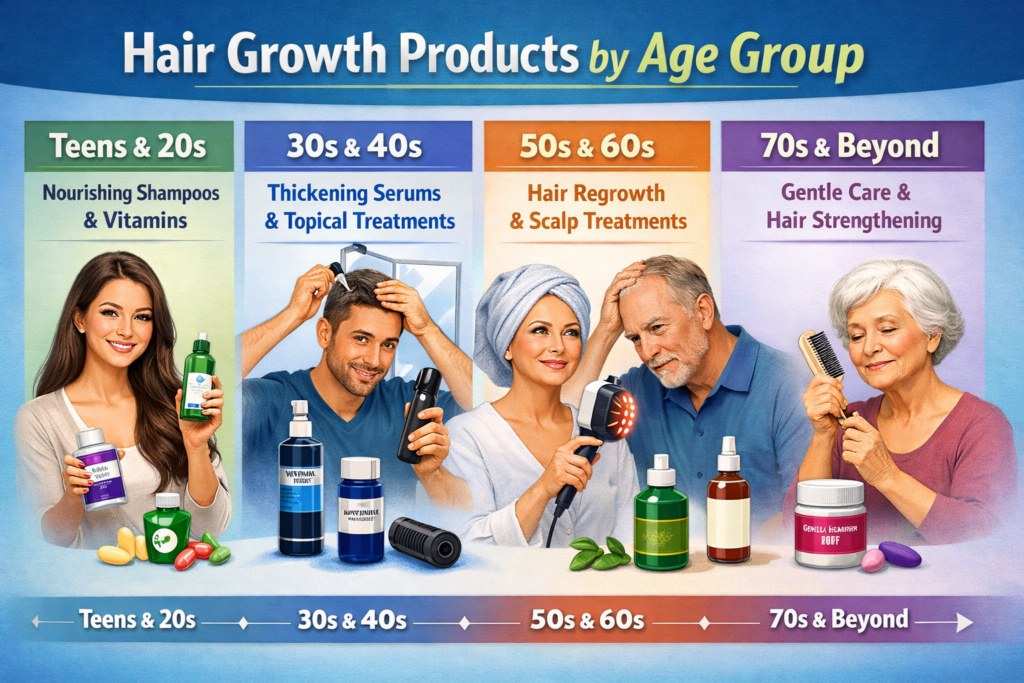
Hair Growth Products by Age Group: A Personal Journey Through Changing Needs
I didn’t start thinking about hair seriously until I noticed the first few strands left behind on my pillow. At first, it felt insignificant—just a part of life, I told myself. But over time, hair becomes more than just something on your head. It reflects health, confidence, identity, and even age. What I eventually learned, through trial, error, and a fair amount of curiosity, is that hair care isn’t one-size-fits-all. What works at 16 won’t necessarily work at 30, and definitely not at 50.
This is a story—not just about products—but about how our relationship with our hair evolves, and how different age groups require different approaches to hair growth and maintenance.
Teen Years (13–19): The Foundation Phase
In your teenage years, hair usually feels like the least of your worries—until it suddenly isn’t. Hormones are in full swing, and they can affect your scalp in ways you don’t always expect. Oily roots, dandruff, or even early shedding can sneak in.
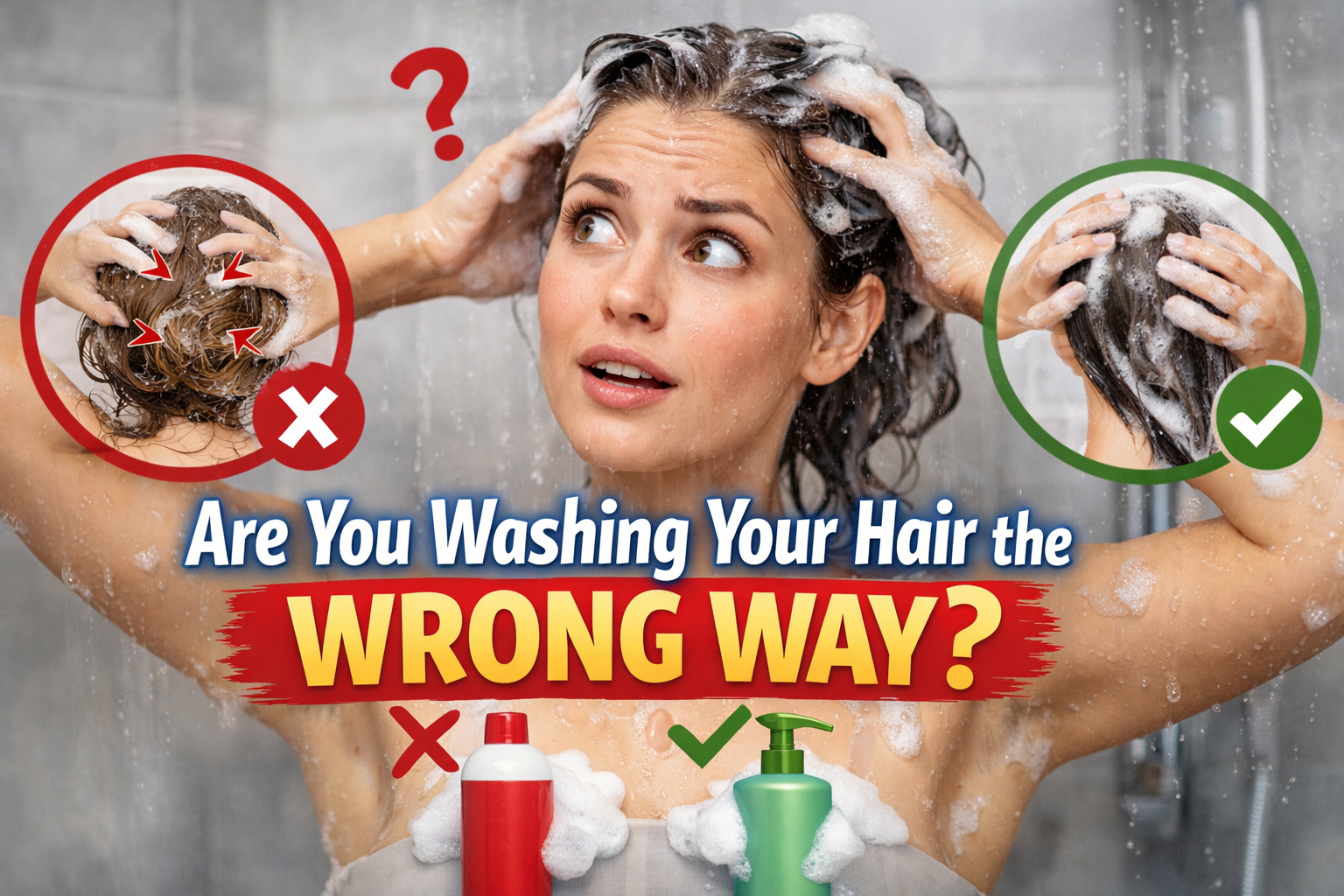
I remember a friend in high school who panicked after noticing more hair in the shower drain than usual. She immediately wanted “hair growth products,” but what she actually needed was balance—not stimulation.
At this age, the focus shouldn’t be aggressive growth treatments. Instead, it’s about creating a healthy scalp environment.
What actually helps:
- Gentle, sulfate-free shampoos
- Light conditioners that don’t clog pores
- Scalp hygiene (washing regularly, but not excessively)
- Proper nutrition—especially iron, protein, and vitamins
What to avoid:
- Heavy oils that suffocate the scalp
- Strong chemical treatments
- Overuse of heat styling tools
Hair growth products marketed to teens can sometimes be misleading. The truth is, unless there’s a medical issue, your hair is already growing at its natural peak. Supporting that growth is more about care than intervention.
Early 20s: Experimentation and Identity
Your 20s are where things get interesting. This is when people begin to experiment—new hairstyles, colors, treatments. Hair becomes a form of self-expression.
I went through phases: bleaching, straightening, curling—sometimes all within a few months. And while it looked great (for a while), the damage slowly crept in.
This is the age where hair growth products begin to play a more active role—but mostly because we start damaging our hair more.
Common concerns:
- Breakage from styling
- Heat damage
- Slower regrowth due to stress or lifestyle
Helpful products:
- Leave-in conditioners with protein
- Hair serums that protect from heat
- Lightweight oils like argan or jojoba
- Scalp serums with niacinamide or caffeine
One thing I learned the hard way: growth isn’t just about your roots. If your ends keep breaking, your hair will never appear longer.
So, in your 20s, the best “growth product” is often protection.
Late 20s to Early 30s: The Wake-Up Call
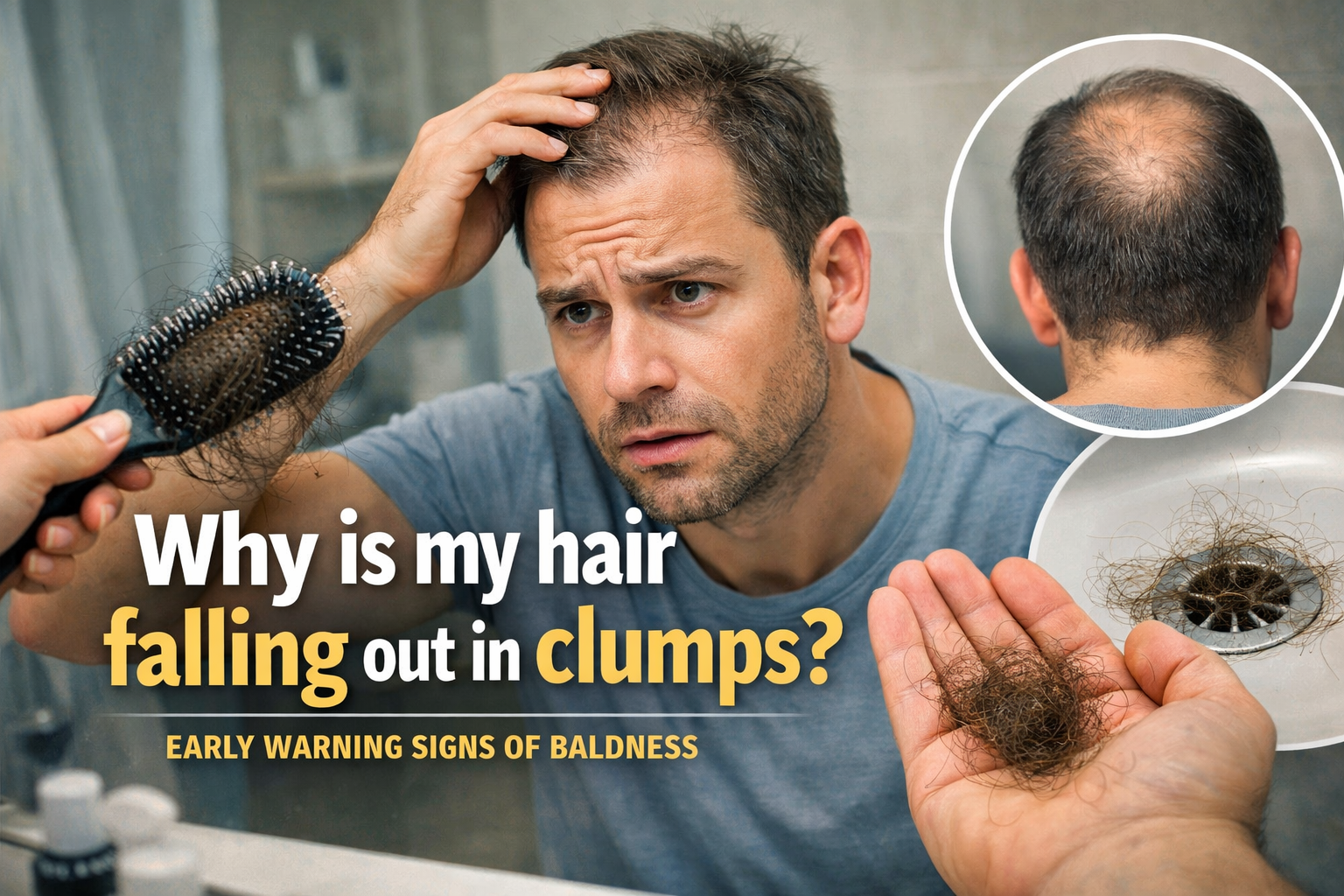
Somewhere between your late 20s and early 30s, you may notice subtle changes. Your hair might not feel as thick as it once did. Maybe your ponytail feels smaller. Maybe shedding becomes more noticeable.
This is where I personally started paying real attention.
Life gets busier—work, responsibilities, stress. And stress, as it turns out, has a direct impact on hair growth cycles.
What changes in this phase:
- Hair growth rate may slow slightly
- Stress-related shedding becomes more common
- Hormonal shifts can begin to influence hair density
Products that start to matter more:
- Biotin-based supplements (if needed)
- Scalp treatments with peptides
- Strengthening shampoos with keratin
- Minoxidil (in some cases, under guidance)
This is also when consistency becomes more important than experimentation. You can’t just switch products every week and expect results.
Hair growth becomes a long-term commitment.
Mid 30s to 40s: Maintenance and Prevention
This stage is less about reacting and more about preventing further loss.
I’ve seen people ignore early signs in their 20s, only to scramble for solutions in their 40s. The truth is, by this age, hair follicles may start becoming less active, and regrowth can be slower.
Common concerns:
- Thinning at the crown or temples
- Increased shedding
- Changes in hair texture
More targeted solutions:
- Clinical-strength treatments (like minoxidil or similar products)
- Scalp exfoliation to remove buildup
- Collagen supplements
- Low-level laser therapy devices (in some cases)
There’s also a psychological shift here. Hair is no longer just about style—it becomes tied to aging.
But here’s the important part: maintaining what you have is just as valuable as regrowing what you’ve lost.
50s and Beyond: Gentle Care and Acceptance
By the time you reach your 50s, hair changes are more noticeable—and more natural. Thinning, graying, and dryness are all part of the process.
But this doesn’t mean giving up on growth. It just means adjusting expectations and methods.
I once spoke to someone who said, “I stopped trying to fight my hair and started learning how to work with it.” That stuck with me.
Key changes:
- Slower growth cycles
- Reduced oil production (leading to dryness)
- More fragile strands
Best product types:
- Moisturizing shampoos and conditioners
- Oils that nourish without weighing hair down
- Gentle scalp stimulants
- Products that improve thickness appearance rather than forcing growth
At this stage, harsh treatments can do more harm than good. Gentle consistency is the key.
What I Wish I Knew Earlier
If I could go back and tell my younger self one thing, it would be this: hair growth isn’t something you can rush.
Every age has its own needs, and trying to force your hair into a different phase rarely works.
Some universal truths I’ve learned along the way:
- Healthy hair starts with a healthy scalp
- Consistency beats intensity
- Nutrition matters more than most products
- Stress management plays a bigger role than we admit
And perhaps most importantly—hair is part of you, but it doesn’t define you.
Choosing the Right Product for Your Age
If there’s one practical takeaway from all of this, it’s that you should choose products based on your current needs, not trends.
Ask yourself:
- Am I trying to grow new hair, or protect what I have?
- Is my issue breakage or actual hair loss?
- Is my scalp healthy?
Once you answer those, the right product becomes much easier to find.
Final Thoughts
Hair growth isn’t a straight path. It’s a journey that changes with time, lifestyle, and age. What worked five years ago might not work today—and that’s okay.
Instead of chasing miracle products, it’s more helpful to understand where you are in your journey and what your hair actually needs right now.
Because in the end, the goal isn’t just longer hair—it’s healthier hair that grows with you, through every stage of life.