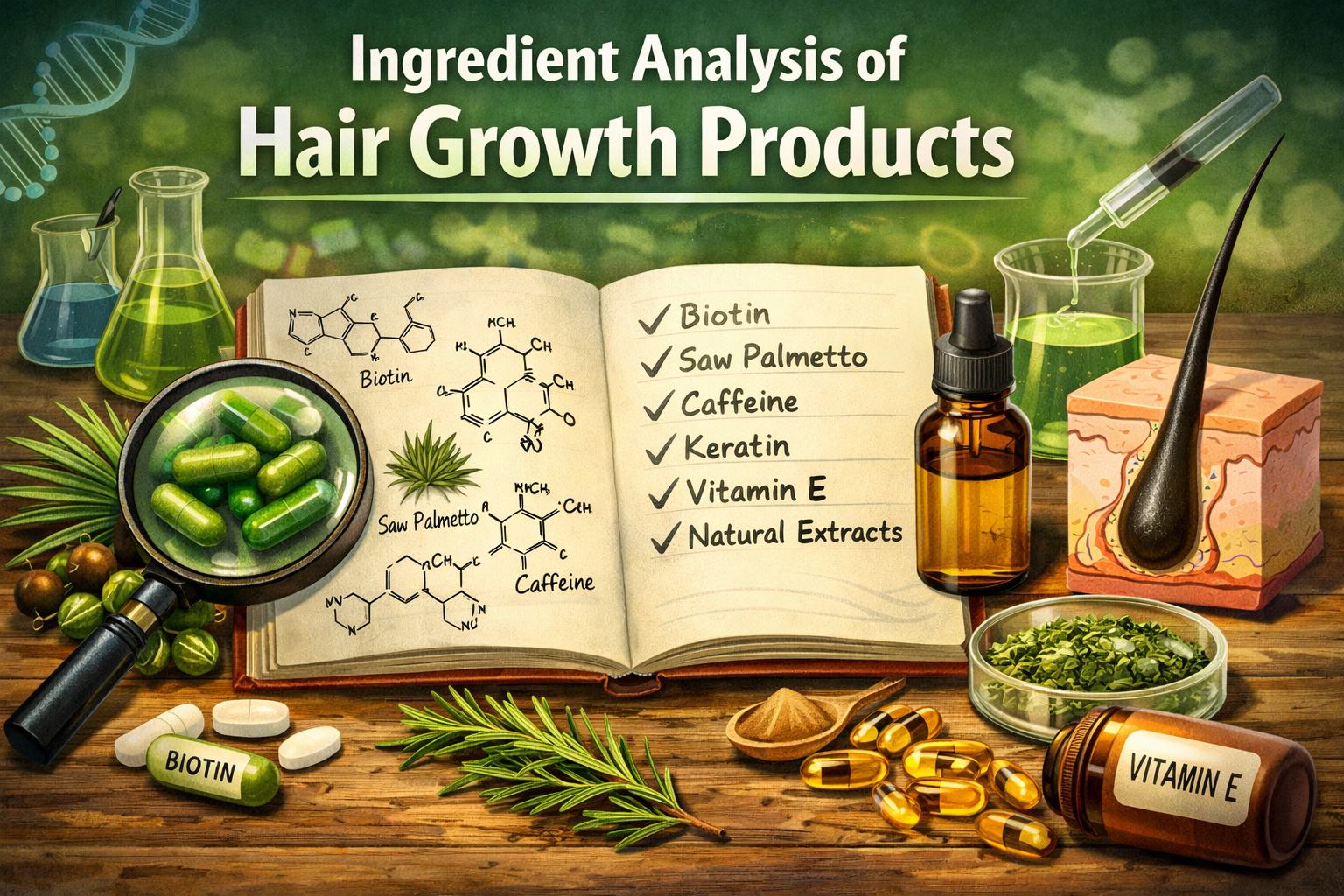
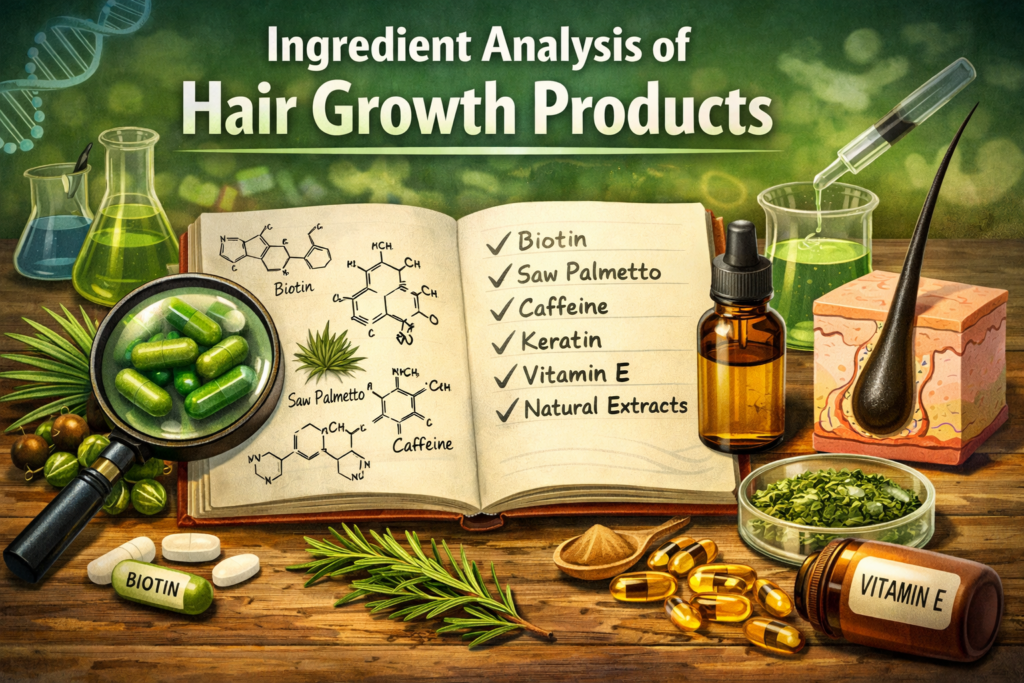
When I first started paying attention to the back labels of hair growth products, I didn’t expect it to feel like decoding a foreign language. The front of the bottle always promised something simple—“thicker hair,” “visible growth,” “stronger roots”—but the ingredient list told a much more complicated story. Long chemical names, botanical extracts I couldn’t pronounce, and a mix of science and marketing that made it hard to know what actually mattered.
This is where my journey really began—not with finding the “perfect” product, but with trying to understand what I was actually putting on my scalp.
The First Realization: Not All Ingredients Are Created Equal
I remember standing in a store aisle, holding two bottles that claimed almost identical results. One was twice the price of the other. At first glance, they seemed interchangeable. But when I compared the ingredients, something clicked.
Some ingredients appeared at the top of the list—meaning they made up the bulk of the formula—while others were buried at the bottom, likely present in tiny amounts. That’s when I realized: marketing highlights ingredients, but formulations reveal priorities.
For example, if a product claims to rely on “argan oil” but lists it near the end, it’s probably not doing much. On the other hand, if key actives are near the top, the product is more likely to deliver results.
That small detail changed the way I looked at everything.
Understanding the Core Categories of Ingredients
As I kept researching, I started to group ingredients into categories. This made things less overwhelming and helped me evaluate products more logically.
1. Active Growth Stimulators
These are the ingredients that actually target hair growth.
- Minoxidil: Probably the most well-known. It’s clinically proven to stimulate hair growth, but it comes with commitment. Once you start, stopping can reverse progress.
- Caffeine: Often marketed as a follicle stimulator. Some studies suggest it can counteract certain causes of hair thinning.
- Redensyl, Capixyl, Procapil: These newer, lab-developed compounds are popular in modern formulations. They aim to strengthen hair follicles and reduce shedding.
At first, I was skeptical of anything that sounded too “scientific,” but over time I realized that some of these lab-engineered ingredients are actually backed by research. The challenge is figuring out which ones are genuinely effective and which are just trendy.
2. Natural Extracts and Oils
This category is where things get emotional. Natural ingredients feel safer, more comforting—like you’re taking care of your hair in a gentle, traditional way.
- Castor oil: Thick, rich, and often associated with hair regrowth. It helps with moisture and scalp health, though evidence for actual growth is mixed.
- Rosemary oil: This one surprised me. Some studies suggest it may perform similarly to certain clinical treatments over time.
- Biotin (Vitamin B7): Often included in both topical and oral products. It supports hair health, but only if you’re deficient.
I used to assume “natural” automatically meant “better,” but that’s not always true. Natural ingredients can be helpful, but they’re usually supportive rather than transformative. They create the right environment for growth rather than triggering it directly.
3. Scalp Health Ingredients
This was the category I underestimated the most.
Healthy hair starts with a healthy scalp—something I didn’t fully appreciate until I experienced issues like dryness and irritation.
- Niacinamide: Helps improve blood circulation and reduce inflammation.
- Tea tree oil: Known for its antibacterial properties.
- Salicylic acid: Gently exfoliates the scalp, removing buildup that can block follicles.
At one point, I was using products that were supposed to promote growth, but my scalp felt worse than ever. It turned out that ignoring scalp health was holding everything back. Once I started focusing on balance—clean, calm, and nourished—the results became more noticeable.
4. Moisturizers and Conditioners
These ingredients don’t directly grow hair, but they make existing hair look fuller and healthier.
- Glycerin
- Panthenol (Provitamin B5)
- Aloe vera
These are the “supporting actors” in the formula. They reduce breakage, improve texture, and make hair easier to manage. And while they don’t create new strands, they help you keep the ones you have—which is just as important.
5. Preservatives and Stabilizers
This is the part most people skip, but it matters more than we think.
- Parabens
- Phenoxyethanol
- Alcohols
At first, I avoided anything with unfamiliar chemical names, assuming they were harmful. But I later learned that preservatives are necessary to keep products safe from bacteria and mold.
The real question isn’t whether these ingredients exist—it’s how they’re used. Some alcohols, for example, can be drying, while others are perfectly safe and even beneficial.
The Turning Point: Learning to Read Between the Lines
The more I explored, the more I realized that ingredient lists are only part of the story. Formulation matters just as much as the ingredients themselves.
Two products can contain the same key ingredient but produce completely different results. Why? Because of concentration, delivery systems, and how ingredients interact with each other.
This was frustrating at first. I wanted a clear answer—a checklist that would guarantee success. But hair care doesn’t work like that. It’s more like a puzzle, where each piece affects the others.
Marketing vs. Reality
One of the hardest lessons was learning not to be swayed by marketing.
Words like “clinically proven,” “dermatologist-approved,” and “natural formula” sound convincing, but they don’t always mean what we think they do.
For example:
- “Clinically proven” might refer to a single ingredient, not the entire product.
- “Natural” doesn’t guarantee effectiveness.
- “Dermatologist-tested” doesn’t mean it works—it just means it was evaluated.
I started asking myself a simple question: What is this product actually doing, based on its ingredients—not its claims?
That shift in mindset made a huge difference.
Personal Trial and Error
No amount of research can replace personal experience.
There were products that looked perfect on paper but didn’t work for me. Others seemed average but delivered surprisingly good results. Hair type, scalp condition, lifestyle—all of these factors influence how a product performs.
I remember trying a highly recommended serum packed with advanced actives. It was expensive, well-reviewed, and scientifically formulated. But after a few weeks, my scalp felt irritated, and I saw more shedding than before.
On the other hand, a simpler formula with fewer ingredients ended up being more effective—probably because it suited my scalp better.
That experience taught me something important: effectiveness is personal.
The Role of Consistency
Another thing I underestimated was consistency.
Hair growth is slow. Painfully slow, sometimes. It can take months to see noticeable changes, which makes it easy to give up too soon.
I used to switch products frequently, hoping to find faster results. But in doing so, I never gave anything enough time to work.
Once I committed to a routine and stuck with it, the changes—though gradual—became more visible.
Red Flags to Watch Out For
Over time, I also learned to spot warning signs in ingredient lists:
- Heavy fragrance: Can irritate sensitive scalps.
- High alcohol content: May cause dryness if not balanced.
- Too many actives at once: Can overwhelm the scalp.
More isn’t always better. A formula overloaded with ingredients can sometimes do more harm than good.
What Actually Matters Most
After everything I’ve learned, tested, and experienced, my perspective has become simpler.
Instead of chasing miracle ingredients, I focus on a few key principles:
- Balance over intensity
A healthy scalp environment is more important than aggressive treatments. - Consistency over quick results
Slow progress is still progress. - Understanding over assumptions
Knowing what ingredients do helps you make better choices. - Personal fit over popularity
What works for others may not work for you—and that’s okay.
Final Thoughts
If there’s one thing this journey has taught me, it’s that hair growth products are not magic solutions. They’re tools. And like any tool, their effectiveness depends on how well you understand and use them.
Reading ingredient lists used to feel intimidating. Now, it feels empowering. Not because I know everything—but because I know enough to ask the right questions.
And maybe that’s the real goal: not to find the perfect product, but to become someone who can navigate the choices with confidence.
Because at the end of the day, it’s not just about growing hair—it’s about understanding what your hair actually needs, and learning how to care for it in a way that makes sense for you.