Do Hair Growth Products Have Side Effects? A Personal Journey Through Hope, Doubt, and Discovery
I still remember the first time I noticed it.
It wasn’t dramatic. No clumps of hair falling out in the shower, no sudden bald patches staring back at me in the mirror. It was quieter than that. Subtle. A little more hair left on my pillow. A slightly wider parting when I tied my hair back. The kind of change you almost convince yourself isn’t real—until you can’t ignore it anymore.
That’s when I began my journey into the world of hair growth products.
At first, it felt hopeful. There were so many options—serums, oils, supplements, shampoos promising miracles. Words like “clinically proven,” “natural,” “fast results” filled my screen. It felt like the solution was out there, just waiting for me to pick the right bottle.
But somewhere along the way, a question started to linger in the back of my mind:
Do hair growth products have side effects?
The Allure of Quick Fixes
When you’re worried about hair loss, it’s easy to become emotionally invested in every solution you come across. I found myself scrolling through before-and-after photos, reading reviews at midnight, and watching videos of people who swore their hair had transformed in just weeks.
It’s not just about appearance. Hair is tied to identity, confidence, even control. Losing it—even slightly—can feel like losing a part of yourself.
So when a product promises regrowth, strength, or thickness, it’s more than just a purchase. It feels like hope in a bottle.
But hope can sometimes blur caution.
What Most People Don’t Talk About
Most advertisements focus on results. Thicker hair. Faster growth. Stronger strands.
What they don’t always emphasize are the potential side effects.
I didn’t think much about that in the beginning. After all, if something is sold openly and used by thousands of people, how risky could it be?
But the truth is, even widely used hair growth products can come with side effects—some mild, some more noticeable—depending on the ingredients, your skin sensitivity, and how your body reacts.
My First Experience: The “Miracle” Serum
The first product I tried was a popular hair serum. It had glowing reviews and claimed to be made with natural ingredients. That word—natural—gave me a sense of safety.
For the first week, everything seemed fine. I followed the instructions carefully, applying it every night and massaging it into my scalp.
Then came the itching.
At first, it was barely noticeable. But over time, my scalp felt increasingly irritated. There was a slight redness along my hairline, and occasionally, a burning sensation that made me second-guess whether I should continue.
I told myself it was just part of the “process.” Maybe it meant the product was working.
But deep down, I knew something wasn’t right.
Understanding Common Side Effects
That experience pushed me to research more deeply—and what I found surprised me.
Hair growth products, depending on their type, can cause a range of side effects. Not everyone experiences them, but they are more common than many people realize.
Some of the most frequently reported ones include:
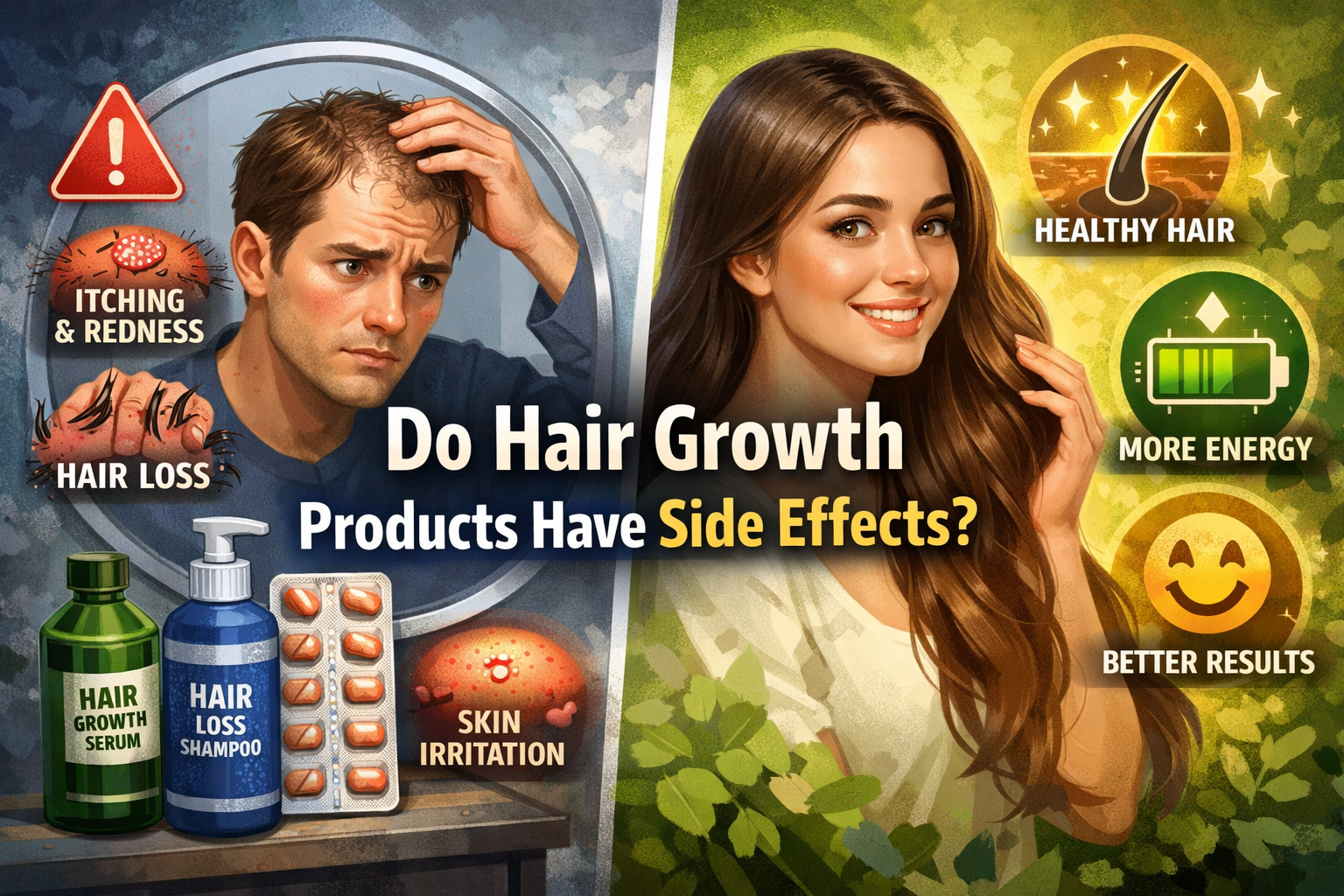
- Scalp irritation: itching, redness, dryness, or flaking
- Unwanted hair growth: in areas where the product accidentally spreads
- Changes in hair texture: some people notice their hair becoming coarser or drier
- Initial shedding: a temporary increase in hair loss before regrowth begins
- Allergic reactions: especially with certain plant-based or chemical ingredients
At first, reading this made me anxious. But it also made me feel more informed—like I was finally seeing the full picture instead of just the highlights.
The Emotional Side of Side Effects
What I didn’t expect was how emotional the experience could be.
When something is supposed to help you ends up causing discomfort, it can feel frustrating—even discouraging.
I remember standing in front of the mirror one night, staring at my scalp, wondering if I had made things worse instead of better.
There’s a quiet kind of disappointment that comes with that realization. It’s not dramatic, but it lingers.
And yet, that moment also taught me something important:
Not every solution is meant for every person.
Natural Doesn’t Always Mean Risk-Free
One of the biggest misconceptions I had was believing that “natural” products are always safe.
Essential oils, herbal extracts, and plant-based formulas can absolutely be beneficial—but they can also cause reactions, especially if used in high concentrations or without proper dilution.
For example, some oils can irritate sensitive skin. Others might clog pores or disrupt the scalp’s natural balance.
It’s not about avoiding natural products altogether—it’s about understanding that natural doesn’t automatically mean harmless.
Listening to Your Body
After my first experience, I decided to slow down.
Instead of jumping from one product to another, I started paying closer attention to how my body responded. I tested products more carefully, used smaller amounts, and gave myself time to observe any changes.
That shift made a big difference.
I realized that my scalp, like the rest of my body, has its own limits and sensitivities. What works for someone else might not work for me—and that’s okay.
The Role of Patience
One of the hardest lessons in this journey was learning to be patient.
Hair growth doesn’t happen overnight. Despite what marketing might suggest, real, lasting results take time—often months.
And when you combine impatience with the fear of side effects, it creates a tricky balance.
You want results, but you also want to feel safe.
Over time, I learned that rushing the process often leads to poor decisions—trying too many products, overusing treatments, or ignoring early signs of irritation.
Patience, as frustrating as it can be, turned out to be one of the most important tools I had.
When to Stop Using a Product
This was something I wish I had understood earlier.
If a product causes persistent discomfort—like ongoing irritation, burning, or unusual changes—it’s usually a sign to stop.
Ignoring those signals doesn’t make the problem go away. In fact, it can make things worse.
There’s a difference between mild, temporary adjustment and a reaction that your body is trying to warn you about.
Learning to recognize that difference is key.
Finding Balance Instead of Perfection
At some point, my mindset shifted.
Instead of searching for the “perfect” product, I started focusing on balance—finding what worked reasonably well without causing harm.
That meant:
- Choosing simpler formulations
- Avoiding overuse
- Being consistent rather than extreme
- Giving my scalp time to rest
And surprisingly, that approach felt more sustainable.
What I Would Tell My Past Self
If I could go back to the beginning of this journey, I would tell myself a few things:
First, don’t believe everything you see online. Not every success story reflects the full experience.
Second, take side effects seriously—but don’t panic. They’re part of the process of finding what works for you.
Third, your worth isn’t defined by your hair.
That last one took the longest to truly understand.
So, Do Hair Growth Products Have Side Effects?
The honest answer is: they can.
But that doesn’t mean they’re bad or should be avoided entirely.
It means they should be used thoughtfully, with awareness and care.
Every product interacts differently with each person. What matters most is how you respond—and whether you’re paying attention to those signals.
A More Grounded Perspective
Looking back, I don’t regret trying hair growth products.
They taught me to be more mindful, more patient, and more in tune with my body.
But I also learned not to rely on them blindly.
Hair care, like many things, isn’t about quick fixes. It’s about understanding, consistency, and sometimes, accepting imperfections along the way.
Final Thoughts
If you’re considering using hair growth products, it’s okay to feel hopeful.
Just don’t let that hope overshadow awareness.
Ask questions. Read beyond the headlines. Pay attention to your body.
And most importantly, remember that you’re not alone in this experience.
Many people go through the same cycle of curiosity, trial, doubt, and discovery.
It’s not always a straight path—but it can still be a meaningful one.