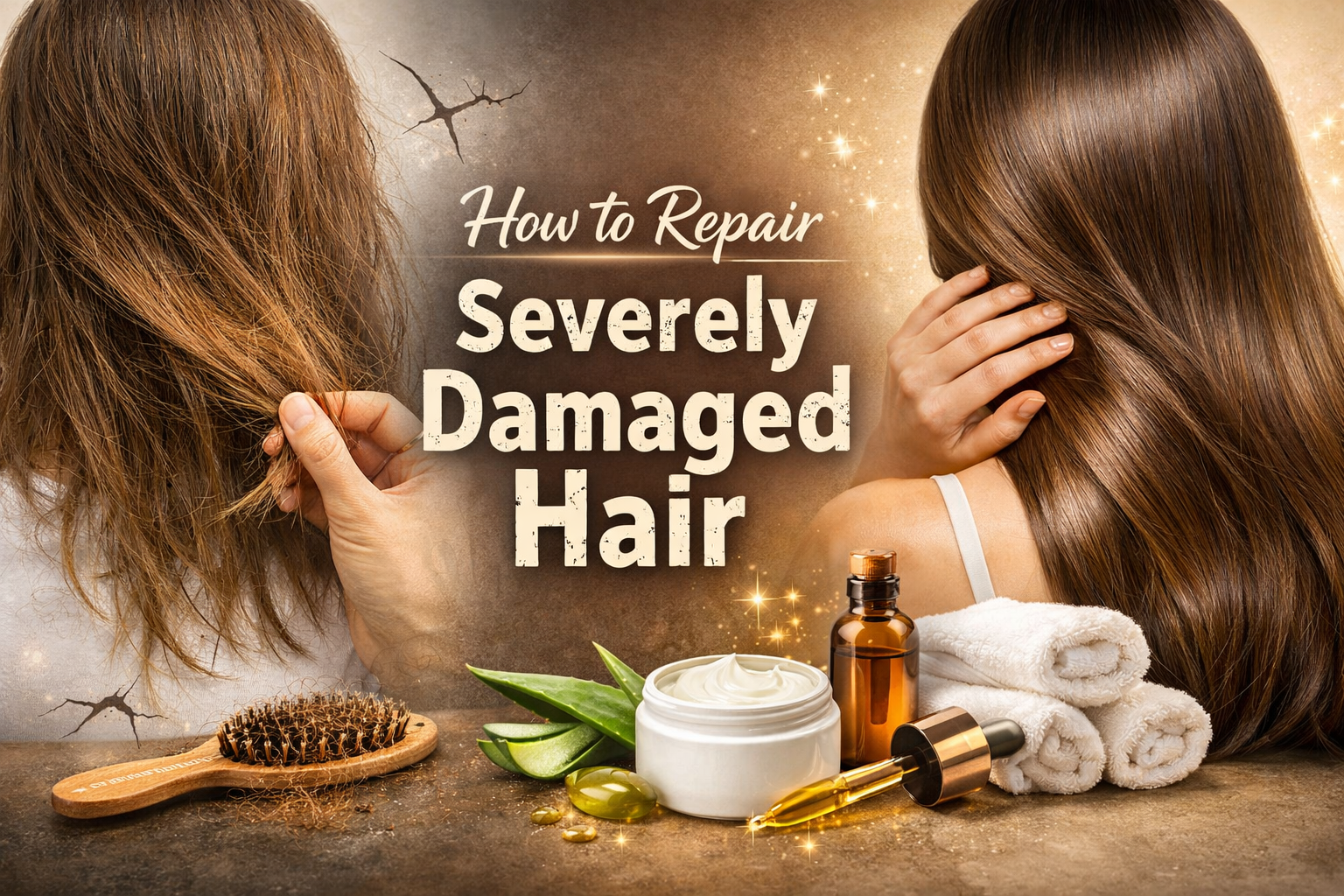
How to Repair Severely Damaged Hair: A Personal Journey Back to Healthy Strands
I still remember the day I realized my hair was beyond “just a little dry.” It was a quiet afternoon, and I was standing in front of the mirror, running my fingers through what used to be soft, manageable strands. Instead, my fingers got caught halfway down, tangled in brittle ends that felt more like straw than hair. That was the moment it hit me—I hadn’t just damaged my hair a little. I had pushed it to its limit.
If you’re here reading this, chances are you’ve had a similar moment. Maybe it was after one too many bleaching sessions, excessive heat styling, or simply years of neglect. Severely damaged hair doesn’t happen overnight, and unfortunately, it doesn’t heal overnight either. But the good news is this: with patience, consistency, and the right approach, your hair can recover.
This isn’t just a guide—it’s a story of trial, error, and eventual transformation.
Understanding What “Severely Damaged” Really Means
Before we talk about fixing it, we need to understand what we’re dealing with. When hair is severely damaged, it’s not just dry—it’s structurally compromised.
Healthy hair has a protective outer layer called the cuticle. When your hair is damaged, that cuticle lifts or even breaks away, leaving the inner structure exposed. That’s why your hair feels rough, tangles easily, and breaks with the slightest tension.
In my case, the damage came from a mix of everything: frequent coloring, heat tools, tight hairstyles, and not enough care in between. I used to think conditioner alone could fix it. I was wrong.
Severe damage shows up in several ways:
- Split ends that travel up the shaft
- Extreme dryness and dullness
- Breakage when brushing or styling
- Hair that feels gummy or stretchy when wet
- Lack of elasticity
Once you recognize these signs, the next step is acceptance. This part matters more than you think. You can’t treat severely damaged hair like slightly dry hair—it requires a different level of care and commitment.
The First Step: Letting Go (Literally)
This was the hardest step for me.
No one wants to cut their hair, especially after spending years growing it out. But here’s the truth: if your ends are badly split and brittle, no product in the world can permanently repair them.
I remember sitting in the salon chair, watching inches of my hair fall to the floor. It felt like losing a part of myself. But at the same time, it felt like starting over.
Trimming doesn’t mean you have to go super short. Even removing the most damaged ends can make a huge difference. It stops the splitting from traveling further up the hair shaft and gives your hair a chance to grow healthier.
Think of it not as losing length, but as making room for strength.
Rebuilding from the Inside Out
One mistake I made early on was focusing only on external products. While they’re important, true hair recovery starts internally.
Hair is made of protein, specifically keratin. If your body isn’t getting enough nutrients, your hair won’t have the building blocks it needs to grow strong.
I started paying attention to what I was eating:
- Protein-rich foods like eggs, fish, and beans
- Healthy fats from nuts and avocados
- Vitamins, especially biotin and vitamin E
- Plenty of water
It wasn’t an overnight change, but over time, I noticed something subtle—my new hair growth felt different. Stronger. Softer. More resilient.
It reminded me that healing isn’t just about what you put on your hair, but also what you put into your body.
Rethinking Your Hair Care Routine
This is where the real transformation begins. Severely damaged hair needs a routine that focuses on moisture, repair, and protection.
1. Gentle Cleansing
I used to wash my hair almost every day, thinking it would keep it fresh. In reality, I was stripping away what little natural oil my hair had left.
Switching to a sulfate-free shampoo made a huge difference. It cleansed my scalp without leaving my hair feeling dry and squeaky.
I also reduced how often I washed my hair—2 to 3 times a week became my new normal.
2. Deep Conditioning Is Non-Negotiable
If there’s one thing you take from this blog, let it be this: deep conditioning is essential.
Once a week, I started using a deep conditioning mask. Not just applying it and rinsing it off quickly, but really giving it time to work. Sometimes I would leave it on for 20–30 minutes, wrapping my hair in a warm towel.
Over time, my hair began to feel softer and more manageable. It didn’t fix everything, but it was a step forward.
3. Protein Treatments (But Carefully)
Because damaged hair loses protein, adding it back can help rebuild strength. But too much protein can make hair stiff and brittle.
I learned to balance it:
- Use protein treatments occasionally (every few weeks)
- Alternate with moisturizing treatments
It’s all about listening to your hair. If it feels too stiff, it needs moisture. If it feels too weak, it might need protein.
Breaking Up with Heat Styling
This was another tough change.
I loved my straightener. It made my hair look polished and controlled, even when it was damaged. But in reality, I was making things worse.
Heat weakens already fragile hair, leading to more breakage and dryness.
At first, going heat-free felt uncomfortable. My natural hair texture wasn’t what I was used to anymore. But slowly, I started embracing it.
When I absolutely needed to use heat, I made sure to:
- Use a heat protectant
- Keep the temperature low
- Limit how often I styled
Giving my hair a break from heat was one of the most powerful steps in my recovery journey.
The Power of Small Daily Habits
Sometimes, it’s not the big changes that matter most, but the small, consistent ones.
I started paying attention to how I handled my hair daily:
- Using a wide-tooth comb instead of a brush on wet hair
- Sleeping on a silk or satin pillowcase
- Avoiding tight hairstyles that pull on the roots
- Gently detangling instead of forcing knots out
These habits might seem minor, but together, they reduce stress on your hair and prevent further damage.
Patience: The Part No One Talks About Enough
Here’s the truth no one likes to hear: repairing severely damaged hair takes time.
There were moments when I felt frustrated. Weeks would go by, and I didn’t see dramatic changes. I wondered if all my effort was pointless.
But then, one day, I noticed something different. My hair didn’t tangle as easily. It felt smoother when I ran my fingers through it. It had a bit of shine again.
Progress wasn’t loud or obvious—it was quiet and gradual.
Healing your hair is a journey, not a quick fix.
Learning to Love the Process
What surprised me most wasn’t just the improvement in my hair—it was how my mindset changed.
Before, I saw hair care as a chore. Something I rushed through without much thought. But during this process, it became something more intentional.
Taking time to care for my hair became a form of self-care. A moment to slow down, to be patient, and to appreciate small progress.
I stopped chasing perfection and started focusing on health.
When to Seek Professional Help
Sometimes, despite your best efforts, your hair might need professional attention.
A good hairstylist can:
- Assess the level of damage
- Recommend suitable treatments
- Help with strategic cuts to improve overall health
Don’t be afraid to ask for help. It doesn’t mean you’ve failed—it means you’re taking your hair seriously.
Final Thoughts: It’s Not About Perfection
If there’s one thing I’ve learned, it’s this: your hair doesn’t have to be perfect to be beautiful.
Severely damaged hair can feel overwhelming, but it’s not the end of the story. With care, patience, and the right habits, you can bring your hair back to life.
It won’t happen overnight. There will be setbacks. There will be days when your hair doesn’t cooperate. But slowly, almost without noticing, things will improve.
And one day, you’ll stand in front of the mirror again, running your fingers through your hair—and this time, they won’t get stuck.
Instead, they’ll glide through strands that feel soft, strong, and alive again.
That’s when you’ll realize: the journey was worth it.