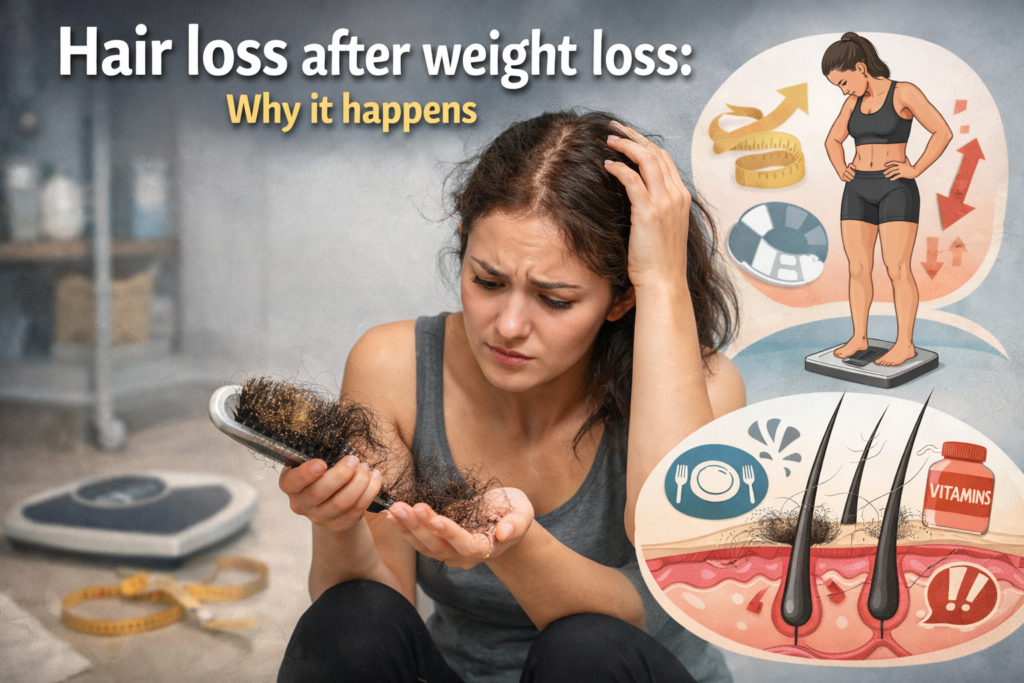
Hair Loss After Weight Loss: Why It Happens
I thought I was doing everything right.
That’s what made it so confusing.
The weight loss didn’t happen by accident. It was intentional. Planned. A series of small decisions that added up over time—eating differently, moving more, paying attention to things I had ignored before.
And for a while, it felt like progress in its purest form.
Lighter.
More in control.
More aware.
Until something unexpected appeared.
The Change I Didn’t Expect
It wasn’t immediate.
It never is.
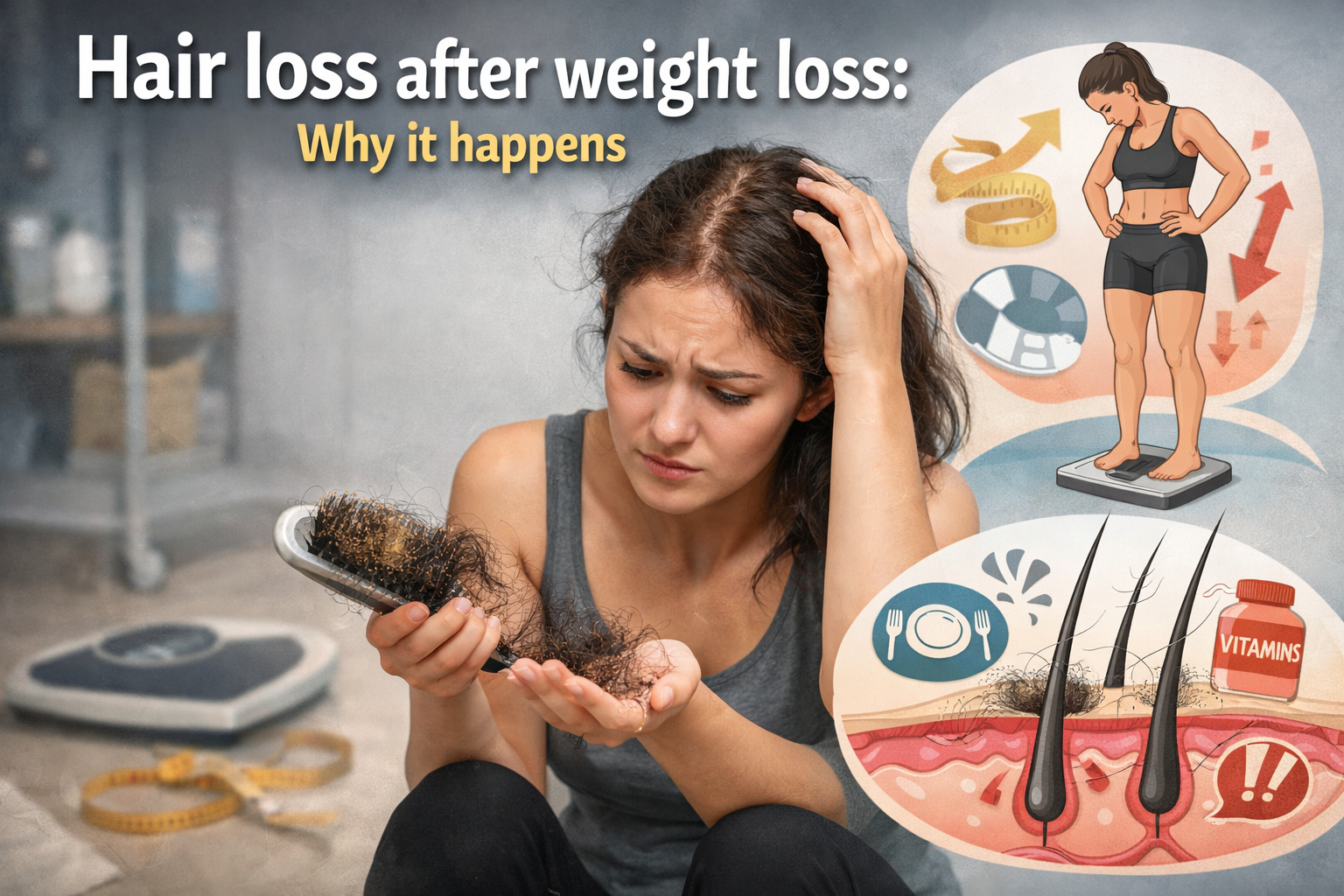
Weeks after the weight started to drop, I began noticing something else.
More hair in the shower.
More strands in my hands.
At first, I didn’t connect it.
Because why would I?
Losing weight felt like a positive change.
So how could it be linked to something that felt like loss?
When Progress Feels Contradictory
That’s what made it difficult.
Two things happening at once:
Moving forward in one way.
Losing something in another.
And it created a strange tension.
Because I didn’t know how to feel about it.
Was this part of the process?
Or a sign that something wasn’t right?
The Delay That Hides the Cause
Like most things with hair, there was a delay.
The shedding didn’t start when I changed my habits.
It started weeks later.
And that delay made the connection unclear.
Because by the time I noticed it, the changes I had made felt like the past—not the cause.
What Happens When Your Body Adjusts
Weight loss isn’t just about fat.
It’s about your entire body adjusting.
Energy intake.
Nutrient levels.
Hormonal balance.
All of these shift at the same time.
And your body responds to those changes—sometimes in ways you don’t expect.
When the Body Goes Into Conservation Mode
One of the things I came to understand is this:
When your body senses a reduction in energy intake, it becomes more selective.
More efficient.
It prioritizes essential functions.
And in that process, some systems receive less attention.
Hair is one of them.
Hair as a Non-Essential Function
Hair doesn’t play a role in survival.
So when your body needs to conserve energy, it redirects resources elsewhere.
Not suddenly.
Not dramatically.
But gradually.
And that shift can push more hair into the shedding phase.
The Role of Nutrients
Even when weight loss feels controlled, it can still create gaps.
Less food often means fewer nutrients—unless you’re very intentional about it.
Protein.
Iron.
Vitamins.
All of these support hair growth.
And when they’re reduced, even slightly, hair can respond.
When “Healthy” Still Isn’t Balanced
This was one of the hardest parts to accept.
I thought I was eating better.
And in many ways, I was.
But “better” doesn’t always mean balanced.
It doesn’t always mean complete.
And hair responds to completeness—not just improvement.
The Stress You Don’t Recognize
Even positive change can create stress.
New routines.
New habits.
New expectations.
And that stress doesn’t always feel negative.
But your body still registers it.
And that can influence the hair cycle.
When Hair Enters the Shedding Phase
At some point, more hairs shift into the shedding phase at once.
Not because something is wrong.
But because your body is adjusting.
And that adjustment shows up as increased shedding.
The Temporary Nature of It
What helped me most was understanding that this type of hair loss is often temporary.
Not immediate.
Not short-lived.
But temporary.
Because once your body stabilizes, the cycle begins to normalize again.
The Waiting That Feels Uncertain
Even knowing that, the waiting wasn’t easy.
Because the shedding was visible.
Consistent.
Hard to ignore.
And when something is visible, it feels more urgent than it might actually be.
When You Start Looking for Solutions
I tried to find ways to stop it.
Quick fixes.
Immediate answers.
But nothing worked instantly.
And that’s when I realized this wasn’t something to stop—
It was something to understand.
The Shift Toward Balance
Instead of focusing only on weight, I started focusing on balance.
Making sure I was getting enough nutrients.
Not restricting too much.
Allowing my body to adjust more gradually.
And that shift made a difference.
The First Signs of Recovery
The change wasn’t dramatic.
But it was there.
Less shedding.
Stronger strands.
Hair that felt more stable.
And those small improvements mattered.
Because they showed that the process was moving forward.
You’re Not Losing Progress—You’re Adjusting
That was the thought that helped me most.
This wasn’t a setback.
It was an adjustment.
My body adapting to change.
And hair reflecting that adaptation.
You’re Not Alone in This
Hair loss after weight loss is more common than it feels.
It just isn’t talked about as often.
Because the focus is usually on the weight—not the side effects.
But the side effects matter too.
So, Why Does Hair Fall After Weight Loss?
Because your body is adjusting.
Because energy intake has changed.
Because nutrients may be reduced.
Because the system is rebalancing.
And hair responds to that process.
It’s Not About Doing Something Wrong
That’s important to remember.
This doesn’t mean you made a mistake.
It means your body is responding to change.
And response doesn’t always look the way you expect.
You’re Not Losing Hair—You’re Going Through a Phase
That was the realization that stayed with me.
This wasn’t permanent.
It wasn’t the end.
It was a phase within a larger process.
Final Thought
Hair loss after weight loss can feel confusing.
Because it appears at a time when you expect improvement—not loss.
But your body doesn’t change in isolation.
When one thing shifts, others follow.
And hair is part of that system.
So if you’re experiencing this, it doesn’t mean something is wrong.
It means your body is adjusting.
Rebalancing.
Finding its way back to stability.
And like most things that involve your body, it doesn’t happen instantly.
It happens gradually.
Quietly.
Until one day, things begin to feel normal again.
Not because nothing changed—
But because your body learned how to adapt to the change.
And your hair followed.